
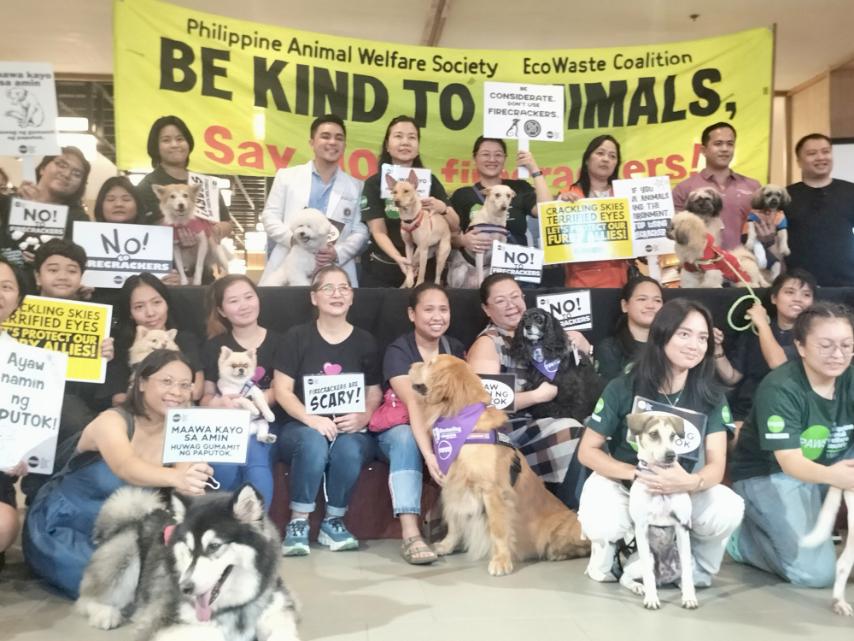
THE Philippine Animal Welfare Society (PAWS) and EcoWaste Coalition urged Filipinos to avoid using firecrackers as 2024 approaches to prevent trauma and fear in dogs and cats caused by loud noise and to reduce environmental damage.
The groups organized an event yesterday at the Ayala Malls in Vertis North, where they talked about roles and pieces of advice on how to keep animals safe from firecrackers, which can cause extreme anxiety, discomfort, and even physical harm to helpless dogs and cats. Several pet owners brought with them imported dog breeds, and media representatives attended the discussion.

Anna Cabrera, PAWS Executive Director said, “The deafening explosions caused by firecrackers during the New Year’s Eve revelry can be a terrifying experience for our companion animals- and even more so for the homeless animals on the streets,”.
“Since cats and dogs can hear better than humans, the sound of firecrackers and fireworks can cause them severe stress. There are documented cases of dogs who tremble hours after being exposed to the sound of firecrackers”, she further said.
In addition to irritating their eyes and lungs, cats and dogs may experience an upset stomach or loss of appetite when exposed to the severe smoke and odor produced by firecrackers and fireworks. Additionally, pyrotechnic device parts can be consumed by dogs and cats, which might result in vomiting, diarrhea, and abdominal pain.

The National Coordinator of EcoWaste Coalition Aileen Lucero, said, “Instead of firecrackers and fireworks, we appeal to citizens from all walks of life to safely welcome the New Year in a jolly manner using alternative noisemakers that will not put the health of our furry friends and the environment as a whole at risk.”
Environmental health specialist Dr. Geminn Louis Apostol of the Ateneo School of Medicine and Public Health added: “Firecrackers and fireworks release a cocktail of hazardous pollutants that can aggravate the air quality to very unhealthy levels and cause health problems, especially for the most susceptible sectors such as children, pregnant women, the elderly and those with pre-existing medical conditions.”
Aside from particulate matter (PM), other chemicals detected in the ambient air following the New Year revelry include aluminum, barium, copper, lead, potassium, and strontium, which can affect health. For example, exposure to PM2.5 can trigger respiratory ailments such as asthma, bronchitis, laryngitis, pneumonia, rhinitis, and sinusitis, and also increase the risk of heart arrhythmias and attacks.


 Republika News
Leave a comment