
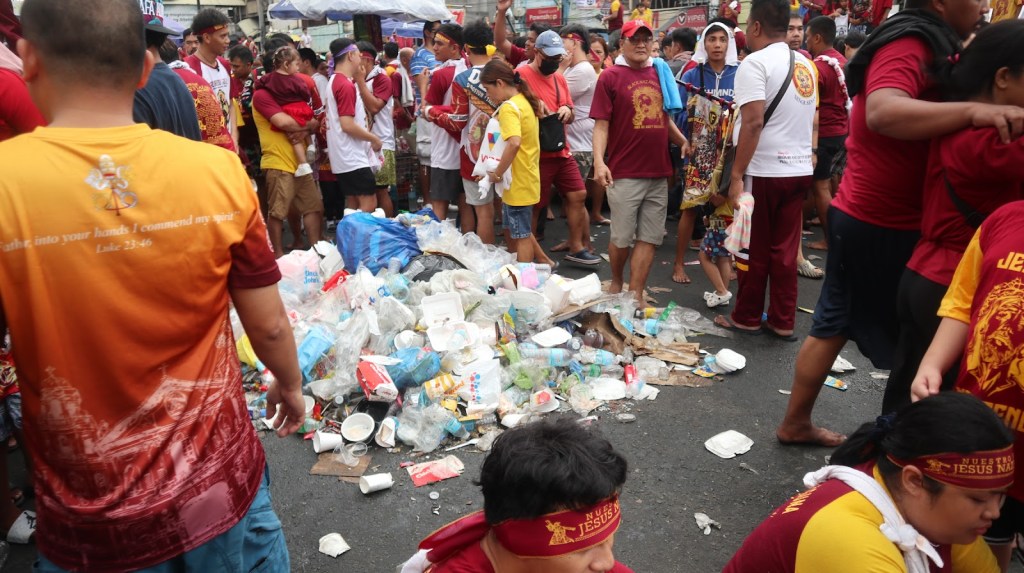
MANILA, Philippines — After devotees finish the Traslacion, most, if not all, leave Quiapo with their petitions whispered to Jesus Nazarene. But for street sweepers, the “calvary” has yet to begin.
Grand religious celebrations like this, according to Ellen Balanon, often pile up trash around the vicinity of Quiapo Church, prompting them to sweep it up ahead of schedule and wait for the Jesus Nazareno to reach Quiapo Church before garbage trucks can pick it up.
“Winawalis na namin ‘yung mga basura tapos itutumpok na lang para hindi na kami matambakan at mahirapan mangolekta pagtapos ng prusisyon,” Ellen told Republika News.
(We’ve already swept up the trash, and we’ll just pile it up to avoid getting overwhelmed and to make collection easier after the procession.)
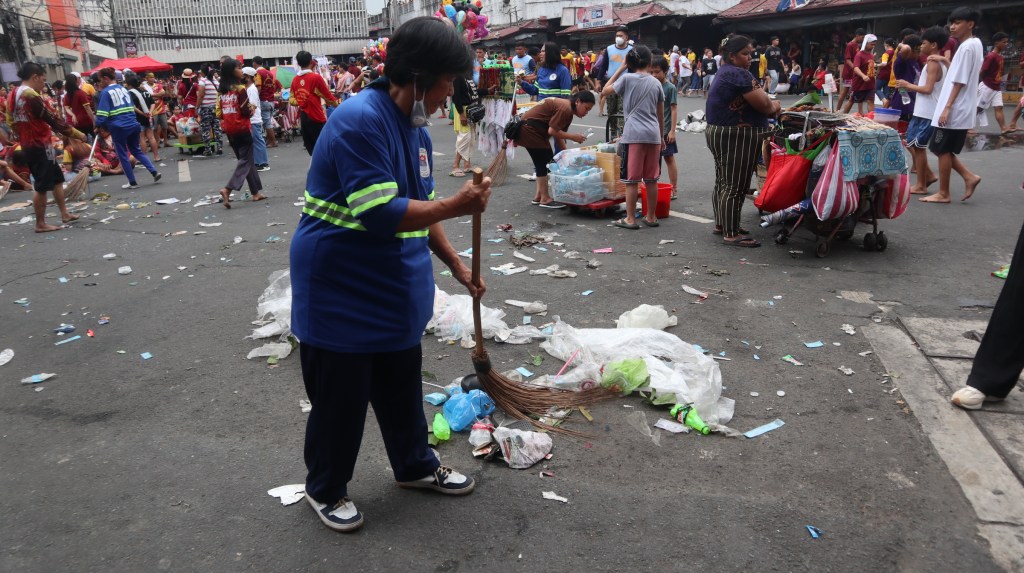
For Ellen, one of the members of Manila Department of Public Services (DPS), the night after the feast is a “long night.”
“Pagkatapos ng prusisyon, magdamag kami magwawalis para malinis talaga yung area ni Nazareno,” she said.
(After the procession, we’ll be sweeping all night to ensure the area around Nazareno is thoroughly cleaned.)
Ellen said prior to the feast, at least three garbage trucks are roaming around to collect “tons” of trash leading to the feast of Jesus Nazareno.
“Bilang tagalinis dito, saksi kami kung paanong isinasawalang-bahala ng mga deboto ang kalikasan. Sobrang bigat sa dibdib na habang taimtim silang nagdarasal at humihiling ng biyaya, ay siya ring paglapastangan nila sa sagradong tahanan ng Nazareno. Sana’y mapagtanto nila na kung gaano nila kahigpit na ninanasa ang katuparan ng kanilang mga panalangin, ganoon din sana katindi ang kanilang pagnanais na pangalagaan ang inang kalikasan. Sapagkat ang kalikasan, kapag napabayaan, ay nagbabalik ng ating mga itinapon—ngunit sa paraang mas masakit, mas mapanganib, at mas mapinsala,” she said.
(As cleaners here, we bear witness to how devotees neglect the environment. It weighs heavily on our hearts that while they fervently pray and ask for blessings, they also desecrate the sacred home of the Nazareno. We hope they realize that just as they desperately long for their prayers to be fulfilled, they should also have the same fervor in caring for Mother Nature. For when nature is neglected, it returns what we have thrown away—but in ways that are more painful, more dangerous, and more destructive.)
In 2024, the DPS reported that a total of 158 truckloads and a volume of 468 metric tons was collected for that year.
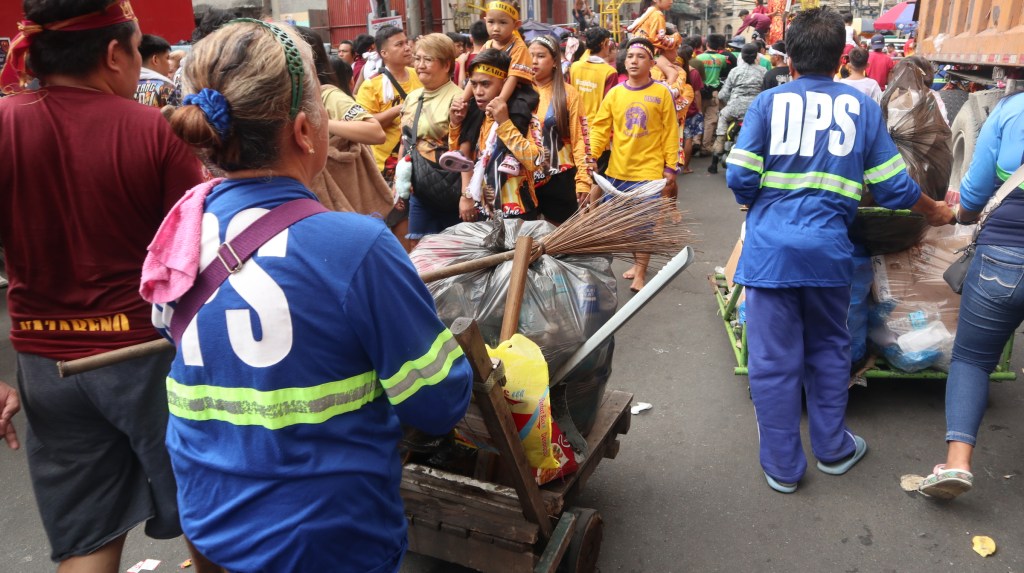
To put that into perspective, the total weight is roughly equivalent to 39 fully loaded city buses or about 6 percent of the Eiffel Tower’s weight. If all the collected waste were placed in water, it could fill approximately 187 Olympic-sized swimming pools.
The DPS has yet to reveal an estimate of the possible number of trash to be collected but Ellen said that the figure this year could be higher due to the more relaxed restrictions for the feast.
Even though they anticipate the trash to pile up especially during this time, Ellen reminded devotees to avoid littering in the area, saying that one of the “signs of being a good devotee” is being respectful to others, especially the street sweepers.
“Sana ma-remind yung mga deboto na huwag magkalat dahil tanda rin ng pagiging deboto ang pagmamalasakit sa ibang tao, lalo na sa aming mga naglilinis dito,” she said.
(I hope the devotees will be reminded not to litter because showing care for others, especially for those of us who are cleaning here, is also a sign of being a true devotee.)

Earlier, environmental group EcoWaste Coalition has lamented the “out of control littering” in the celebration of the feast day.
The group said that while local authorities imposed a strict ban on guns and liquor to ensure peace and order of the feast, the ban on littering “was evidently not enforced during the conduct of the Traslacion”
“We are truly moved by our people’s unmatched devotion to Nuestro Padre Jesus Nazareno, but we are deeply saddened by the unsightly trail of trash that sullied the surroundings and kept our waste workers and volunteers exhausted,” said Ochie Tolentino in a statement.

“As our nation is highly vulnerable to the impacts of climate change, pollution, and biodiversity loss, we are challenged to integrate our duty to care for God’s creation in all aspects of our lives, including in the celebration of our faith,” the group said.

A day before the feast, Senator Loren Legarda has urged the government to take the lead in reducing single-use plastics as the country marks National Zero Waste Month this January.
“I call on all government agencies to take the lead in creating to help find innovative ways to reuse everyday products and reduce waste,” Legarda said.
In a 2021 report from the World Bank, it said that the Philippines produces 2.7 million tons of plastic waste yearly, with about 20 percent ending up in the ocean.
The report said that several structural challenges are contributing to the failure of plastics recycling in the Philippines. High logistics costs make it difficult for recyclers to source materials from across the archipelago, while electricity costs, which are 38-67 percent higher than those of neighboring countries, further burden recyclers using inefficient equipment.
The informal recycling industry also creates intense competition, distorting the market for formal recyclers, it said.
According to the same report, more than half of plastic packaging used is made from low-value, hard-to-recycle flexible materials, locking in significant material value. Low landfill tipping fees discourage local governments from investing in better waste management solutions. Small and medium enterprises (SMEs) that dominate the domestic recycling market also struggle to meet the demands of multinational buyers.
Additional factors compounding the recycling problem include fluctuations in virgin resin and oil prices, the absence of local recycled content requirements for key plastic resins, and the challenging economics of waste collection for the informal sector.
There’s also a lack of “design for recycling” standards, fragmented waste management implementation, and insufficient organic waste treatment facilities, it said.


 Republika News
Leave a comment