

Noong Bata pa si Sabel – an old proverb that remains intriguing
Many Filipino people continue to find the old proverb “Noong Bata pa si Sabel” for being intriguing and mysterious.
For several decades, the saying’s origin has been ingrained in our memory. I even asked my grandmother and a few other elders where the saying “Noong Bata pa si Sabel ” originated, but I was unable to find the definitive answer to my question.
When our elders criticize something when we wear old-fashioned clothes or a querying long-standing habit, we frequently hear them say “Noong Bata pa si Sabel,” which translates to “when the world was younger.”
It’s the same way our elders often tell us the phrases, ‘Panahon pa ni Mahoma” and “Nineteen Kopong Kopong”.
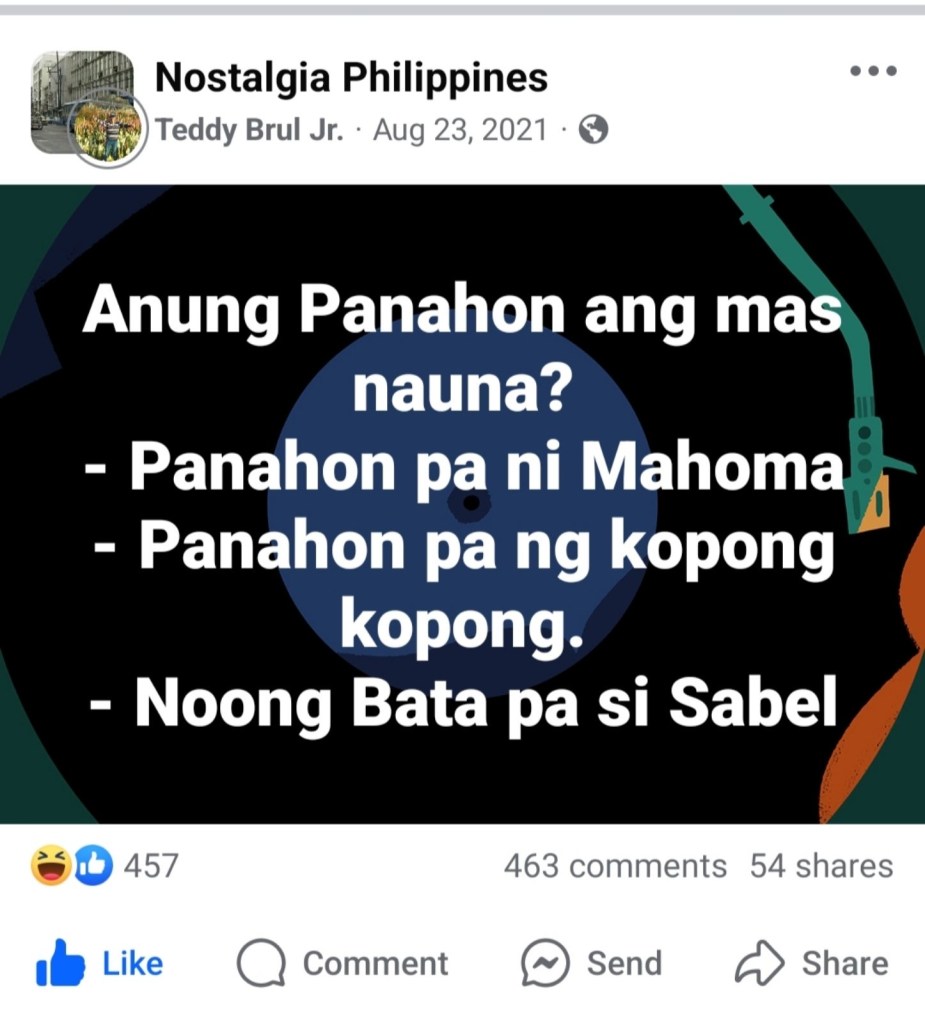
I posted on the Facebook group page Nostalgia Philippines and asked, “Anung Panahon ang mas Nauna? Panahon pa ni Mahoma, Panahon ng Nineteen Kopong-Kopong o Noong Bata pa si Sabel (“Which Era came first? Mahoma’s time, Nineteen Kopong-Kopong’s time, or When Sabel was young?”). My query gained 457 likes, 463 comments, and 54 shares.
Based on the vast majority of the rationales that I gleaned from online users, the phrase “When Sabel was a child” appeared much earlier.
They claim that “Noong Bata pa si Sabel” is the earliest expression of the old folks that pay tribute to Queen Isabel II of Spain (María Isabel Luisa de Borbón y Borbón-Dos Sicilias) who reigned at the age of three years old after her father Ferdinand VII died in 1833.
She was Queen of Spain from 1833 until her deposition in 1868.
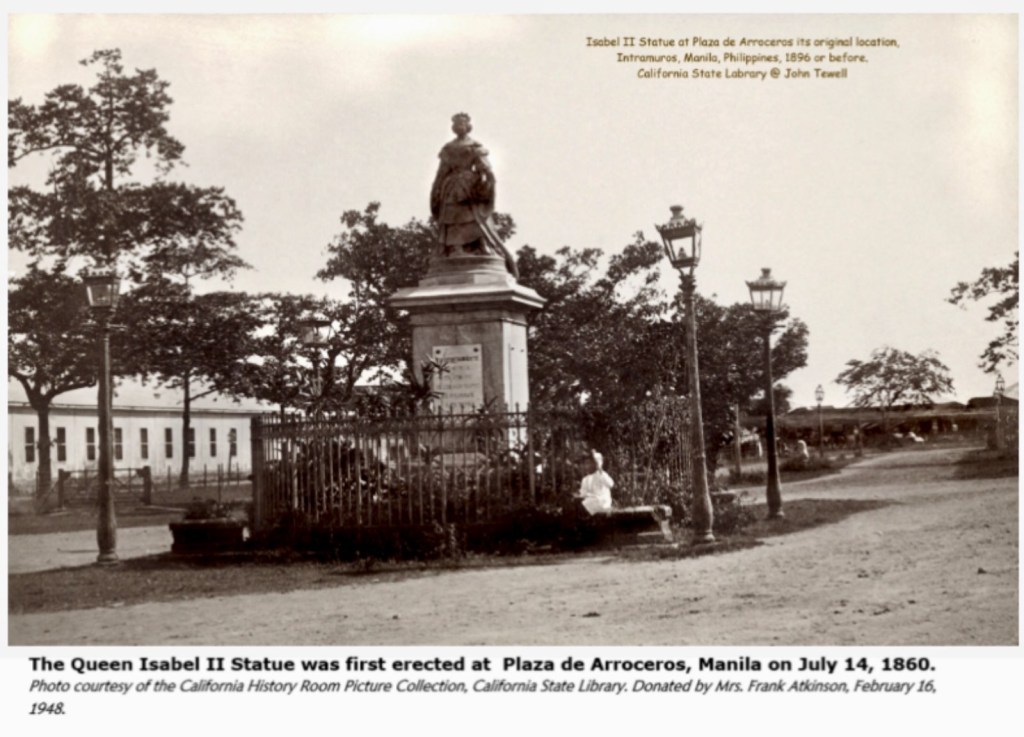
Historically gathered, on July 14, 1860, the Queen Isabel II Statue was first erected at Plaza de Arroceros (Liwasang Bonifacio) near Teatro Alfonso XII (where Metropolitan Theater stands today).
Queen Isabel II herself ordered it and donations gathered in 1854 and 1855 financed it. Spanish sculptor Ponciano Ponzano created the bronze statue.
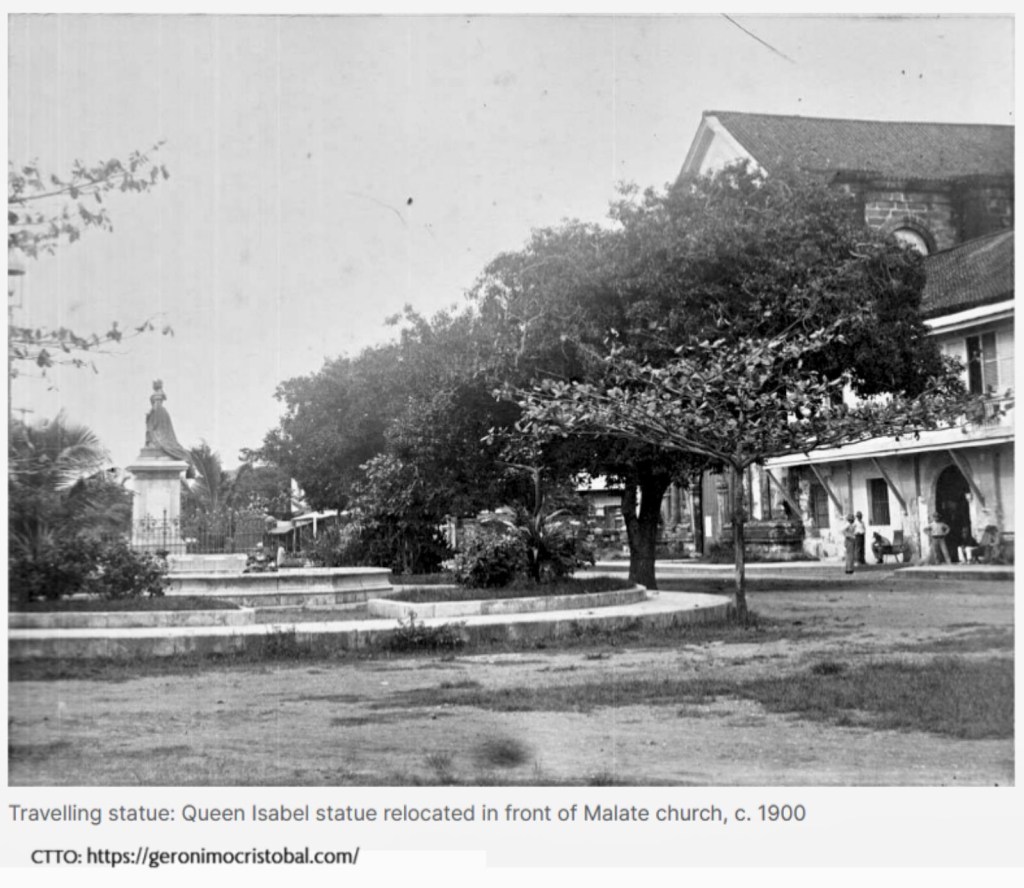
The statue was moved to Malate Church in 1896 due to political unrest in Spain. The statue stood until Typhoon Yoling dislodged it in the 1970s.
The statue was restored in 1975 and relocated to its present site in front of Puerta Isabel II on Magallanes Drive in Intramuros, fronting the Chamber of Commerce of the Philippine Islands beside the National Press Club building.
While Mahoma’s time relied on Masaharu Homma, a lieutenant general in the 43,110-man IJA 14th Army, who was in charge of the invasion of the Philippines during World War II. He commanded his soldiers to respect the Filipinos’ traditions and religion and to treat them as friends rather than enemies.
A word from Indonesia that was also used in the Philippines, “kopong” means “no content, empty”—that is, zero, as in 19 zero-zero. They believed it occurred in the 1900s, which is why they called it “nineteen kopong-kopong.”
Now we probably know where the term “Noong Bata pa si Sabel” came from. We can extend the ancient adage further.
Would you kindly tell us what your grandmother, parents, and other elders have told you about this proverb? -30-


 Republika News
Leave a comment