

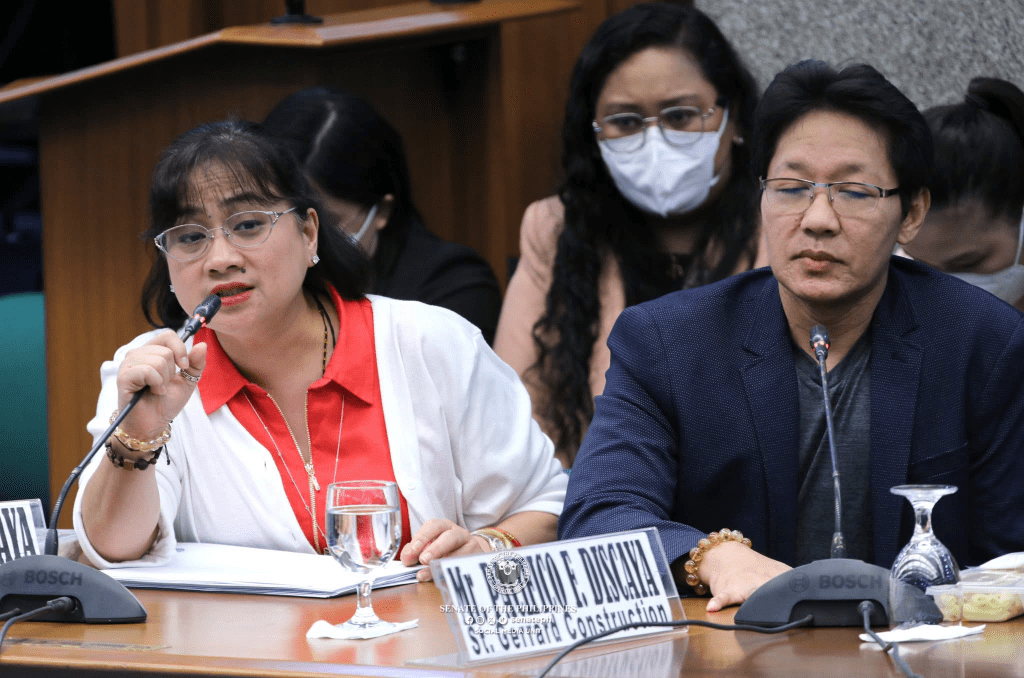
MANILA, Philippines — The Senate Committee on Public Services on Thursday has instructed the National Telecommunications Commission (NTC) to submit a report detailing its efforts to address ongoing issues with internet service quality and cybersecurity risks in the country.
Citing a Senate hearing on January 15, Senator Raffy Tulfo, chairman of the committee on public services, said that the NTC should enhance its monitoring of telecommunications services, particularly in malls nationwide.
The committee also called the commission to collaborate with the Philippine Competition Commission (PCC) to hold telecom companies accountable for any violations.
The senate said the NTC has to provide a report and action plan by January 20.
This came after a separate report from the Cybercrime Investigation and Coordinating Center (CICC) and trust-tech firm Gogolook, Gogolook country head Mel Migriño said that a total of 6,157,51 text scams and 610,688 scam calls were tallied in the country in 2024, citing its Whoscall mobile application.
It said that scam calls and SMS messages saw a steady rise per quarter throughout 2024. In the first quarter, Whoscall logged 108,157 scam calls, which increased to 201,760 by the fourth quarter.
Similarly, SMS scams grew from 1,143,268 in the first quarter to 2,079,968 by the end of the year, it said.
Among the fraudulent texts, according to Whoscall, 16,553 contained dangerous links, mainly promoting online services, insurance, loans, financial products, game memberships, and rewards.
The committee report also raised concerns about the security of public Wi-Fi networks in malls and restaurants, pointing to incidents where individuals fell victim to hacking after accessing free Wi-Fi.
Tulfo likewise presented videos of victims whose phones were remotely controlled by hackers, exposing sensitive information and urged the Department of Information and Communications Technology to improve its cybersecurity measures to better protect users from emerging threats such as “text hijacking,” where hackers intercept and manipulate text messages.
Aside from these cybersecurity concerns, the committee noted the complaints from users about service outages and weak signal coverage, particularly in areas with limited competition among telcos.
The Department of the Interior and Local Government (DILG) was likewise urged to address the difficulties telcos face in securing permits for cellular towers in rural areas, which could help improve signal coverage.
“The DILG [was ordered] to look into the struggle of telcos applying for permits with local government units to establish cellular towers particularly in the provinces to ensure quality and up-to-speed signals for users in geographically disadvantaged areas,” the committee said.
According to the committee, there has to be refund mechanisms for consumers, urging telecommunications companies to offer billing adjustments, rebates, and other forms of compensation for service disruptions.


 Republika News
Leave a comment