
MANILA, Philippines — Despite acknowledging the difficulty of providing a definitive answer on whether nuclear power could lower electricity costs in the country, the Department of Energy (DOE) said it is optimistic that Congress will pass a bill to establish a regulatory framework for nuclear power, even amid time constraints.
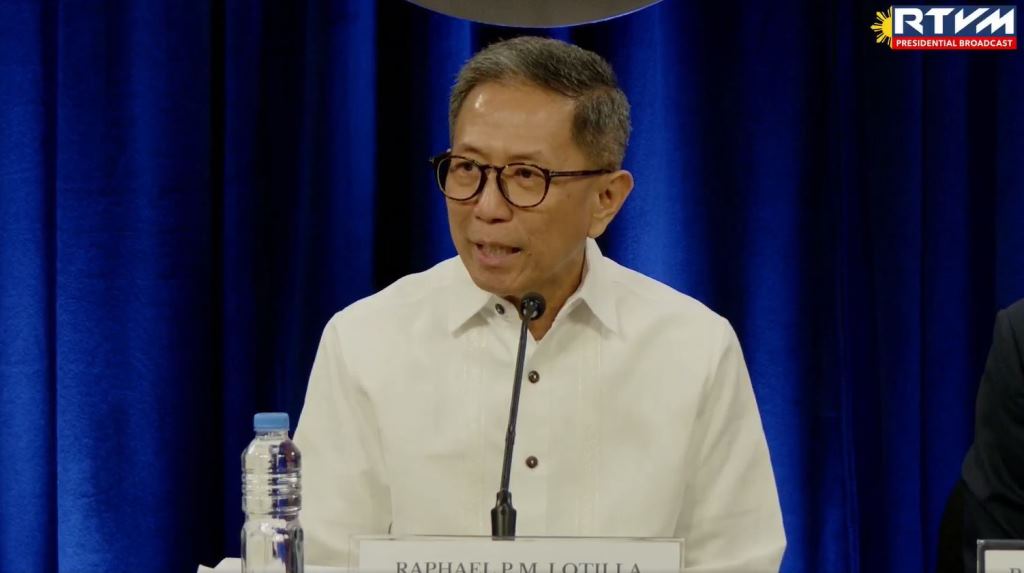
Energy Secretary Raphael Lotilla announced during a Malacañang press briefing that the measure has already been approved by the House of Representatives on its third and final reading.
However, the bill is still undergoing deliberations in the Senate.
“We are optimistic that the Senate will be able to move it forward and therefore be able to come up with legislation during this Congress,” Lotilla said.
“We’ll take it from there because we are strongest when both the executive and the legislature speak with one voice,” he said
Economic potential of nuclear energy
On the potential of nuclear energy to lower electricity costs, Lotilla noted that it was challenging to give a definitive answer. However, he instead noted the long-term benefits of nuclear power.
“Over the lifespan of a nuclear plant—which is generally longer than that of other types of power plants—the costs would be spread out over this extended period, ultimately making it more economical,” he explained.
Financing through the Maharlika Fund
Lotilla also said that the DOE has requested the Maharlika Investment Corp. (MIC) to assess the financing requirements for nuclear power development, following President Ferdinand R. Marcos Jr.’s recommendation.
“The financial analysis can be effectively undertaken by the Maharlika Investment Fund so that the government can gain a clearer understanding of financing costs and returns,” Lotilla said.
He said that the President is not favoring specific companies but is instead gathering insights from various players in the nuclear sector to build a broader understanding of available technologies and developments.
Lotilla said that under the Electric Power Industry Reform Act (EPIRA), the government cannot directly engage in electricity generation, leaving the responsibility to private entities.
“It’s not even the government, then we will have to work with the private sector [to] bring in nuclear power,” he said.


 Republika News
Leave a comment