

MANILA, Philippines — Only one in 10 higher education students is able to graduate from college, particularly in the Bangsamoro Autonomous Region in Muslim Mindanao (BARMM), according to the latest Second Congressional Commission on Education (EDCOM 2) report.
The report, which highlights the country’s mishaps in the education sector from early childhood to higher education, revealed that during the second year period of the study, higher education, specifically in college faces high dropout rates particularly in regions including the BARMM.
Provinces under the BARMM include Basilan, Lanao Del Sur, Maguindanao Del Norte, Maguindanao Del Sur, and Tawi-Tawi.
“Higher education also faces significant hurdles, with high dropout rates, especially in regions like BARMM, where only 1 in 10 students graduate from college, the report said.
EDCOM 2’s Year Two report is based on 97 research studies and insights gathered from 45 consultations, school visits, and public hearings held throughout 2024.
According to the report, the significant cuts to tertiary education subsidies under RA 10931 risk excluding the poorest students from higher education, restricting their opportunities for future employment and economic mobility.
The Republic Act No. 10931, or the Universal Access to Quality Tertiary Education Act, provides free tuition and other fees in state universities, local colleges, and public technical-vocational schools in the Philippines.
It also offers financial aid for students in private schools and a loan program for education expenses. Signed in 2017 by former President Rodrigo Duterte, the law aims to make higher education more accessible, especially for low-income students, by reducing financial barriers.
EDCOM 2 Co-Chair Rep. Mark Go said that the country needs to make higher education more accessible and inclusive, particularly for marginalized communities.
“The current participation rate in higher education in the Philippines stands at 34.89 percent. While this number is a step forward, it falls significantly short of the ASEAN average of 41.10,” said Go in the report.
“This gap is a clear signal that we must do more to make higher ed accessible and inclusive for our youth especially those from the marginalized communities,” he said.
Following the release of the report, Senator Win Gatchalian said that for the 2022-2023 school year, less than 1 percent of TES beneficiaries came from 4Ps households, which goes against the law’s goal of supporting the neediest students.
Gatchalian said that, as a result, a provision in the 2024 national budget to prioritize the poorest students for TES led to an increase, with about 27 percent of TES grantees for the 2023-2024 school year coming from the poorest households. This policy will continue into fiscal year 2025.
Filipino students ‘behind,’ books face shortage
The report finds that only 25 percent of Filipino children receive the proper nutrition in their first 1,000 days, leading to a significant gap that affects their development.
As a result, 1 in 4 Filipino children under 5 are stunted, despite laws like RA 11148 aimed at addressing this. In basic education, a UNICEF study reveals most Grade 3 students are 1-2 years behind in reading and math, while public schools continue to face textbook shortages, with only 35 out of 94 titles delivered by January 2025.
These issues are worsened by frequent natural disasters, with schools in the Cordillera region losing 48 percent of school days last year, highlighting the ongoing educational challenges and learning losses, the report said.
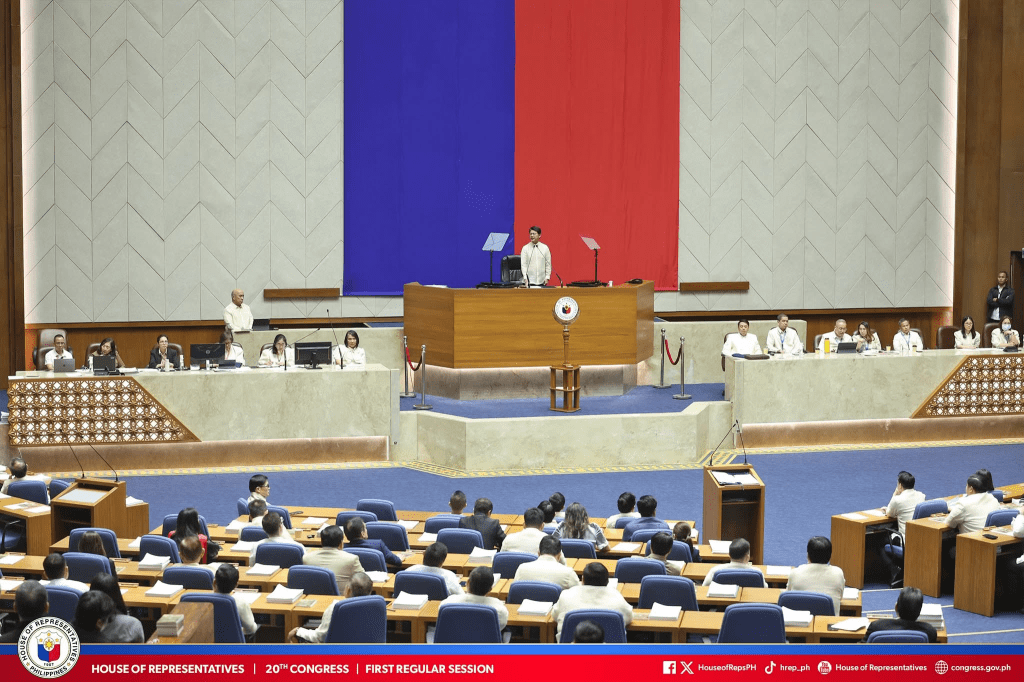
“We call on our colleagues and the DepEd leadership to address this concern with utmost urgency. Mr. Speaker, colleagues, any working education system requires that we have robust pathways not just in formal education, but also in non-formal and informal ones. We need to make sure that we are not leaving any learner behind,” said EDCOM 2 Co-Chairperson Rep. Roman Romulo.
Budget cuts to derail education sector
DepEd had its budget cut by nearly P12 billion, reducing it from P748.6 billion to P737 billion, as approved by the House of Representatives while the CHED and state universities and colleges also faced significant cuts.
CHED’s original proposal of P31.52 billion was raised by the House to P60.22 billion, but was later reduced to P33.31 billion in the bicam.
Education Secretary Sonny Angara expressed disappointment, saying, “this reverses the trend in recent years where Congress adds even more to the education budget, save for one year during the pandemic.”
He also posted on X (formerly Twitter), noting that P10 billion was cut from DepEd’s proposed 2025 computerization program, “that could have funded thousands of computers/gadgets for our public school children.”
After the education sector budget cuts, President Ferdinand Marcos Jr. commented on the budget gaps for DepEd projects, saying, “We have to be able to show that that’s (education) the priority,” during a meeting with Education officials to discuss the 2025 budget.
According to Angara, the budget cut could likewise “exacerbate teacher shortage,” adding that the requirement from previous years remains partly addressed, further compromising the delivery of quality education.

 Republika News
Leave a comment