
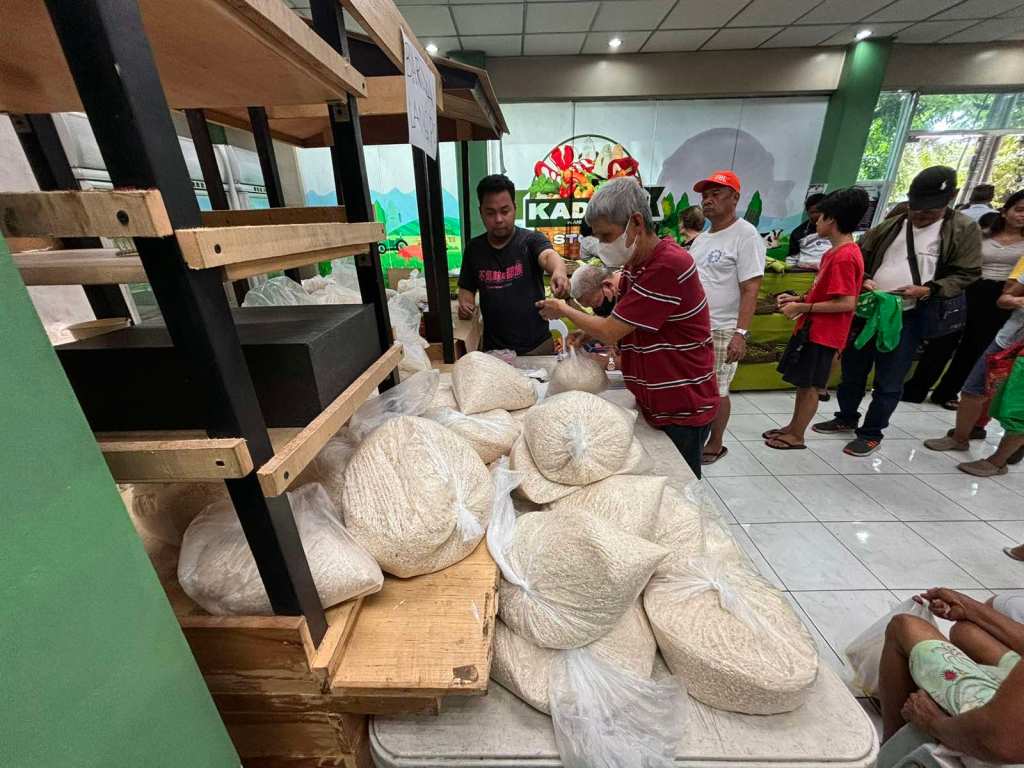
MANILA, Philippines – The Commission on Elections (Comelec) has clarified that the emergency sale and release of buffer rice stocks by the National Food Authority (NFA) to Local Government Units (LGUs) is not covered by the election ban ahead of the May 12, 2025, national and local elections.
In a press statement released on March 12, Comelec said that its en banc decision, based on the legal opinion of its Law Department, determined that the Department of Agriculture (DA) and NFA’s action of selling rice to LGUs to address a food security emergency does not fall under the prohibitions of Section 261(v) of the Omnibus Election Code (OEC).
The measure is in line with Republic Act No. 12078, which amends the Rice Tariffication Law, and allows emergency interventions during supply shortages or extraordinary price increases.
“Such act is merely a sale and release of buffer rice stocks to areas covered by the Declaration of Food Security Emergency on Rice and resale of the same by the concerned LGUs to their constituents, which does not involve a distribution of aid in its present form. Thus, said action by the DA requires no prior authority from the Commission on Elections for its implementation,” the statement read.
Comelec Chairman George Erwin M. Garcia assured the public that government services would continue while maintaining compliance with election laws. However, the commission warned that the sale of NFA rice should not be used for partisan political activities or as a means to influence voters.
“The Comelec reminds said agency parties, however, that this merely extends to the emergency measure of sale and release of buffer stocks by the DA and the NFA, and eventual resale of such buffer stocks as purchases by the LGUs to its constituents, and should not, in any way:
- be an avenue for partisan political activity of whatever form or nature; and
- [be] intended to induce anyone of the public in general to vote for or against any candidate under the guise of social welfare services.”
Furthermore, the commission stressed that while the emergency sale is allowed, LGUs must seek prior Comelec authorization if:
- public funds will be released, disbursed, or expended during the 45-day election ban from March 28 to May 11, 2025;
- the rice purchased will be distributed as aid to vulnerable sectors; or
- it will be sold to the community at large at a subsidized rate.
Comelec reiterated that violations of the election ban could lead to severe penalties, including imprisonment of up to six years without probation, disqualification from holding public office, and deprivation of voting rights.
LGUs participating in the program are urged to comply with election regulations and secure proper authorization if their activities fall under the restricted categories to avoid legal repercussions.


 Republika News
Leave a comment