
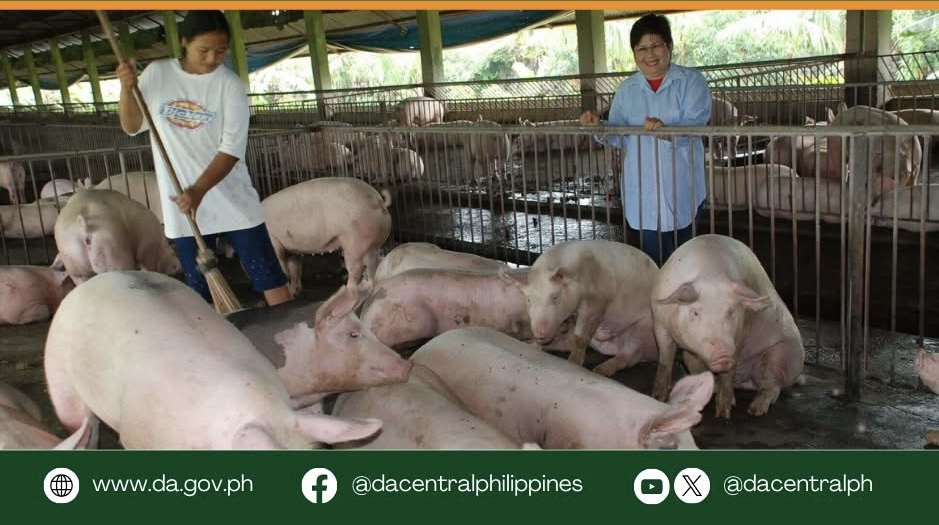
MANILA, Philippines — Agriculture Secretary Francisco P. Tiu Laurel Jr. on Thursday called on the swine industry to ramp up production by an additional 2 million hogs annually, aiming to restore the country’s pig population to pre-African Swine Fever (ASF) levels by 2028.
ASF has severely impacted the swine industry since its first outbreak in 2019, reducing the country’s hog population from nearly 14 million to around 8 million. The drastic decline has affected local pork supply, leading to increased reliance on imports.
Speaking at the 25th National Hog Convention and Trade Exhibit in Pasay City, Secretary Tiu Laurel emphasized the potential recovery opportunities for the industry, citing the anticipated rollout of an ASF vaccine and financial support from the proposed Animal Industry Development and Competitiveness Act.
“Before ASF, we had nearly 14 million hogs; now, we have 8 million. This creates a 6-million head deficit. With a growing population, demand is far higher than the previous 14 million,” the DA chief said.
“My challenge to the industry is clear: we need to produce an additional 2 million hogs each year—through 2026, 2027, and 2028—to return to pre-ASF levels…and that’s the minimum,” he said.
To support this initiative, the agriculture chief tasked DA Undersecretary for Livestock Dante Palabrica with developing a roadmap to guide the swine sector’s recovery, underscoring the industry’s role in ensuring food security and sustaining economic growth.
The livestock and poultry sectors together account for about a quarter of the country’s total agricultural output, providing livelihoods to over 2.8 million Filipino farmers. Pork and chicken remain essential protein sources in Filipino diets, highlighting the urgency of stabilizing local production.
Under the proposed animal industry competitiveness enhancement fund, the swine industry is set to receive around P4 billion in support to facilitate recovery and expansion.
If the industry meets the target, Secretary Tiu Laurel noted, it could significantly reduce pork imports, which have offset the local supply deficit. “Filipinos still prefer the meat of freshly slaughtered hogs,” he said.
He also disclosed that two large commercial hog producers have pledged to increase their production, with each committing to an additional 500,000 hogs starting next year. “If they deliver, I already have around 1 million additional heads,” he added.




 Republika News
Leave a comment