
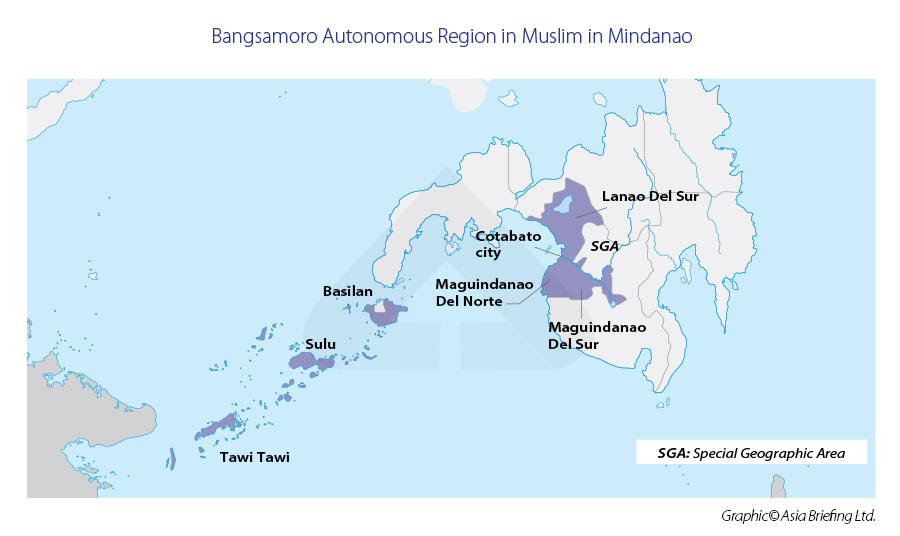
MANILA, Philippines — The Bangsamoro Autonomous Region in Muslim Mindanao (BARMM) remains the least literate region in the country, based on the results of the 2024 Functional Literacy, Education, and Mass Media Survey (FLEMMS) released by the Philippine Statistics Authority (PSA).
According to the survey, only 81 percent of individuals in BARMM aged five years and older are considered basically literate — the lowest among all regions — while 14.4 percent of the population in the region cannot read or write.
Nationwide, nine out of ten Filipinos or 90 percent of the estimated 103.46 million individuals aged five and above were classified as basically literate, equivalent to about 93.07 million individuals. However, disparities remain across regions and age groups.
Central Luzon registered the highest basic literacy rate at 92.8 percent, while BARMM lagged behind other regions, indicating persistent educational gaps in the south.
Youngest, oldest age groups see lowest literacy
Children aged 5 to 9 years posted the highest proportion of illiteracy at 20.1 percent, raising concerns over access to early childhood education. Meanwhile, Filipinos aged 60 and above had the lowest basic literacy rate among age groups, at only 76.2 percent.
“These numbers highlight the need for targeted literacy programs for both early learners and senior citizens,” the PSA said.
Gap in comprehension
The 2024 FLEMMS also introduced a refined definition and methodology for assessing functional literacy — the ability to read, write, compute, and comprehend.
The nationwide functional literacy rate among individuals aged 10 to 64 stood at 70.8 percent. This means nearly 30 percent of Filipinos in this age range struggle with comprehension, despite having basic reading and writing skills.
The largest gap between basic and functional literacy was found among those aged 60 to 64. In this group, for every three individuals who can read, write, and compute, one struggles with understanding written information.
Zamboanga Peninsula least functionally literate
Region IX (Zamboanga Peninsula) recorded the lowest functional literacy rate at 59.3 percent, while the Cordillera Administrative Region had the highest at 81.2 percent.
Females consistently outperformed males in both literacy measures, with 90.9 percent of women considered basically literate compared to 89 percent of men. In functional literacy, the gap was even wider: 74.1 percent for females versus 67.6 percent for males.
The FLEMMS, conducted every five years, provides the government with data to inform policies on education, skills development, and media access. This year’s survey applied revised definitions of literacy adopted by the PSA Board earlier in 2024.


 Republika News
Leave a comment