
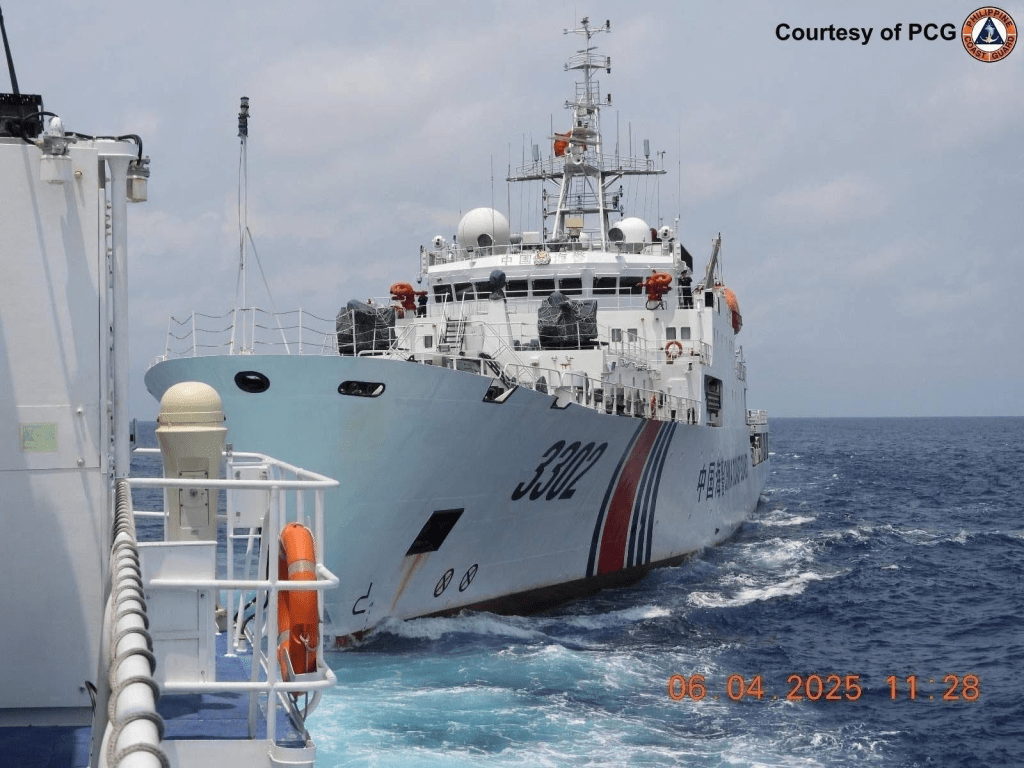
MANILA, Philippines — As tensions persist in the West Philippine Sea, a leading Filipino political analyst is urging the public and policymakers to move beyond divisive labels such as “anti-China” or “pro-US,” warning that such rhetoric is unproductive and undermines the country’s long-term interests.
Speaking at the Pandesal Forum, Dr. Rommel C. Banlaoi stressed the importance of a balanced foreign policy that prioritizes Filipino national interests over geopolitical alignments.
“It is counterproductive to use labels like anti-China or pro-US in the context of the SCS/WPS disputes,” Banlaoi said. “It is more pro-Filipino to believe that sustaining friendship and strengthening peaceful co-existence with the US and China are essential for the advancement of Filipino national interests.”
To support his position, Banlaoi cited the work of M. Taylor Fravel, a respected American political scientist from the Massachusetts Institute of Technology (MIT), who studied 23 territorial disputes involving China since 1949. Fravel found that China has often chosen peaceful negotiations over conflict and has shown a willingness to compromise—sometimes receiving only a small portion of contested land or even ceding more than half to its neighbors.
“Fravel discovered that China over the past sixty years was more likely to compromise in these conflicts with neighbors and less likely to use force than many Western scholars have feared,” Banlaoi noted.
Hs said that China has successfully resolved disputes with countries such as Russia, Vietnam, and several Central Asian states, often through generous settlement terms. Banlaoi also highlighted China’s long patience in regaining Hong Kong and Macao—waiting 156 and 442 years respectively without resorting to military action.
“China has a bag full of patience to peacefully settle territorial disputes,” he said.
“China has taught the world that in the peaceful settlement of territorial disputes, patience is the main requirement,” he said.
In the current Philippine climate, where anti-China sentiment is high due to ongoing maritime issues, Banlaoi warned against allowing popular opinion to dictate foreign policy.
“In the Philippines, it is currently popular to be anti-China because of the WPS issue. But as Albert Einstein said, ‘what is popular is not always right’,” he said.
Banlaoi said that highlighting China’s peaceful dispute resolution record is not an endorsement of its actions, but a strategic recognition of diplomatic pathways.
“Those are scientific findings from an American and not from a Chinese scholar,” he said. “It is therefore very unfair to be labeled as pro-China by highlighting China’s exemplary practices in the peaceful settlement of territorial disputes with neighbors.”
Banlaoi said that rather than choosing sides, the Philippines must prioritize what is best for the nation. “Being truly pro-Filipino means pursuing peace, dialogue, and cooperation—both with China and the United States.”



 Republika News
Leave a comment