

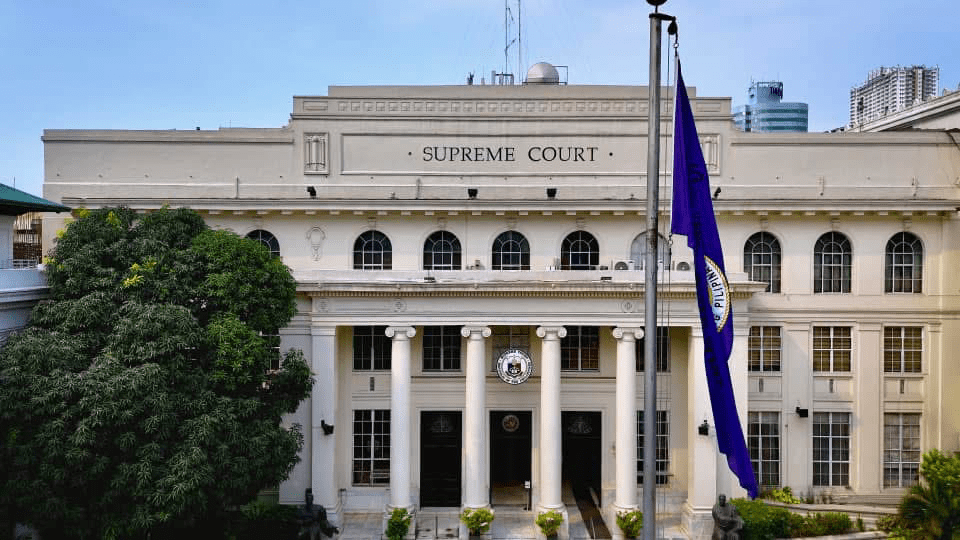
MANILA — The Supreme Court has ruled that a verbal land sale can be considered valid and binding even without a written contract—provided that the agreement has been partially or fully executed.
In a Decision penned by Associate Justice Samuel H. Gaerlan, the SC’s Third Division upheld the validity of an oral sale between Marcos Batara and his nephew Benedicto Ocampo, citing that Ocampo had taken possession of the property, made improvements, and received the land title.
The property in question was registered under Batara’s name. After his death in 1974, his children, Noblesa and Ernesto, only learned of the property in 2007 when they were notified of unpaid real estate taxes and discovered that Ocampo was living on the land.
The heirs filed a case to reclaim the property, arguing that as Batara’s legal successors, they had rightful ownership. Ocampo, however, said he had purchased the land directly from Batara while the latter was still alive. He claimed he received the title from Batara after making initial payments and continued paying installments to Batara’s brother Marcelo after Batara’s death.
Lower courts, including the Regional Trial Court and Court of Appeals, sided with the heirs, ruling that the property remained registered under Batara and finding insufficient evidence to prove a valid sale.
The Supreme Court reversed both rulings.
While the Civil Code requires a written document to enforce a land sale in court, the SC emphasized that a sale may still be deemed valid if it has been partially or fully executed. Actions such as taking possession, making improvements, and receiving the land title are considered strong indicators of a sale.
In this case, the Court found that Ocampo had partially paid for the property, received the title, lived on the land, and paid real property taxes—acts sufficient to validate the verbal agreement.
However, the SC clarified that Ocampo’s posthumous payments to Batara’s brother Marcelo were not binding, as Marcelo had no authority to accept payments on behalf of Batara’s heirs. As a result, while the sale remains valid, Ocampo was ordered to pay the remaining balance of the purchase price—with interest—to Noblesa and Ernesto.

 Republika News
Leave a comment