

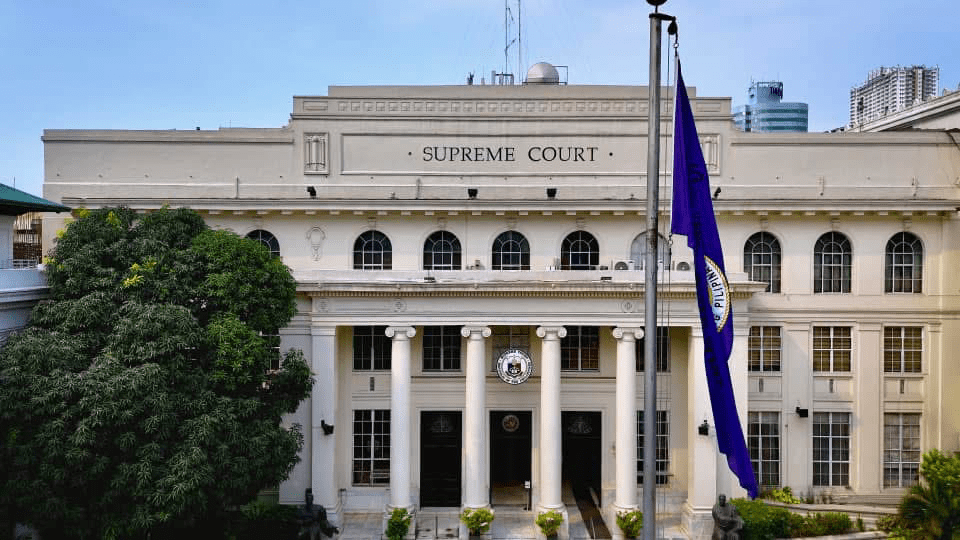
MANILA, Philippines – The Supreme Court (SC) has ruled that the salaries of public officials are not exempt from garnishment and may be legally collected by courts to settle outstanding debts.
In a decision penned by Associate Justice Samuel H. Gaerlan, the SC’s Third Division upheld a lower court ruling allowing the garnishment of Baguio City Councilor Atty. Fred L. Bagbagen’s salary to pay his civil liability to Anna May F. Perez.
While Bagbagen had been cleared of criminal charges for estafa, the Regional Trial Court (RTC) held him civilly liable and ordered him to pay PHP 308,000. The RTC later authorized the garnishment of his salary, which the Philippine Veterans Bank subsequently withheld.
Bagbagen challenged the garnishment, claiming that as a public official, his salary should not be subject to collection, arguing it remained public funds until spent. However, both the RTC and the Court of Appeals rejected this, saying the salary became private property once deposited into his personal account.
Affirming the ruling, the High Court emphasized that no law exempts the salaries of government officials from garnishment. Under Rule 39 of the Rules of Court, both public and private sector salaries can be garnished to fulfill court-ordered obligations.
The SC pointed out that only manual laborers enjoy a limited exemption, protecting up to four months’ worth of wages to ensure their livelihood. Public officials, the Court said, do not fall under this category and must adhere to a higher standard of financial accountability.
“Public officers are constitutionally expected to uphold the highest standards of accountability,” the decision stated. “They are not above the law, especially in matters involving financial responsibility.”
The ruling reinforces that public office is a public trust, and that financial obligations—like court-ordered debts—must still be honored by those in government service.


 Republika News
Leave a comment