
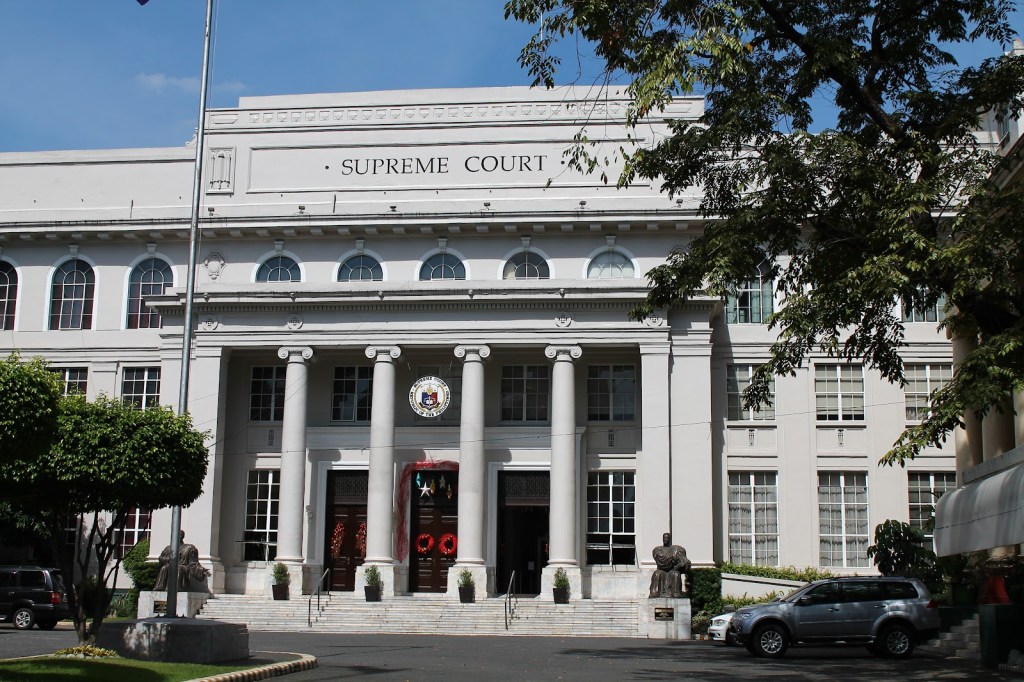
MANILA, Philippines — The Supreme Court has acquitted two men previously convicted of illegal gambling, ruling that police failed to provide sufficient and specific details of the alleged gambling activity.
In a decision penned by Associate Justice Amy C. Lazaro-Javier, the Court’s Second Division overturned the conviction of Robert Plan and Mark Oliver D. Enolva, who were earlier found guilty of violating Presidential Decree No. 1602, which penalizes illegal gambling.
Plan and Enolva were arrested after police received a tip from a concerned citizen alleging they were playing cara y cruz, a traditional coin-toss betting game. The Metropolitan Trial Court convicted the two, sentencing them to nearly three years in prison—a penalty later reduced by the Regional Trial Court to 30 days. The Court of Appeals upheld the conviction.
However, the Supreme Court ruled that the evidence presented was not enough to sustain a conviction.
The Court found that while police officers claimed to have seen “pot money” on the ground, they failed to identify the denomination of the bills or confirm that actual betting took place. The SC emphasized that for a gambling conviction to stand, officers must clearly establish the circumstances surrounding the illegal activity.
“[T]he arresting officers must not only have seen the suspected bettors place their bets. They must testify with certainty on the details of the entire gambling operation, including but not limited to the alleged game being played, the identification of the person administering the bets as well as the identification of the bettors, and the denomination of money being bet,” the Court ruled.
In a concurring opinion, Senior Associate Justice Marvic M.V.F. Leonen supported the acquittal but raised concerns over the unequal enforcement of anti-gambling laws.
He noted that while the government permits gambling in licensed casinos, street-level games like cara y cruz are often met with arrests—creating a disparity that disproportionately affects the poor.
“This unequal treatment of offenders on the basis of wealth is a blatant violation of the social justice clause,” Leonen said, pointing out the contradiction in penalizing informal gamblers while allowing wealthier individuals to engage in gambling through state-regulated establishments.



 Republika News
Leave a comment