
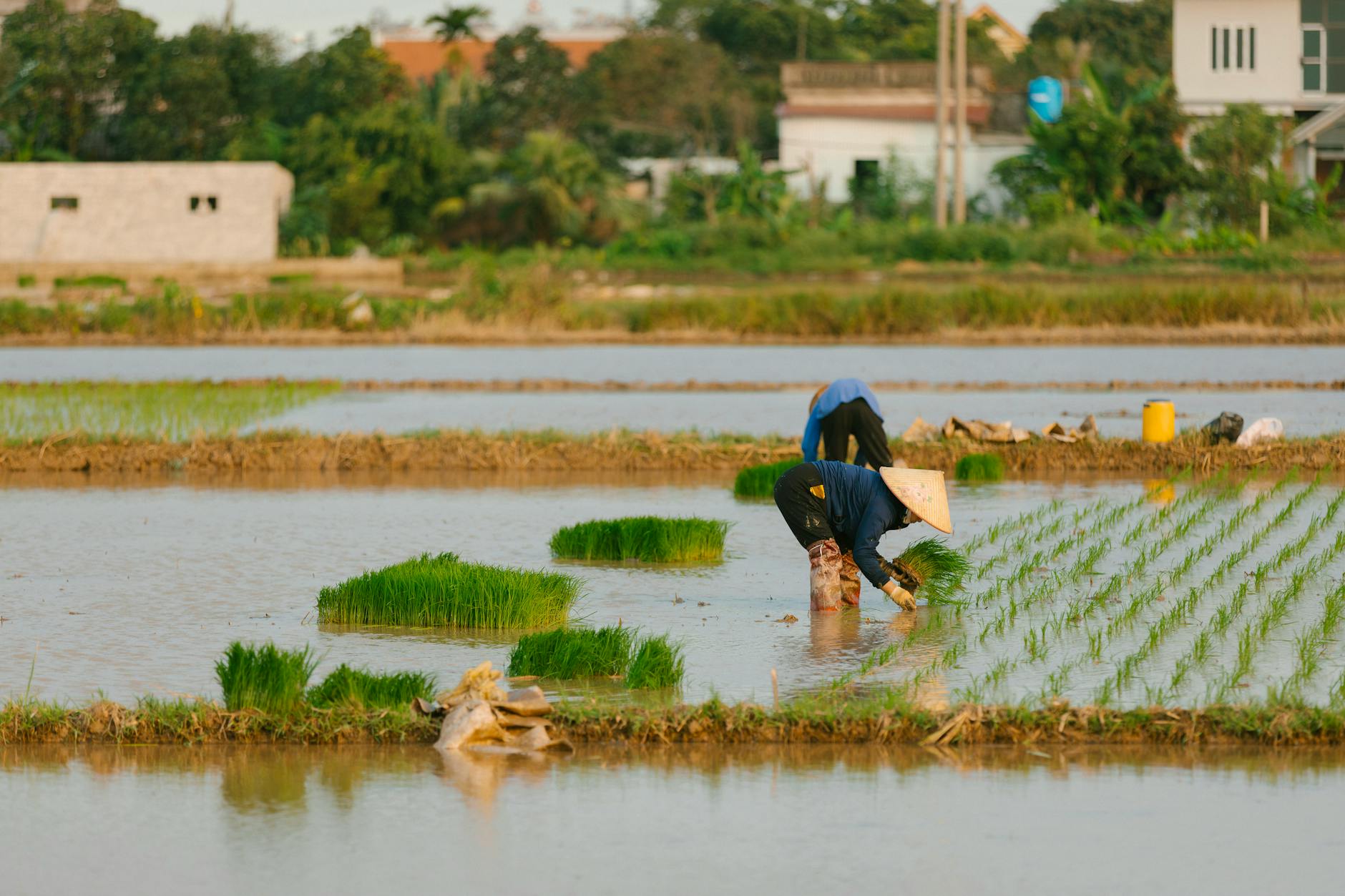
MANILA — Rice farmers saw increased earnings in 2024 despite rising production costs, while the country achieved a stronger national rice buffer stock, the Department of Agriculture (DA) reported Thursday.
Citing Philippine Statistics Authority (PSA) data, the DA said the average farmgate price of palay (unhusked rice) rose to PHP23.48 per kilogram in 2024, up from PHP19.88 in 2023. This pushed the gross return per hectare to PHP95,906 and net return to PHP36,211 — higher than PHP82,914 and PHP26,423, respectively, in 2023.
The net profit-cost ratio also improved to PHP0.61 per kg. of palay sold, compared to PHP0.47 in 2023 and PHP0.20 in 2022.
In a pre-State of the Nation Address (SONA) interview, DA spokesperson Assistant Secretary Arnel De Mesa said the National Food Authority’s (NFA) Price Range Scheme (PRICERS) helped influence traders’ prices.
“Kahit bumaba iyong production natin dahil sa El Niño at La Niña at mga sunod-sunod ng bagyo last year… Nagkaroon naman ng magandang presyo iyong ating mga farmers,” he said.
“Especially naglabas ng resolusyon ng NFA Council na taasan iyong presyo ng buying price sa dry and clean between PHP23 to PHP30.”
The buying price for fresh and wet palay ranged between PHP17 and PHP23 per kg., up from the previous PHP16 to PHP19 per kg. and PHP19 to PHP23 per kg. for wet and dry palay, respectively.
Despite the increased income, farmers also faced higher production costs, mainly due to increased labor expenses. PSA data showed the average cost to produce palay rose to PHP14.52 per kg. in 2024 from PHP13.54 per kg. the previous year.
De Mesa attributed this to cultural practices in the Philippines where laborers, especially during harvesting and threshing, are often paid in kind.
“Unlike other countries, ang binabayad nila sa harvesting ay cash. Sa atin, culturally speaking, ang binabayad natin iyong tinatawag na ikapu, 9 to 10 percent ng total harvest ang ibabayad sa harvesters,” he explained.
“So, kung titignan mo yung 2024 na data, dahil mas malaki iyong presyo ng palay at PHP23.48, in effect, mas lumaki iyong labor cost,” he added.
De Mesa said the DA will study potential adjustments in these practices, while continuing support for mechanization to reduce production costs.
Improved rice buffer stock
The DA also reported a significant improvement in the country’s rice buffer stock, now at 450,660 metric tons (MT) as of July 5 — equivalent to 12 days’ supply — up from just one to two days before President Ferdinand Marcos Jr. took office. The amended Rice Tariffication Law (RTL) sets a target of 15 days’ buffer stock for emergencies.
Higher farmgate prices encouraged more farmers to sell to the government. According to NFA Administrator Larry Lacson, 94,483 farmers have benefited from PRICERS since April 2024.
To support expanded procurement, 18 out of 134 NFA warehouses slated for refurbishment have been rehabilitated in provinces including Pangasinan, Nueva Ecija, Isabela, and Zamboanga del Sur.
DA backs RICE Act
The DA expressed support for the proposed Rice Industry and Consumer Empowerment (RICE) Act, or House Bill No. 1, which seeks to restore NFA’s regulatory powers.
Currently, NFA’s rice distribution is limited to calamity responses, the PHP20 per kg. “Benteng Bigas Meron (BBM) Na” program under Food Terminal, Inc. (FTI), and auctions during a declared food security emergency.
If enacted, the RICE Act would authorize NFA to conduct market interventions using locally procured rice stocks and accredit retailers to sell affordable rice. A floor price may also be set to shield farmers from exploitative traders.
As of July 17, the Samahang Industriya ng Agrikultura (SINAG) reported that wet palay buying prices dropped to as low as PHP5 per kg. in parts of Nueva Ecija.
Agriculture Secretary Francisco Tiu Laurel Jr. has directed the NFA to look into areas with low market prices for possible intervention. (PNA)




 Republika News
Leave a comment