
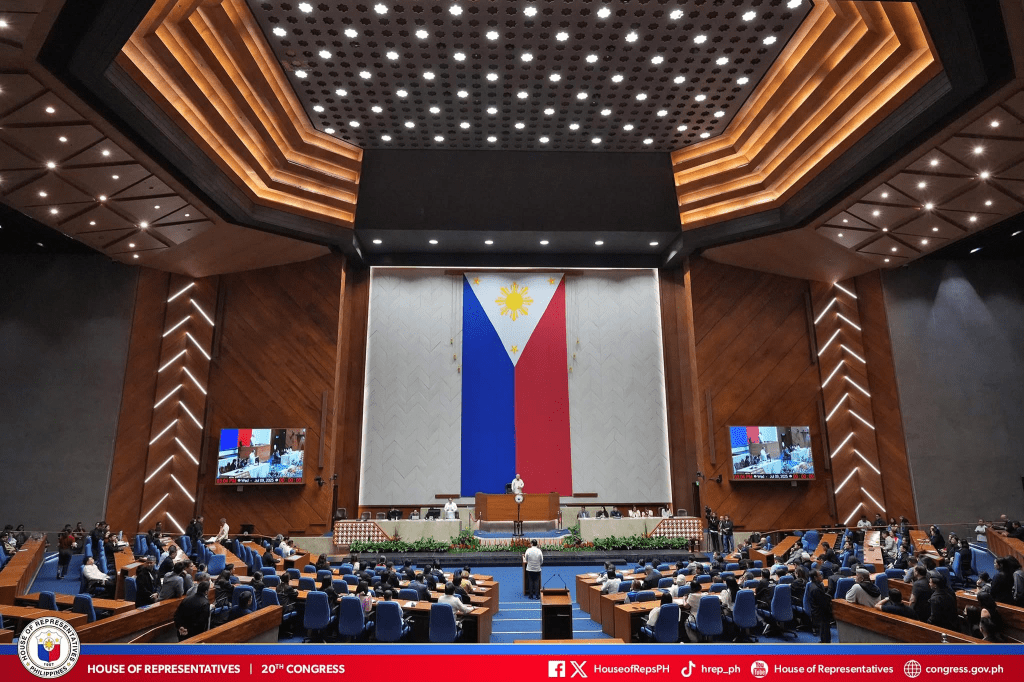
MANILA — The House of Representatives will file a motion for reconsideration before the Supreme Court following its decision to void the impeachment complaint against Vice President Sara Duterte, citing “factual premises” in the ruling that the chamber described as “false” and “contrary to official records.”
In a statement on Sunday, House spokesperson Atty. Princess Abante said the Supreme Court’s decision to strike down the Articles of Impeachment submitted to the Senate was based on “erroneous findings” and a misreading of congressional records.
“Ang Kamara, matapos ang masusing pag-aaral, ay maghahain ng Motion for Reconsideration dahil ang Desisyon—na nagsasabing ang Articles of Impeachment na ipinadala sa Senado ay barred o unconstitutional—ay nakaangkla sa mga factual premises o findings na mali at salungat sa opisyal na rekord ng Kamara,” Abante said.
The SC decision had ruled that the February 5 impeachment complaint was transmitted to the Senate without a plenary vote. This, Abante stressed, was “categorically false.”
“Noong Pebrero 5, 2025, si Majority Leader Mannix Dalipe ang nagmungkahi na ipasa ang Pebrero complaint sa Senado… Ang mosyong ito ay inaprubahan sa plenaryo, at agad ring bumuo ang Kamara ng panel of public prosecutors,” she said, citing House Journal No. 36 and official records of the chamber.
Abante also disputed the Court’s claim that the House failed to act on three earlier impeachment complaints filed in December 2024.
“Ginawa ito [pag-archive ng December complaints] ilang oras bago mag-adjourn ang session, dahil nakumpirma na ang Pebrero complaint ay pirmado at verified ng 1/3 ng mga miyembro ng Kamara,” she said.
According to the House, the February complaint—signed and verified by at least one-third of members—qualified as Articles of Impeachment under the Constitution and should have been transmitted to the Senate, as the House did.
However, the Supreme Court concluded that the February complaint violated the constitutional one-year bar on impeachment, citing inaction on the earlier complaints.
Abante said the Court appeared to have “relied more on a news article” than the House Journal and records submitted to the Court. “Nakababahala na ang Desisyon ay hindi man lang bumanggit o tumugon sa mga dokumentong ito,” she added.
The SC also ruled that due process was violated, arguing that even a verified complaint by one-third of the House should still require each signatory to read it, that it be subjected to another plenary vote, and that the respondent be given a chance to reply before transmittal to the Senate.
“Ngunit wala pong ganitong rekisito sa ating Konstitusyon o sa mga Rules ng Kamara,” Abante said, noting that the ruling effectively imposed new procedural rules not grounded in existing law.
She also invoked the doctrine of operative facts, saying the House relied on jurisprudence from previous Supreme Court rulings in Francisco and Gutierrez, which had guided their process.
“It should also be said—kung due process at opportunity to be heard ang usapan, ilang beses nang naimbitahan si VP Sara Duterte sa mga pagdinig ng Committee upang siya ay mabigyan ng pagkakataong ipaliwanag ang kanyang panig. Ngunit nanatili siyang tikom ang bibig,” Abante said.
The House also warned against what it called an “unacceptable intrusion” into its exclusive constitutional power to initiate impeachment, citing the “very stringent requirements” the Court has now laid out.
“We remain hopeful that once the facts are corrected, the Court will arrive at a different and more just conclusion,” Abante said.
She concluded by emphasizing that the impeachment complaint underwent proper constitutional process and was transmitted with full plenary authority.
“To disregard these facts is not only a disservice to the truth—it is a disservice to the Constitution itself,” she said.




 Republika News
Leave a comment