
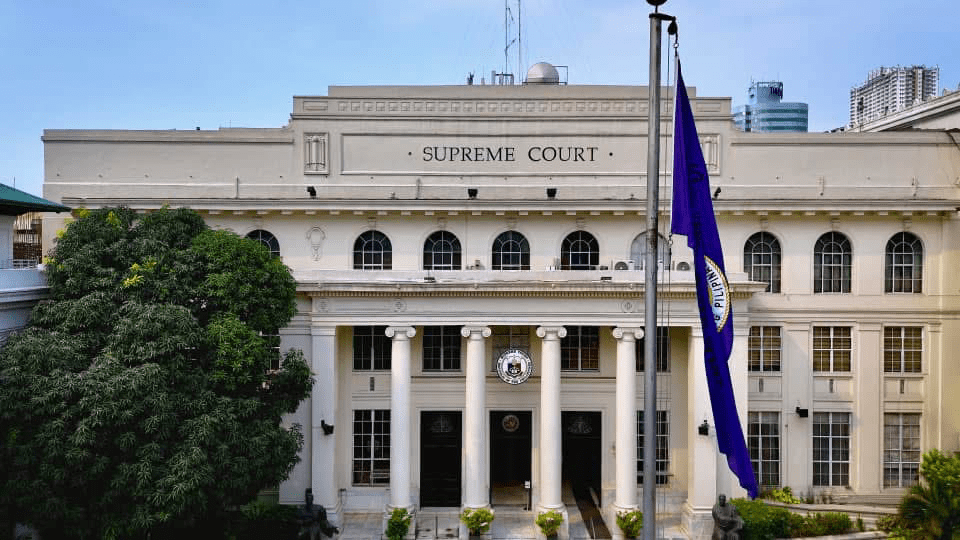
MANILA — The Supreme Court (SC) has ruled that when an arbitration clause in a contract is not strictly worded, it merely gives parties the option — but not the obligation — to resolve disputes through arbitration.
In a Decision penned by Associate Justice Maria Filomena D. Singh, the SC’s Third Division upheld the agreement between the government, through the Bases Conversion and Development Authority and Poro Point Management Corporation, and Bulk Handler’s Inc. and Poro Point Industrial Corporation for the development of a special economic and freeport zone in San Fernando, La Union.
Disagreements between the parties arose several years into the contract. The corporations claimed the government failed to turn over certain project areas as promised. In response, the government questioned the agreement’s validity, citing alleged bidding irregularities. The corporations filed a case before the Regional Trial Court (RTC).
The RTC ruled that the agreement was valid and that the corporations had the right to develop the areas they were already occupying. However, the court also ruled that the government was no longer obligated to turn over the remaining areas and accordingly reduced the agreed annual payment.
The government appealed the RTC’s ruling, arguing that the matter should have gone through arbitration in line with the contract’s dispute resolution clause. The corporations, however, argued that arbitration was not appropriate since the government had itself questioned the validity of the agreement.
The SC sided with the RTC, affirming that the wording of the agreement’s arbitration clause—“shall have the right to have the dispute settled by binding arbitration”—makes arbitration an option and not a mandatory requirement.
The Court clarified that such language allows parties to seek other legal remedies, including going to court. “Like any right, the option to arbitrate may be exercised or waived,” the SC said.
It added that arbitration remains available even if one party questions the contract’s validity. In this case, although the government challenged the validity of the agreement, the corporations still had the option to arbitrate to enforce its terms.



 Republika News
Leave a comment