
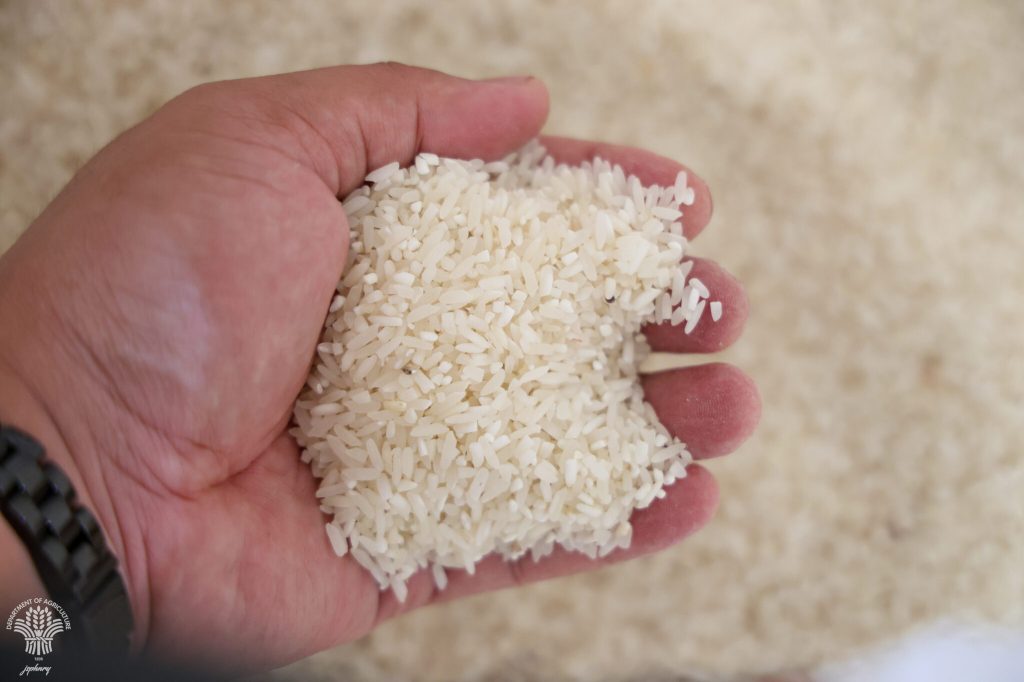
MANILA—Agriculture Secretary Francisco P. Tiu Laurel Jr. has directed the Rice Industry Development Office (RIDO) to study the apparent shift in Filipino rice preferences, as demand for imported rice—particularly from Vietnam—continues to rise.
Secretary Tiu Laurel said the trend could reflect a change in consumer priorities, with more Filipinos choosing quality over quantity when it comes to texture, aroma, and overall eating experience.
“This trend is worth watching. It may be telling us something important about what Filipino consumers are looking for,” he said. “It may now be a question of quality over quantity, and that could require a shift in our agricultural policy.”
RIDO, led by Undersecretary Christopher Morales, was tasked to conduct a comprehensive review of consumer behavior and rice preferences to help local farmers and millers adapt to evolving market demands, improve grain quality, and explore export potential.
Morales noted that preliminary studies already show locally available inbred rice can compete with imported varieties. “I think, in terms of quality, we have the varieties to compete with imported rice—if that is what the market requires,” he said.
He cited a recent analysis by the Rice Chemistry and Food Science Division and Dr. Flordeliza Bordey of PhilRice, which compared Vietnam’s award-winning Soc Trang 25 (ST25) with Philippine inbred rice. Several local varieties under the Rice Competitiveness Enhancement Fund (RCEF) program—including Rc 218, Rc 160, Rc 480, and Rc 512—were found to have similar traits to the premium Vietnamese type. Some hybrid varieties released by the National Seed Industry Council (NSIC) also compare favorably.
The initiative is being carried out through the Masagana Rice Industry Development Program and the OneRicePH Project, jointly implemented by the Philippine Rice Research Institute, University of the Philippines Los Baños, and the International Rice Research Institute.
Vietnam’s ST25, awarded as the world’s best rice in 2019, is prized for its taste, pandan-jasmine aroma, long slender grains, short cultivation period, and resistance to salinity and disease.
Vietnam remains the Philippines’ top rice supplier, accounting for 74 percent of imports last year. The Vietnam Trade Office in Manila said the most popular Vietnamese varieties in the country are DT8 and OM5451.
Thirteen local rice types, including Rc 160, are being eyed as potential models for breeding high-yield, premium-quality Philippine rice that can compete with imports both domestically and globally.




 Republika News
Leave a comment