
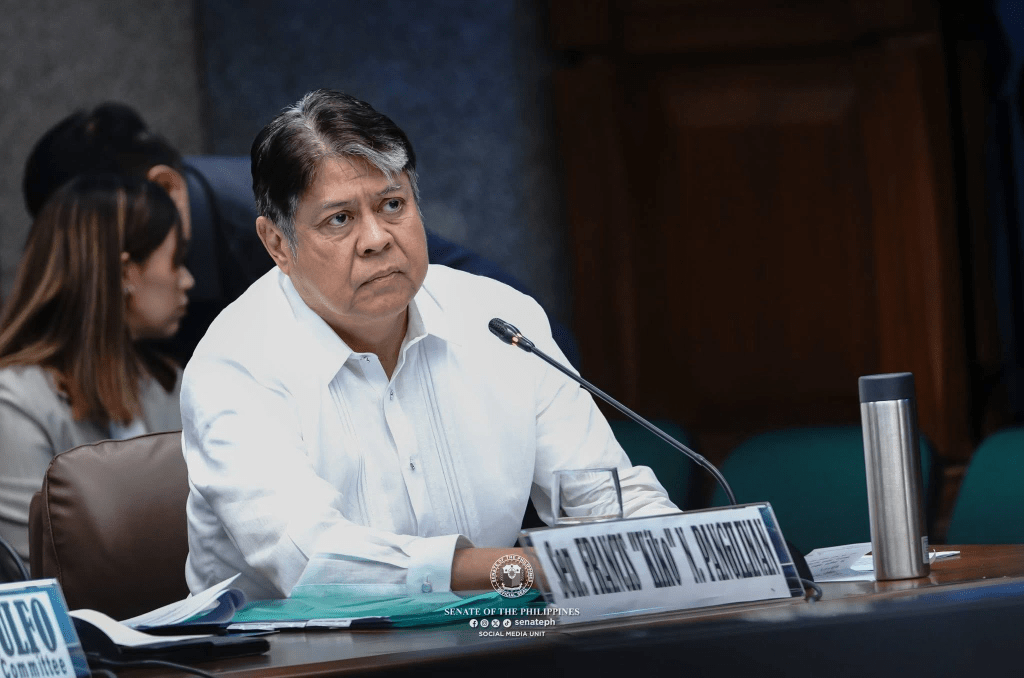
MANILA—Senator Francis “Kiko” Pangilinan called on government agencies and the agricultural sector—including farmers, fisherfolk, agri-entrepreneurs, and stakeholders—to unite and push for reforms critical to national food security, rural development, and economic resilience.
Speaking as the head of the Senate Committee on Agriculture, Food, and Agrarian Reform, Pangilinan highlighted the urgent need for systematic changes in the sector amid persistent challenges such as climate change, food inflation, outdated infrastructure, limited access to support, and an influx of imported goods.
“We can no longer afford to be passive observers. The time has come for the agricultural sector to rise, to organize, and to demand the support and reforms that are long overdue. And we must do it with resolve, unity, and vision,” Pangilinan said.
The senator, a long-time advocate for rural development and former presidential assistant on food security and agricultural modernization, met with President Ferdinand “Bongbong” Marcos Jr., Executive Secretary Lucas Bersamin, Department of Agriculture (DA) Secretary Francisco Tiu Laurel, and Department of Agrarian Reform (DAR) Secretary Conrado Estrella III at Malacañang Palace on Thursday, September 25.
During the meeting, Pangilinan presented a five-point agenda aimed at addressing current agricultural challenges. Key points include:
- The creation of the Congressional Commission on Agriculture, Fisheries, and Food Security (AGRICOM) Act to recommend evidence-based policy reforms ensuring food security, improving productivity, and promoting sustainability.
- Review and possible amendments to the Rice Tariffication Law (RTL) to better monitor rice supply, curb exploitative trading practices, and provide direct support to farmers.
- Passage of the Agriculture and Fisheries Extension Act of 2025 and the Agricultural Cooperatives Act of 2025 to strengthen extension services and empower farmers through cooperatives.
- Full implementation of Republic Act No. 11321 (Sagip Saka Act), enabling government agencies and local government units to purchase food directly from accredited farmers and fisherfolk without public bidding, alongside initiatives such as the Free Breakfast Program and Sustainable Agriculture Act, which require 50% of school food requirements to come from local producers.
- Presidential support for key initiatives, including certifying the Agricultural Land Conversion Ban Act as urgent, overseeing implementation of the Anti-Agricultural Sabotage Act, filing economic sabotage cases against abusive traders, and tapping over 25,000 agriculture degree holders to fill DA vacancies in extension services and cooperatives.
President Marcos agreed to issue two executive orders establishing a floor price for palay purchases by government agencies and local government units and for the full implementation of the Sagip Saka Act. Malacañang also endorsed a review of the National Food Authority’s charter, pushing for RTL amendments, creation of AGRICOM 2.0, and strengthening of the Cooperative Development Authority and DA extension services to help farmers consolidate into cooperatives.
Pangilinan thanked the President, Executive Secretary Bersamin, and Secretaries Tiu and Estrella for their commitment to boosting the country’s agricultural sector and addressing long-standing challenges.



 Republika News
Leave a comment