
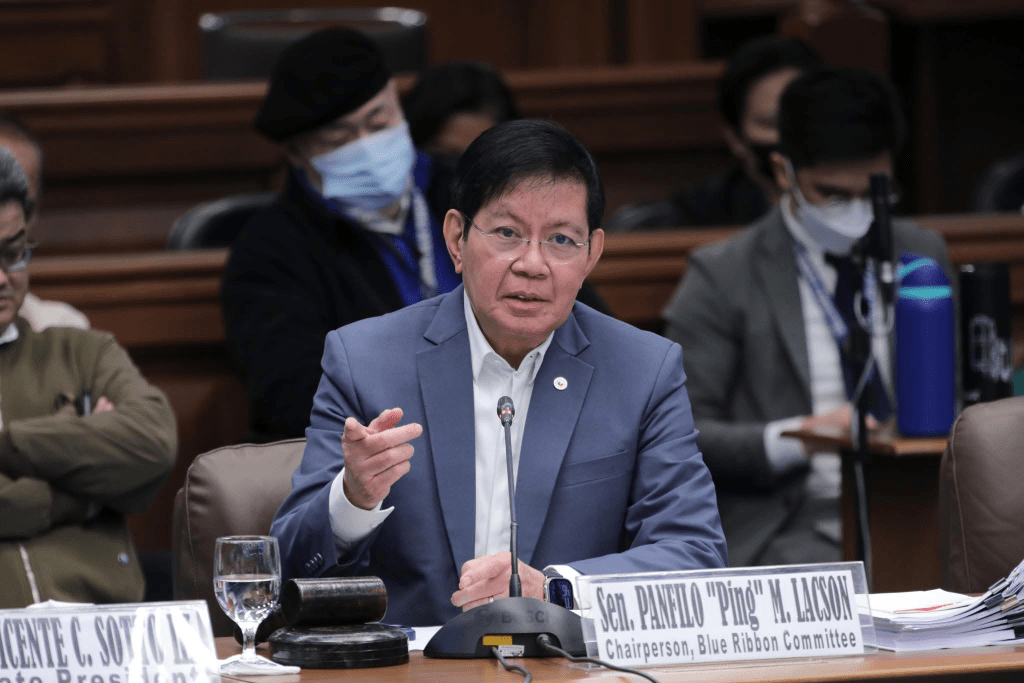
MANILA – Senate President Pro Tempore Panfilo “Ping” Lacson said that the Manila Regional Trial Court (RTC) may help clarify questions surrounding the affidavit of Orly Guteza, the “surprise witness” at the Senate Blue Ribbon Committee hearing last Thursday.
Lacson, who chairs the panel, noted that part of the RTC executive judge’s function is to investigate violations involving notarized documents within its jurisdiction.
“The Manila RTC can help unravel the mystery behind the now (in)famous Guteza affidavit since part of the executive judge’s function is to investigate violations relating to notarized documents within its jurisdiction. Was he just made to sign a prepared affidavit that he read during the committee hearing, and by whom?” Lacson posted on X.
Lawyer Petchie Rose Espera, whose name and signature appeared in the affidavit, earlier denied any involvement, saying the notarial details attributed to her were “falsified and unauthorized.”
During Thursday’s hearing, Sen. Rodante Marcoleta introduced Guteza, who he said was referred to him by ex-Rep. Michael Defensor, without prior courtesy notice to the committee chair. Marcoleta asked Guteza if his sworn statement was duly notarized, to which Guteza replied yes. At several points, Marcoleta was observed prompting Guteza on portions of his affidavit.
Lacson, meanwhile, dismissed Marcoleta’s earlier claim questioning his impartiality, saying he merely gave a personal opinion in a television interview. “Impartiality, my foot!” Lacson said, stressing that credibility is not absolute as a witness “can be credible in one thing and not credible in another.”
On Friday, Guteza failed to meet Justice Secretary Jesus Crispin Remulla after earlier seeking witness protection. The Department of Justice is also reviewing Espera’s denial of involvement in the affidavit.
Two of Guteza’s former colleagues, Mark Bunagan and Allan Colesio, have likewise disputed his claims of alleged cash deliveries to the houses of Romualdez and Co. In their sworn affidavits, both men said they were willing to testify before the Senate or in court.




 Republika News
Leave a comment