
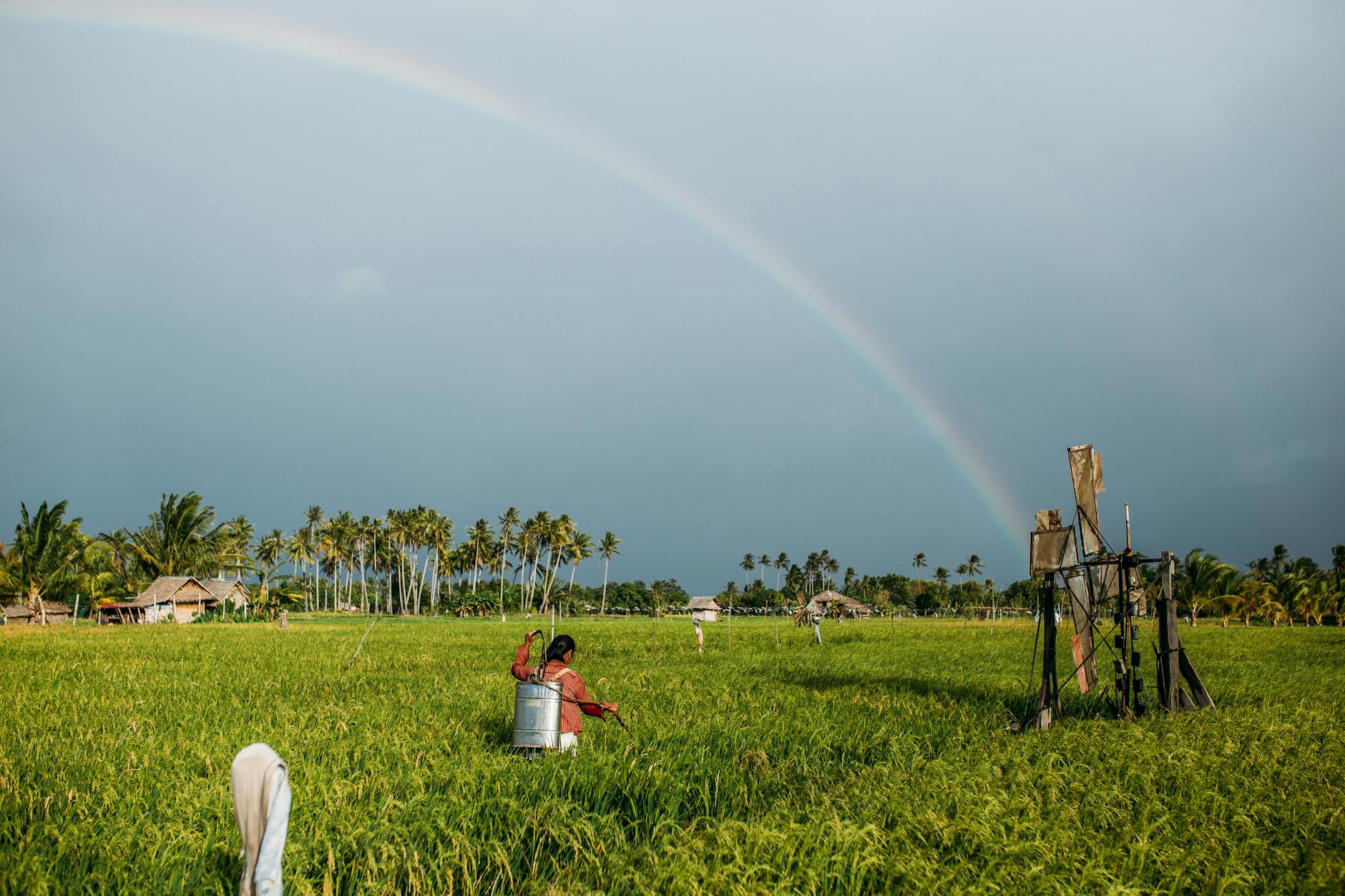
MANILA – Agriculture Secretary Francisco P. Tiu Laurel Jr. is calling on Congress to significantly increase the government’s crop insurance subsidy to provide coverage for up to 4.2 million agricultural workers—most of them rice farmers—by 2026.
Currently, only 2.3 million farmers are insured under the Philippine Crop Insurance Corporation (PCIC), with rice farmers accounting for 1.25 million. The PCIC offers a maximum coverage of P20,000 per hectare for rice, roughly a third of the estimated average production cost of P60,000 per hectare.
“PCIC’s current subsidy level is simply inadequate,” Tiu Laurel said. “We need to insure more farmers at realistic levels that reflect the true cost of production, especially as climate change and market volatility continue to impact the sector.”
Under the proposed 2026 General Appropriations Act, the PCIC’s subsidy remains at P4.5 billion—the same level since 2022. Tiu Laurel warned that stagnant funding limits the government’s ability to shield farmers from growing risks.
“To insure 4.2 million farmers, we need about P8 billion. That means we’re short by P3.5 billion,” he said. “Of the 4.2 million farmers we aim to cover, 2.2 million will be rice farmers—an increase of nearly a million from the current number.”
The agriculture chief emphasized that expanding insurance coverage is a strategic investment in national food security. He said a well-funded PCIC can provide a stronger safety net for smallholder farmers, who face rising input costs and increasingly unpredictable weather.
“Crop insurance isn’t just a financial product—it’s a critical lifeline,” Tiu Laurel said. “When typhoons, droughts, or pest outbreaks hit, insured farmers can recover faster and get back to planting. Without it, many are left in debt or forced to abandon farming altogether.”
He urged lawmakers to prioritize agricultural resilience in the national budget, noting that a robust insurance system is essential for stabilizing rural incomes, encouraging sustained production, and safeguarding the country’s food supply.



 Republika News
Leave a comment