
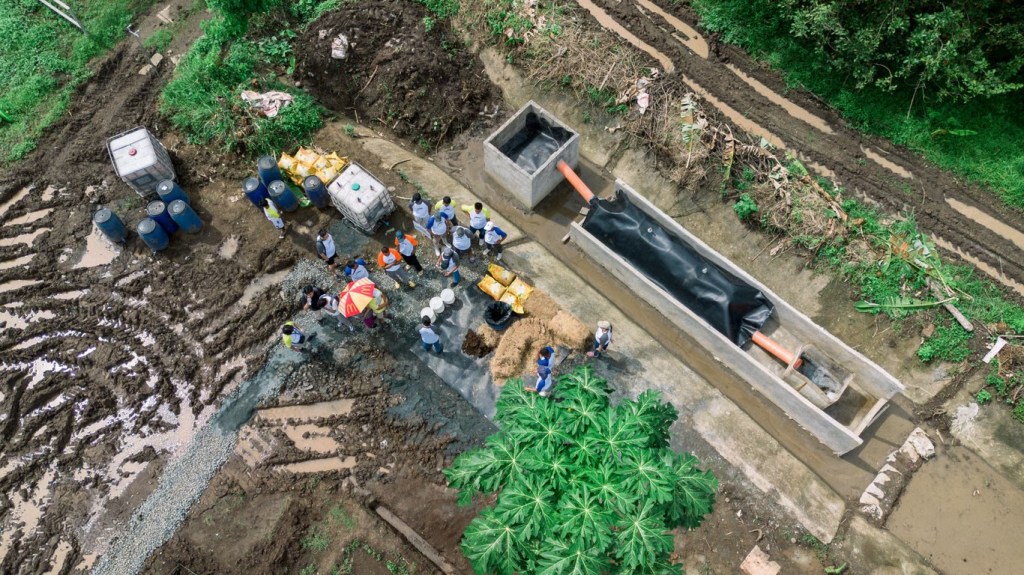
MANILA – The Philippines’ first Rice Straw Bioenergy Hub was launched in Pila, Laguna on October 7, bringing together national and local leaders, international partners, and farmers to showcase innovations that convert rice straw into renewable energy and other valuable products.
The hub aims to demonstrate how rice straw—a common by-product of rice farming often burned in open fields—can be transformed into biochar, soil amendments, livestock bedding, and renewable energy, addressing key challenges in agriculture such as greenhouse gas emissions, high production costs, and low farmer incomes.
Among the attendees were British Embassy Manila Economic and Climate Counsellor Lloyd Cameron, Department of Agriculture (DA) Region IV-A Executive Director Fidel L. Libao, Laguna Committee on Agriculture Chair Karla Adajar-Lajara, and representatives from various DA agencies, local governments, and farmer organizations.
Developed by Straw Innovations Inc. with partners including Aston University, SEARCA, Koolmill Systems, Takachar, and Innovate UK, the Hub demonstrates a practical model for upcycling rice straw into sustainable and profitable ventures for rural communities.
Technologies showcased
During the launch, participants witnessed live demonstrations of:
- Straw Traktor®, a 3-in-1 machine that collects straw even in wet fields while spreading soil amendments and preparing land;
- Takavator™ by Takachar, a portable device that converts rice straw into biochar for soil improvement and carbon credit generation;
- Koolmill, an energy-efficient rice mill that uses up to 90% less power and reduces grain breakage; and
- Biogas production systems that turn low-quality straw into clean energy for rural areas.
The hub also promotes a farmer-centered model by making machinery financially accessible. Some pilot operators have already improved their incomes, renovated their homes, and supported their families’ education through straw-related enterprises.
Government and institutional support
Collaboration with government agencies such as the DA, Department of Energy (DOE), Department of Environment and Natural Resources (DENR), and Department of Science and Technology (DOST) is key to expanding the initiative, alongside municipal agriculture offices in Laguna and nearby provinces.
“DA-CRAO welcomes partnerships that can help integrate rice straw solutions into local programs and pilots, supporting productivity, emissions reduction, and rural livelihoods,” said Director Agnes Catherine Miranda of the DA’s Climate Resilient Agriculture Office.
SEARCA Director Dr. Mercedita Sombilla said the project “will not only contribute to reduction of greenhouse gas emissions but also enable communities to turn agricultural wastes into livelihood opportunities that increase incomes.”
Meanwhile, Cameron of the British Embassy Manila said:
“When UK science meets Philippine innovation, rice straw becomes more than a byproduct—it becomes part of the solution. That partnership lies at the core of the Rice Straw Bioenergy Hub.”
Climate and food security impact
Rice farming sustains over 115 million Filipinos but is also the country’s largest source of methane emissions due to widespread straw burning. The hub’s technologies, such as the Straw Traktor® and Takavator™, help halve methane emissions, improve soil health, and generate new revenue for farmers.
By transforming rice straw into energy and soil-enhancing materials, the initiative supports the Philippines’ Nationally Determined Contributions (NDCs) under the Paris Agreement—cutting emissions while strengthening food security and rural livelihoods.
The Rice Straw Bioenergy Hub marks a step toward low-emission, regenerative agriculture, proving that with innovation and collaboration, agricultural waste can power communities and drive climate resilience.


 Republika News
Leave a comment