
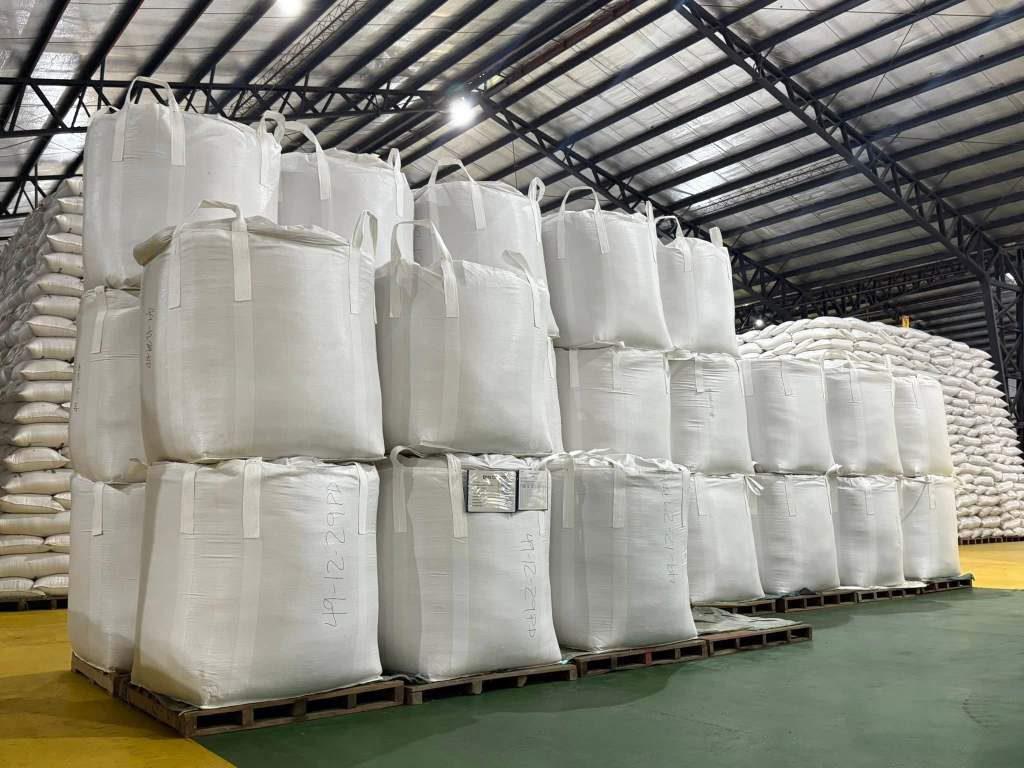
MANILA – The National Food Authority (NFA) on Friday, October 17, began pilot testing a 1-tonner bagging system for palay to reduce storage costs, increase warehouse capacity, and improve grain quality preservation.
“This is part of our broader effort to upgrade NFA’s storage capacity with minimal cost to the government,” said Agriculture Secretary Francisco P. Tiu Laurel Jr., who also chairs the NFA Council. “By maximizing existing warehouse space, we can procure more palay from farmers and help address post-harvest losses.”
The initiative aligns with President Ferdinand Marcos Jr.’s vision of building a modern, efficient agricultural system that ensures food security and delivers better income for Filipino farmers.
According to NFA Administrator Larry Lacson, the pilot test will begin in at least three warehouses nationwide. “This trial will provide us with critical data to determine whether the technology is viable for broader implementation,” he said.
The NFA operates more than 300 warehouses across the country, some of which are undergoing upgrades to handle larger volumes of palay and milled rice, and potentially corn, pending legislative amendments.
The 1-tonner bagging system offers several advantages over traditional storage methods. The airtight bags help preserve grain quality by protecting against moisture, heat, insects, and rodents. They also reduce storage and transport costs, simplify grain segregation, improve pest control, and lessen the strain on warehouse infrastructure.
Lacson estimated that the new system could increase warehouse capacity by up to 30 percent, resulting in faster returns on investment.
“There will also be savings in manpower, fumigation, and sack costs,” he added.
The NFA currently spends about ₱15 per printed sack, plus labor costs per bag. At full capacity, an NFA warehouse with a maximum of eight piles can store up to 55,440 50-kilogram bags—underscoring the potential scale of savings and efficiency gains through the use of the 1-tonner bag system.

 Republika News
Leave a comment