
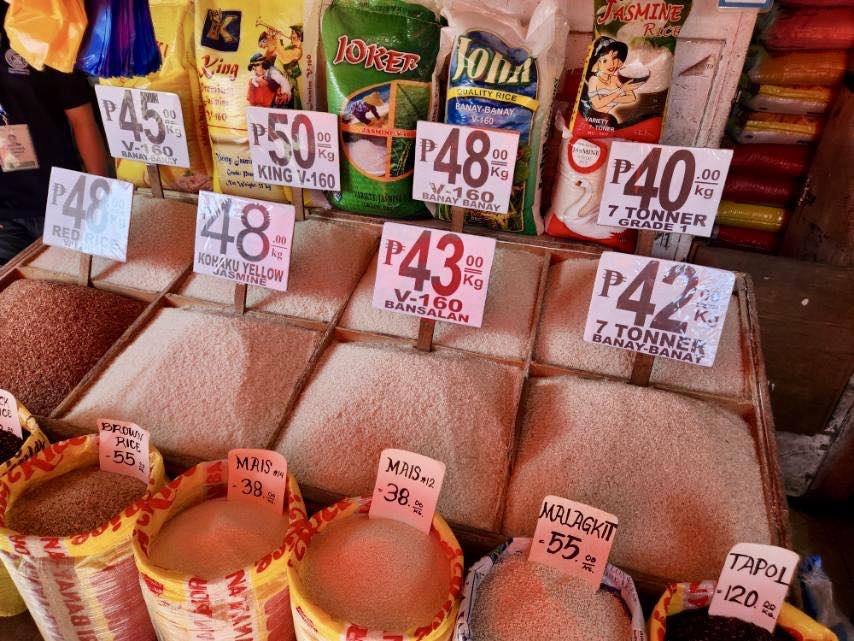
MANILA – Agriculture Secretary Francisco P. Tiu Laurel Jr. has directed tighter market monitoring to ensure compliance with the ₱43 per kilo maximum suggested retail price (MSRP) on imported rice, even amid the ongoing suspension of rice importation.
“Teams from AMAS (the Agribusiness and Marketing Assistance Service) will visit markets where price increases on imported rice have been reported. If the complaints are validated, retailers will be issued show cause orders,” Tiu Laurel said.
He assured that the supply of imported rice remains sufficient, even if the import freeze is extended.
During a Senate Committee on Agriculture and Food hearing, Tiu Laurel revealed that the country ended 2024 with an excess rice import volume of about 1.2 million metric tons, as traders took advantage of lower global rice prices and tariffs. Another 800,000 metric tons were imported during the first nine months of 2025.
President Ferdinand Marcos Jr. is expected to extend the two-month import suspension through December, a move originally intended to help stabilize palay farmgate prices, which dropped to as low as ₱8 per kilo in some areas due to oversupply, high production, and weather-related crop losses.
While demand for premium imported rice has increased, Tiu Laurel said prices should still stay within the ₱43 MSRP for 5 percent broken rice.
“There are still imported and local rice varieties selling for as low as ₱33 to ₱38 per kilo. Consumers just need to be more discerning in choosing where they buy,” he added.
For low-income households, the Department of Agriculture (DA) continues to implement its Rice-for-All initiative and the ₱20 per kilo rice program through KADIWA ng Pangulo centers and selected National Food Authority (NFA) warehouses.
Assistant Secretary Genevieve Velicaria-Guevarra, who oversees AMAS and the KADIWA program, said letters will be sent to four Metro Manila markets where higher rice prices have been reported.
“We will conduct site visits to assess compliance and determine what actions may be taken if imported rice is being sold above the MSRP,” Guevarra said.
She added that aside from market inspections, AMAS will also monitor warehouses to assess current rice supply levels.




 Republika News
Leave a comment