

MANILA — The Second Congressional Commission on Education (EDCOM 2) has called for a review of Republic Act No. 9155, or the Governance of Basic Education Act of 2001, to address disparities in the distribution and workload of school division offices (SDOs) across the country.
In a hearing with the Department of Education (DepEd), EDCOM 2 found that some SDOs oversee far more schools and personnel than others, resulting in unequal access to resources, staff, and support for students and teachers.
Under Section 7 of RA 9155, “a division shall consist of a province or a city which shall have a schools division superintendent,” who is responsible for hiring and evaluating division supervisors, school district supervisors, and other teaching and non-teaching personnel.
However, EDCOM 2’s study revealed wide disparities among more than 200 SDOs nationwide. For instance, among large divisions, Leyte supervises 1,363 schools, while Caloocan City manages only 319. Cebu, the largest division in the country, oversees 1,346 schools, while Batanes has only 28.
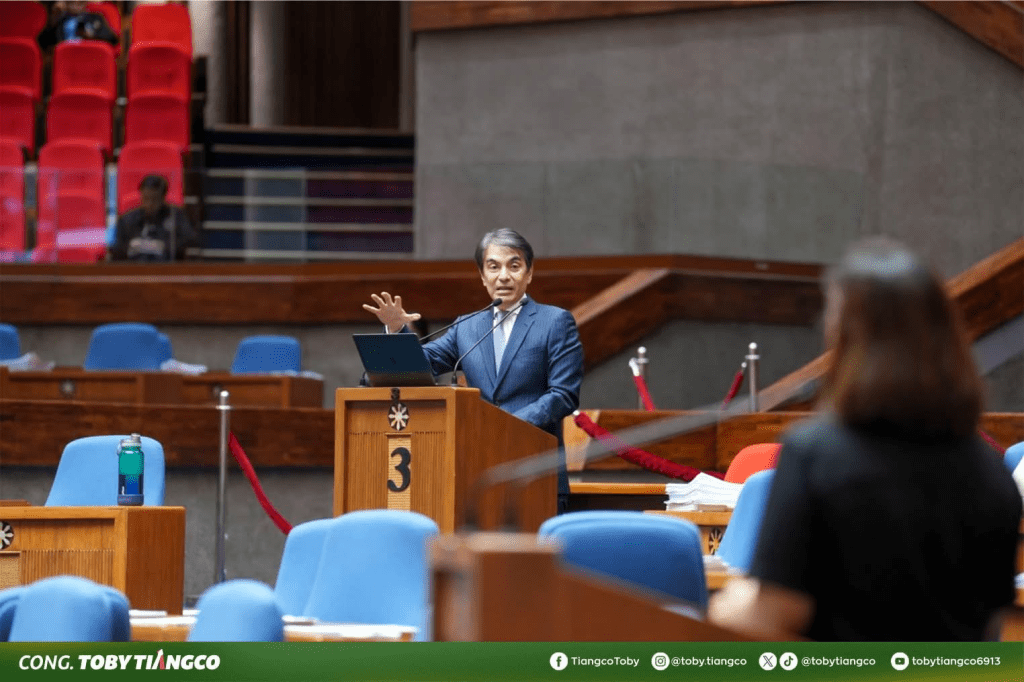
EDCOM 2 Co-Chairperson Rep. Roman Romulo said there is a need to correct the imbalance. “Do you need a law to create a new school division, or can DepEd do that on your own? What is the perfect ratio — staff to student ratio — and what do you plan to do?…Is anyone in charge of taking a look at this already to propose to the Secretary or probably to Congress on the perfect ratio? What do you plan to do?” he asked.
DepEd Undersecretary for Legal and Legislative Affairs Atty. Filemon Javier said the law’s current wording limits the Department’s ability to establish new divisions. “Because the provision explicitly says that a division shall consist of a province or a city, it implies that there’s only one division in a province or a city,” he explained.
He added that this restriction prevents DepEd from adjusting to population growth or the increasing number of schools in certain areas.
Passed in 2001, RA 9155 decentralized DepEd’s functions to empower schools and local divisions, shifting away from the “memocracy” system cited in the 1990s EDCOM 1 Report, where local actions heavily relied on memoranda from the central office.
Under the law, the Central Office retains policy-making authority, while regional offices are tasked with ensuring compliance and conducting research and planning.
EDCOM 2 Commissioner Rep. Steve Solon suggested allocating more staff to existing divisions. “Can’t you just add more staff to the existing offices?” he said.
DepEd Secretary Sonny Angara responded, “I guess that’s what we’re trying to do, Cong. Steve. But I think the opinion is that 1,300 schools is too much for one official to oversee — that’s the crux of it.”
Romulo urged DepEd to submit its proposed amendments and budgetary requirements to the Commission. “Just give us the amendment for you to be able now to be able to craft it later on — ‘yung pag-divide ninyo. Ano ‘yung ideal,” he said.
Javier suggested that adding the word “within” to the law’s provision could grant DepEd flexibility to create divisions “within” provinces or cities when necessary.
EDCOM 2 Co-Chair Senator Loren Legarda reminded DepEd to coordinate with other agencies in crafting its proposal. “Remember, when we legislate this, we will need to coordinate closely with the Department of Budget and Management (DBM) for the availability of plantilla positions when we create a new division,” she said. “So along with the recommendation for the proposed measure, let’s also see how many plantilla positions and the commensurate budget needed.”



 Republika News
Leave a comment