
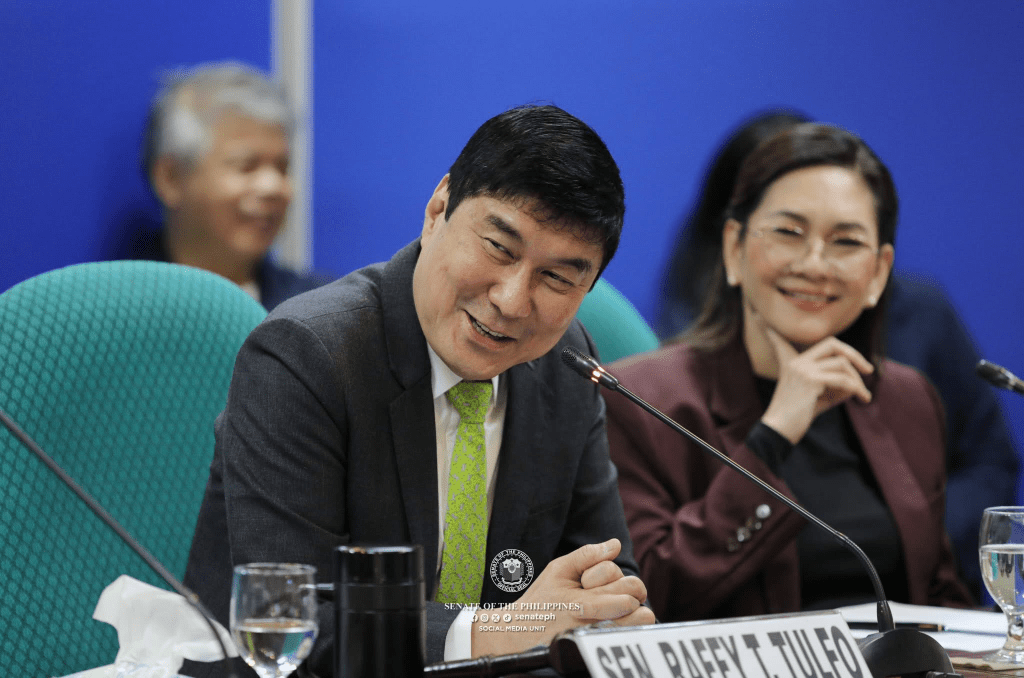
MANILA—Senator Raffy Tulfo called for increased government support for children with disabilities, highlighting gaps in services and the need for early intervention during a privilege speech delivered on the International Day of Disabled Persons.
“Today is International Day of Disabled Persons. It seems that the universe intended for me to deliver this privilege speech today to open our eyes to what families with disabled children are going through,” Tulfo said.
Tulfo discussed his recent review of Project Aruga, a Department of Social Welfare and Development (DSWD) program providing disability-inclusive social protection. In 2025, Project Aruga had 400 beneficiaries and a P44 million budget, with a target of 1,200 beneficiaries for 2026. The senator said he is pushing for an additional P40 million to expand the program and raise financial support for more families.
“Agad kong naireport ito sa ating mga kababayan. Madami po ang natuwa sa mas mataas na allowance dahil ma-iibsan talaga ang kanilang financial shortage,” he said, but stressed that other urgent issues still need attention.
Tulfo detailed the challenges families face in raising children with disabilities, including difficulties in obtaining diagnoses, limited access to developmental pediatricians and therapy centers, and the high cost of care. He cited a 2022 UNICEF-DSWD study showing that households with children with disabilities spend 40 to 80 percent more than other families, and poverty rates are 50 percent higher among these households.
“Sa simula pa lang, when parents begin to notice some developmental issues with their children, hirap na sila makakuha ng tamang diagnosis at medical confirmation…There is a lack of education for parents regarding signs to look out for if their child has mental disabilities,” Tulfo said.
He also noted gaps in existing programs and laws, including limited coverage of disability ID cards, scarcity of specialty healthcare centers, and the exodus of medical professionals needed to provide interventions.
To address these challenges, Tulfo proposed several measures:
- Strengthening the Department of Health’s registry of children with disabilities to streamline access to services.
- Expanding PhilHealth coverage to include assistive devices and increase the network of accredited facilities.
- Enhancing training and compensation for medical professionals, guidance counselors, and special education assistants, while also providing training for at-home caregivers.
- Adjusting eligibility assessments and financial support in programs like Project Aruga to reflect the higher costs of raising children with disabilities.
“Children with disability enter this world at a disadvantage. Ang realidad po talaga ay habang sila ay bata nandiyan ang kanilang mga magulang upang alagaan sila, pero darating po ang araw na kailangan nila tulungan ang sarili nila, otherwise, they will be the responsibility of the government,” he said.
Tulfo also highlighted his Autism Bill (SBN No. 1430) filed under the 20th Congress, which seeks to institutionalize long-term support, research, and coordinated care for persons with autism and their families.
“I hope that this legislation, together with strengthened programs across our social welfare and health agencies, will push our government toward a more inclusive and equitable future for all children with disabilities,” he said.




 Republika News
Leave a comment