
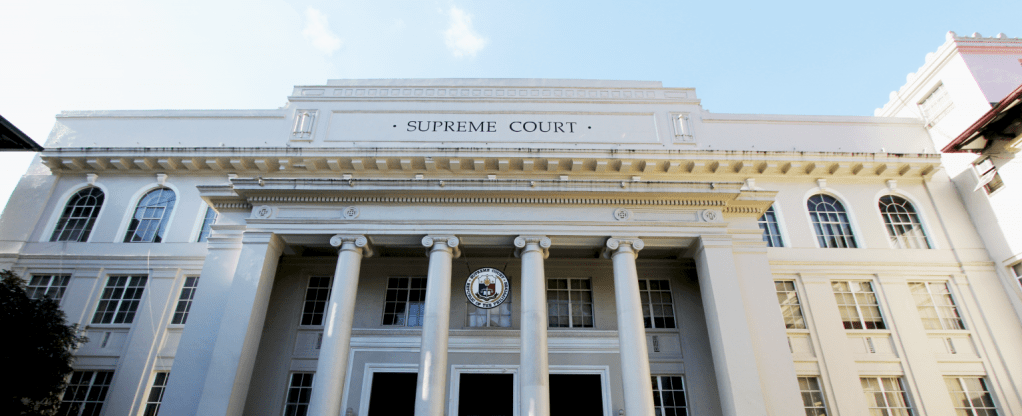
MANILA — The Supreme Court (SC) has ruled that the Commission on Elections’ (Comelec) unreasonable delay in investigating an alleged election offense violated a mayoral candidate’s constitutional right to the speedy disposition of his case.
In a decision written by Associate Justice Ricardo R. Rosario, the SC En Banc nullified the Comelec resolution that found probable cause to charge Petronilo Solomon Sarigumba for alleged violation of the Omnibus Election Code.
Sarigumba lost the mayoral race in Loboc, Bohol, during the May 2010 elections. A month after the polls, he filed his Statement of Election Contributions and Expenditures (SOCE), as required by law.
Four years later, the Comelec Campaign Finance Unit asked Sarigumba to explain his alleged overspending based on his SOCE. After he submitted his explanation, the unit filed a complaint against him before the poll body in December 2014.
The case was set for preliminary investigation on April 14, 2015, but Sarigumba sought several postponements due to illness. The Comelec Law Department later directed him to submit a counter-affidavit on July 11, 2015, which he failed to file.
More than six years later, the Comelec En Banc adopted the Law Department’s recommendation and issued a resolution finding probable cause to charge Sarigumba with election overspending before the Regional Trial Court.
Sarigumba elevated the case to the SC, arguing that the Comelec was guilty of undue delay in investigating his case, thereby violating his right to the speedy disposition of cases.
The Comelec countered that the 20-day period for preliminary investigation under its Rules of Procedure begins only upon the respondent’s submission of a counter-affidavit. It also argued that Sarigumba had waived his right by failing to participate in the proceedings and by raising the issue only years later.
The SC rejected these arguments.
Citing Article III, Section 16 of the Constitution, the Court stressed that all persons are guaranteed the right to the speedy disposition of cases before judicial, quasi-judicial, and administrative bodies, and that cases must be dismissed when this right is violated.
The SC explained that under the Comelec Rules of Procedure, a preliminary investigation should be completed within 20 days after receipt of the counter-affidavit or after the lapse of the period to file one, with a resolution to be issued within five days thereafter.
The Court noted that more than six years had passed since Sarigumba was required to submit his counter-affidavit, yet the Comelec failed to resolve the case within the timeframes set by its own rules. His failure to submit a counter-affidavit did not justify the poll body’s prolonged inaction, as any delay after the filing period had lapsed was attributable to Comelec.
The SC further observed that the Comelec offered no justification for the delay, noting that the case was not complex and was based solely on Sarigumba’s SOCE.
The Court also ruled that Sarigumba could not be faulted for invoking his right only after receiving the Comelec resolution years later, stressing that respondents are not duty-bound to follow up on the progress of their cases.
“It is the duty of the prosecutor to speedily resolve the complaint, as mandated by the Constitution, regardless of whether the petitioner did not object to the delay or that the delay was with his acquiescence provided that it was not due to causes directly attributable to him,” the Court said.
The SC consequently dismissed the case against Sarigumba.




 Republika News
Leave a comment