
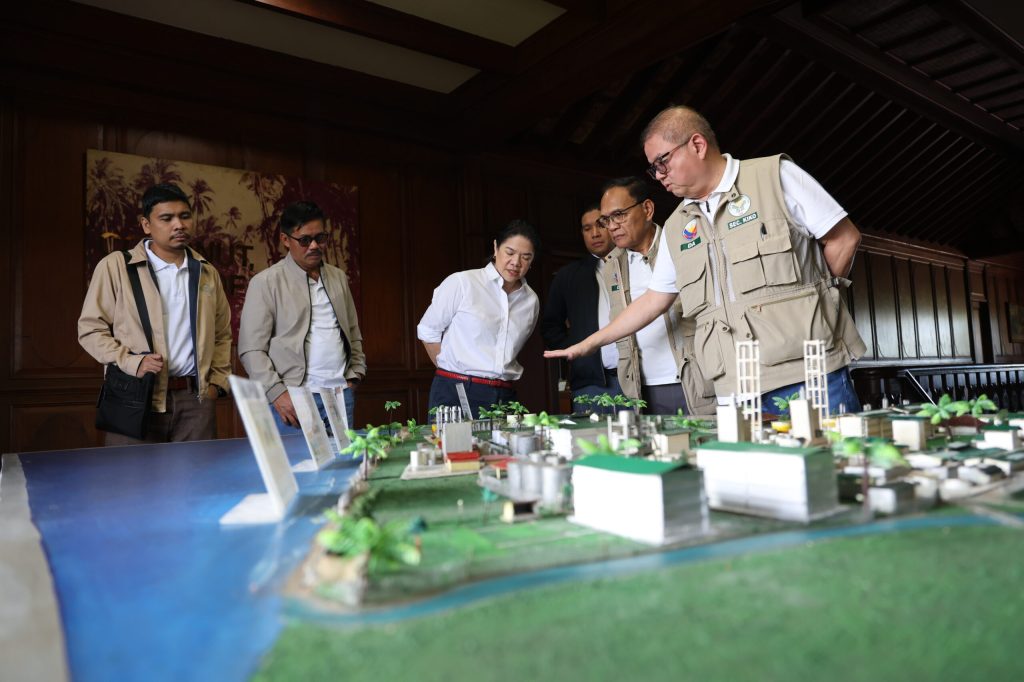
MANILA – Agriculture Secretary Francisco P. Tiu Laurel Jr. led an ocular inspection of United Coconut Chemicals Inc. (Cocochem) as the government reassesses whether to proceed with the long-planned sale of the coconut chemicals producer amid renewed global demand for coconut-based products.
“We want to see for ourselves whether it still makes sense for the government to continue operating this chemicals and oleo fats factory given the rising demand for coconut products, particularly in Europe,” Tiu Laurel said, describing the visit as a fact-finding exercise ahead of a policy decision.
The government, through the Land Bank of the Philippines, is offering about 682 million common shares of Cocochem, aiming to raise at least P2.82 billion. Proceeds are intended to support coconut farmers, while the sale could allow private investors to revive or repurpose the facility in line with shifting market conditions.
Established in 1981 by then-President Ferdinand E. Marcos Sr. and Ambassador Eduardo M. Cojuangco Jr., Cocochem was once the largest coconut chemicals and oleo fats factory in Southeast Asia and the first in the region to produce fatty alcohols via the fatty acid route using German-designed Lurgi technology.
The complex features a private jetty capable of handling 35,000-deadweight-ton vessels, which supported its export-driven growth. By January 1986, Cocochem was shipping products to the United States, Europe, Japan, Korea, China, ASEAN countries, India, Australia, New Zealand, South Africa, and the Middle East.
The company faced challenges in the following decades. Non-implementation of Executive Order 259 in 2001 curtailed domestic demand for fatty alcohols in local detergents, while record-high coconut oil prices a decade later undermined competitiveness against ASEAN rivals. Plant operations were ultimately shut down in 2012.
Cocochem shifted to a facilities-based model in 2014, generating income primarily from land leases, storage tank and warehouse rentals, power distribution, wastewater treatment, pier and weighbridge operations, dockage fees, water supply, and housing rentals. Operating across 39 hectares, Cocochem Agro-Industrial Park Inc. contributes 53 percent of annual income, Cocochem itself 44 percent, and residential operations 3 percent.
With European demand for coconut derivatives gaining traction again, the government is reviewing whether retaining the strategically located asset would better serve the interests of coconut farmers.


 Republika News
Leave a comment