
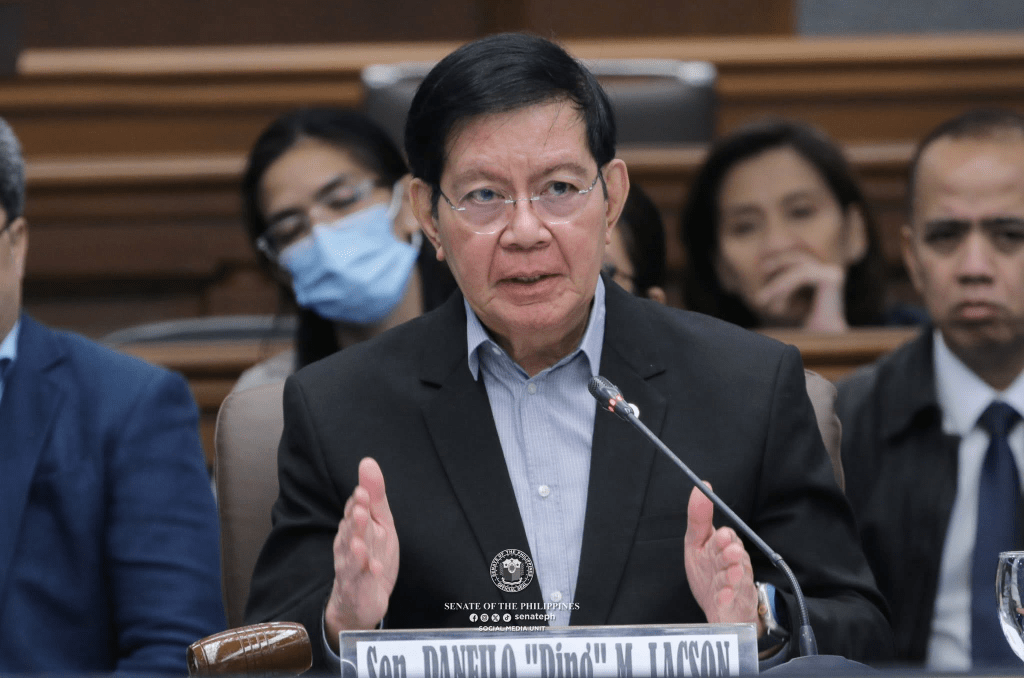
MANILA — Senate President Pro Tempore Panfilo “Ping” Lacson said a briefly reenacted 2025 national budget would be preferable to rushing the passage of the proposed 2026 budget, warning that a hastily approved spending plan could be unresponsive to current needs or prone to corruption.
Lacson made the statement after Executive Secretary Ralph Recto was quoted as saying President Ferdinand Marcos Jr. is set to sign the proposed P6.793-trillion 2026 budget in the first week of January, which would result in a reenacted budget for several days.
“This is exactly what I said earlier – better a reenacted budget in January, or even in the first quarter of 2026, than rushing the passage of a national budget that is not responsive to the call of the times, amidst the yet unresolved investigations on the misuse and abuse of the current and previous expenditure programs, particularly involving flood control projects,” Lacson said.
He said a briefly reenacted budget would be the most prudent option, despite the Palace’s opposition to a reenacted budget as earlier stated by press officer Claire Castro, noting that the bicameral conference committee failed to reach agreement on several issues.
Among the contentious items were proposed increases in funding for farm-to-market roads and “ayuda” programs, including the Medical Assistance to Indigent and Financially Incapacitated Patients (MAIFIP) and Assistance to Individuals in Crisis Situations (AICS), which Lacson said are vulnerable to potential abuse by politicians.
He also cited the Department of Public Works and Highways’ appeal to restore portions of its budget, following its repeated pronouncements to slash its own estimates involving allegedly overpriced Construction Materials Price Data (CMPD).
With the House panel insisting on the disputed provisions, Lacson said the Senate decided in caucus to introduce several general and special provisions aimed at serving as safeguards in the implementation of the 2026 budget.
These safeguards include a ban on guarantee letters and any form of “epal” in all “ayuda” programs; strict implementation of MAIFIP under the Universal Health Care program in compliance with the UHC law; and monthly oversight of infrastructure and farm-to-market road projects, including the use of grid coordinates to allow monitoring by the media and the public.
“Certainly, the bicameral committee report is far from perfect insofar as proper utilization of public funds is concerned. Having said that, we cannot be in a perfect and ideal world when we entrust government funds to politicians of different persuasions and attitudes,” Lacson said.
He reiterated that vigilance should continue even after the budget is signed into law, expressing hope that lawmakers would respond to public demands to curb corruption.
“I would like to believe that there are still many of us in Congress who are willing to listen to the public clamor of stamping out corruption in government. The key is not letting our guard down in monitoring and reporting, even shaming shenanigans in the public sector and their co-conspirators outside of government,” he said.



 Republika News
Leave a comment