
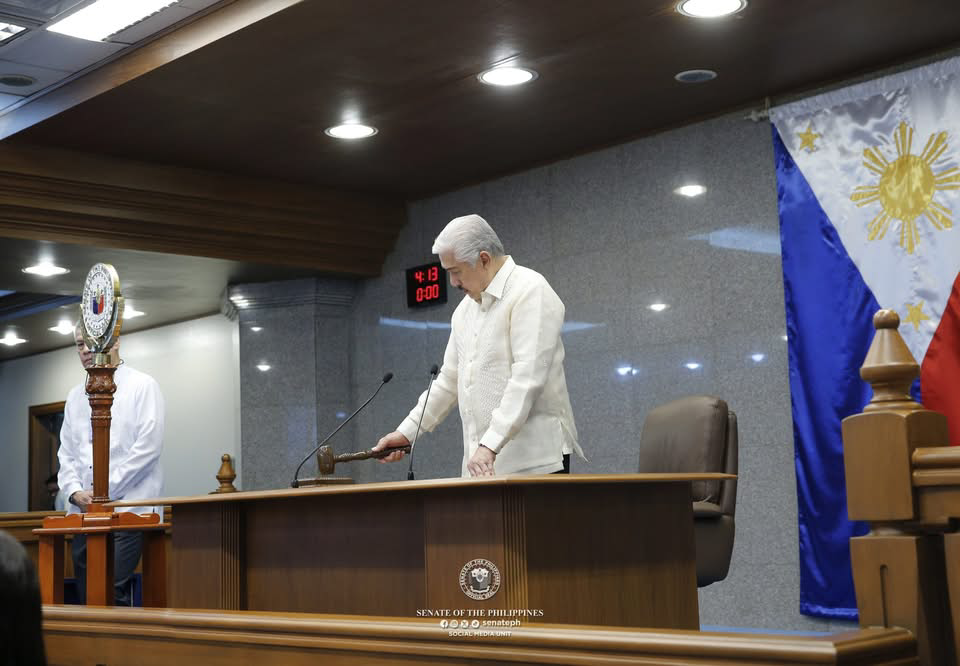
MANILA — Both the Senate and the House of Representatives have ratified the P6.793-trillion national budget for 2026, clearing the way for President Ferdinand R. Marcos Jr. to sign the spending plan into law.
Lawmakers approved the bicameral conference committee report in separate plenary sessions at the Senate and the House on Monday, December 29, a day after bicam delegates signed the report reconciling differences between the two chambers’ versions of the budget.
The ratified budget retains the controversial P243-billion unprogrammed appropriations and includes a sharp reduction in the allocation for the Department of Public Works and Highways.
Marcos is expected to sign the budget on January 5. If this timeline is followed, the Philippines will enter the new year operating under a reenacted 2025 budget for several days.
The 2026 budget marks the first time lawmakers ratified an actual enrolled copy of the bill rather than a summary of the bicam report, following a procedural change pushed by Senate leaders after last year’s budget controversy involving unexplained blanks in agriculture-related allocations.
This year’s budget process also introduced livestreamed bicameral deliberations for the first time, replacing the traditional closed-door sessions where House and Senate delegates previously settled differences in private.
Several minority lawmakers voted against the final budget, citing what they described as “pork” allocations, including the P243 billion in unprogrammed appropriations and increased funding for the Assistance to Individuals in Crisis Situations program, which critics say promotes patronage politics.
During the Senate ratification, Senator Sherwin Gatchalian said investments in education, health, and agriculture are the highlights of the 2026 national budget.
Delivering the ratification speech for the bicameral conference committee report on House Bill No. 4058, Gatchalian said the overall direction of the 2026 General Appropriations Bill is anchored on human development.
“We will see that the funds that we have invested in education, health, and agriculture are big because we believe that these three sectors are very important for the development of our country and for the development of our economy,” said Gatchalian, chairperson of the Senate Committee on Finance.
He said education remains the single largest allocation, amounting to PHP1.35 trillion or 4.4 percent of gross domestic product, which he described as a “historic” investment aimed at reducing classroom shortages, expanding the School-Based Feeding Program, and ensuring the provision of textbooks.
The health sector’s budget was increased to PHP447.6 billion, including PHP129.78 billion for the Philippine Health Insurance Corp., representing a 15-percent increase from the House-approved level. Gatchalian said funding was also increased for Zero Balance Billing in Department of Health hospitals and for specialty hospitals.
He also highlighted the PHP214.39-billion agriculture budget, the highest allocation for the sector in more than a decade, intended to support farm incomes and strengthen food security.
Gatchalian said safeguards were incorporated in the budget process, including livestreamed bicameral deliberations, public access to budget documents, and requirements for infrastructure projects to include station numbers and geographic coordinates for on-the-ground verification.
The Senate’s approval cleared the 2026 national budget for transmittal to Malacañang for the President’s signature.



 Republika News
Leave a comment