
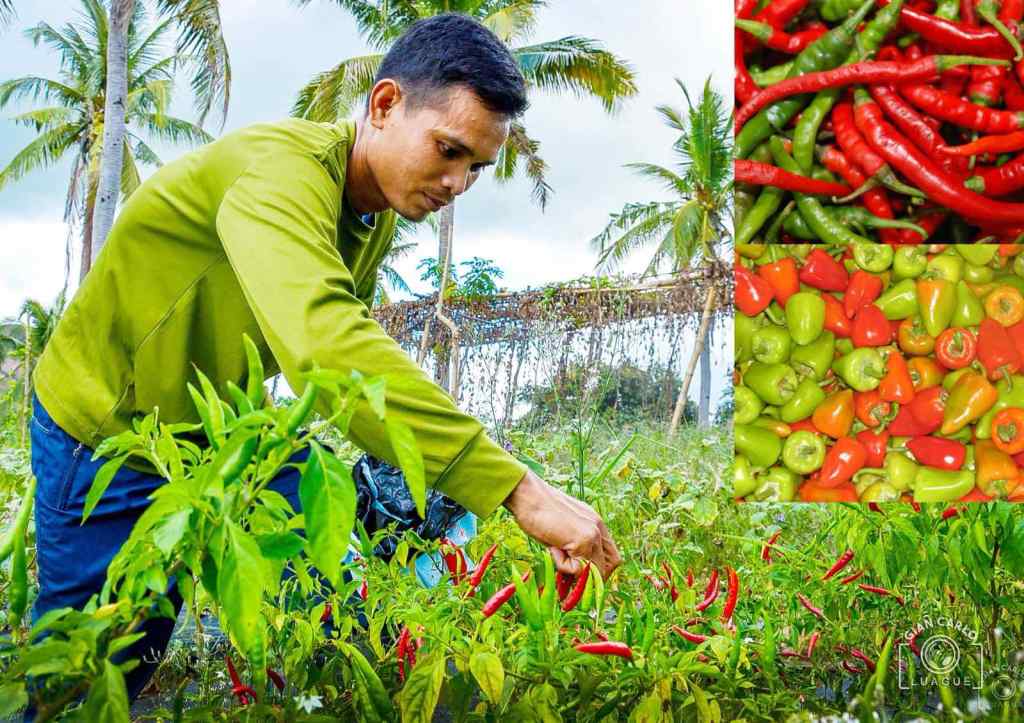
MANILA — Agriculture Secretary Francisco P. Tiu Laurel Jr. has ordered measures to boost chili pepper production and protect farms from extreme weather as the Department of Agriculture (DA) seeks to stabilize supply and prices of one of the most volatile kitchen staples.
Chili pepper prices typically surge during the rainy season as heavy rains and typhoons damage crops and disrupt supply. In September, a kilo of siling labuyo reached as high as ₱800 following weather disturbances.
In a recent meeting with DA officials, Tiu Laurel directed the establishment of baseline data on national and Metro Manila consumption, current output, and average yield per hectare to guide production planning.
“We need to know how much we consume, how much we produce, and where the gaps are,” Tiu Laurel said.
DA officials said chili peppers can be grown in most parts of the country and are not limited to traditional producing regions such as Bicol, expanding the pool of potential growers under the agency’s High Value Crops (HVC) program.
For 2026, chili has been identified as a priority crop alongside munggo, with the goal of lowering chili prices and reducing reliance on imports for mung beans.
Weather-related crop damage remains the main driver of price spikes. Tiu Laurel said prices rise when rains destroy harvests, prompting the DA to promote protected cultivation in designated locations.
The department is supporting the use of greenhouses made from local materials and typhoon-resistant structures designed to withstand strong storms, flooding, and prolonged rainfall to help ensure year-round production.
The DA will also expand access to quality planting materials, including siling labuyo, siling pansigang, and grafted bell peppers, through its Gulayan sa Bayan program. The initiative aims to strengthen agri-entrepreneurship in 1,370 municipalities and address food inflation through commercial high-value crop farming and primary processing.
The push comes as the DA monitors price movements of other vegetables. Bell pepper prices have been around ₱250 per kilo, while munggo prices have shown wide fluctuations, underscoring the impact of supply shocks and import dependence.
Tiu Laurel said more stable chili production could help reduce price spikes affecting restaurants, food processors, and retailers, especially during peak demand periods such as the holidays.
He has ordered weekly public updates on prices and supply starting January through articles and short-form videos to improve transparency.
While typhoons may still cause disruptions, Tiu Laurel said the objective is to make such shocks the exception rather than the rule by expanding climate-resilient, year-round chili production.



 Republika News
Leave a comment