
By Atty. Carlos G. Serapio & Ralph Ryan A. Garcia
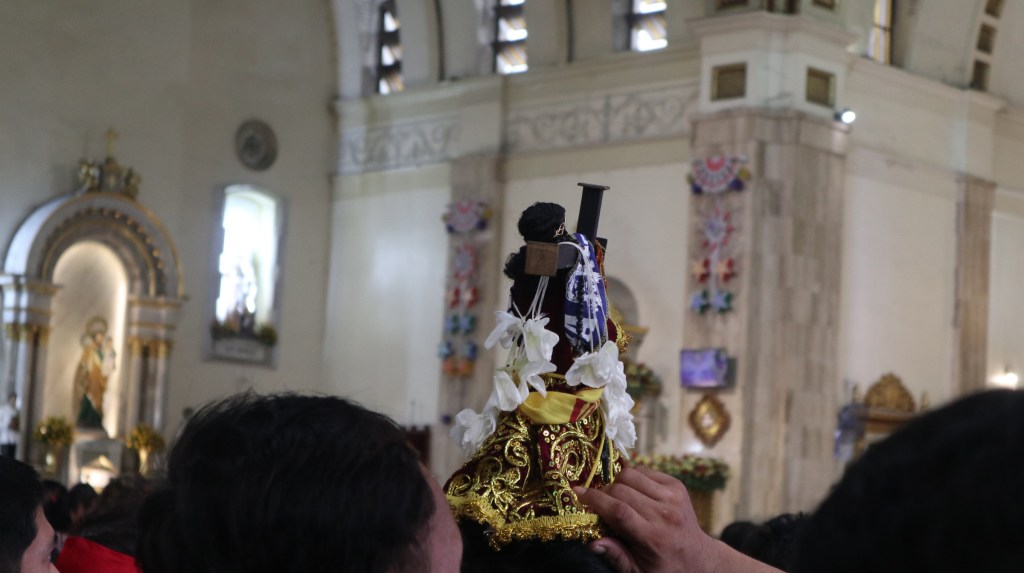
There is a small, almost forgotten story from the Traslación that rarely finds its way into headlines. Amid the heaving crowd, the shouting, the tension, and the sweat, there once stood an old man by the roadside. He did not fight for the rope.
He did not reach out to touch the image. He simply held a worn white handkerchief, lifted it gently as the carozza passed, closed his eyes, and wept. When someone asked why he did not join the surge, he replied softly, “I have already arrived. Not with my hands, but with my heart.”
That story never went viral. Yet it reveals what many fail to see. The deepest power of the Nazareno is not in force, but in quiet surrender.
The Black Nazarene has never needed to summon the people. It does not threaten absence with punishment, nor reward presence with favor. No human voice commands the faithful to come. And still, they come. In numbers that defy planning.
In devotion that resists explanation. Drawn not by spectacle, but by a gravity that feels older than language and deeper than reason, guided by the quiet spirit of compassion, justice, accountability, forgiveness. A force that can only be called divine.
People come because of faith, because of inspiration, and because of love.
Each year, millions walk beneath the open sky, their bodies bearing what their words cannot carry. Sweat falls like confession. Tears are shed without embarrassment. Pain is endured without complaint as the carozza of Hesus Poong Nazareno makes its long return from the Quirino Grandstand to its home, the Minor Basilica and National Shrine of Hesus Nazareno in Quiapo. This is not a procession staged for the eye. It is a pilgrimage etched into muscle and memory.
Every devotee carries a private burden. A healing long delayed. A life held together by patience. A thanksgiving spoken after surviving what should have broken them. Each raised hand, each white handkerchief waved in the air, is a prayer that has learned how to wait.
The Panata to Hesus Poong Nazareno is a deep mirror of love of God and love of country. It reflects something rarer still: the true power of a people bound not by command, but by conscience. This is unity without coercion, devotion without transaction, strength without noise.
Lives have been changed by this faith. We know this not through grand testimonies, but through quiet endurance. God answers prayers, not always in the form requested, nor at the hour demanded. But in the long discipline of reflection, many come to know this truth: God answers in the way that keeps the soul alive. In the way that teaches us how to stand again.
To touch the image, to kiss it, to wave white handkerchiefs before it, is not fanaticism. It is reverence. It is homage to a God who chose to become human, who chose to walk with the poor, who chose to listen when the cries of the powerless are drowned out by speeches and power. The devotion to the Nazareno is not magic, yet it carries a mystery that refuses to fade, the mystery of a God who does not abandon those who endure.
And this is why the Traslación quietly unsettles the present moment.
This year, as the Traslación is once again celebrated, it calls for awakening. From the living faith of the people must rise a call that stirs not only the Church, but the nation itself. Let the strength of believing bodies awaken a government grown numb to abuse, to corruption, to shameless excess. Let conscience be disturbed.
We live in a time when floodwaters rise faster than accountability. When structures meant to protect collapse, and explanations dissolve into silence. When authority is abused not with shame, but with ease. Political rivalries grow loud, yet remain shallow, circling power while neglecting responsibility. Against this backdrop, millions still walk barefoot, disciplined not by fear, but by faith.
Disciplined love is not a mood. It is practice. It is the one who walks through the halls of power without letting their hands be stained. The one who builds not for applause, but so that what they leave behind can stand without shame. The one who speaks truth quietly, even when lies roar louder than thunder. The one who holds a heart unbought, unbroken, refusing the easy path that bends the soul. And it is the labor of the unseen, the care of the invisible – the keeping of a people’s inner life intact, so that decency, courage, and reverence do not vanish into the world’s dullness. A people who surrender this inner life will forever bow to men who shine brightly only because they blind the eyes of those who might see.
This is where darkness and light confront each other. Where the cruelty of power without mercy stands against hope that refuses to die. One leads to numbness. The other insists on dignity. The Nazareno stands at this crossing, not shouting, not commanding, but walking, wounded, and enduring.
Many groups have tried to display the power of the masses. Most fade as quickly as they gather. Attendance born of fear weakens. Loyalty purchased by reward expires. But the devotees of Hesus Poong Nazareno come freely. They are not forced. They are not paid. They are not threatened. They arrive because something within them remains awake.
This is not a call to turn devotion into politics. The Nazareno does not belong to any faction. But it is a call to see clearly. There is no truer force of the people than a conscience shaped by disciplined love.
History reminds us that power listens when it senses moral weight. Not just numbers, but resolve. When a people quietly decide what they will no longer tolerate, even authority hesitates. This has happened before. It can happen again, not through fury, but through faith that has learned restraint.
The feast of Hesus Poong Nazareno remains the clearest mirror of this reality. It shows what a people looks like when it still knows how to kneel, how to wait, and how to endure together.
Let us be disturbed by the spirit of justice, accountability, compassion, and forgiveness. Let it awaken the conscience of those who abuse power, profit from corruption, and inflict suffering on the poor. Let it shake the hearts of those who commit crimes against love, so that they may know that no wrong can escape the weight of disciplined faith.
The Traslación reminds us: true power does not roar. It walks barefoot. It endures. It returns.




 Republika News
Leave a comment