
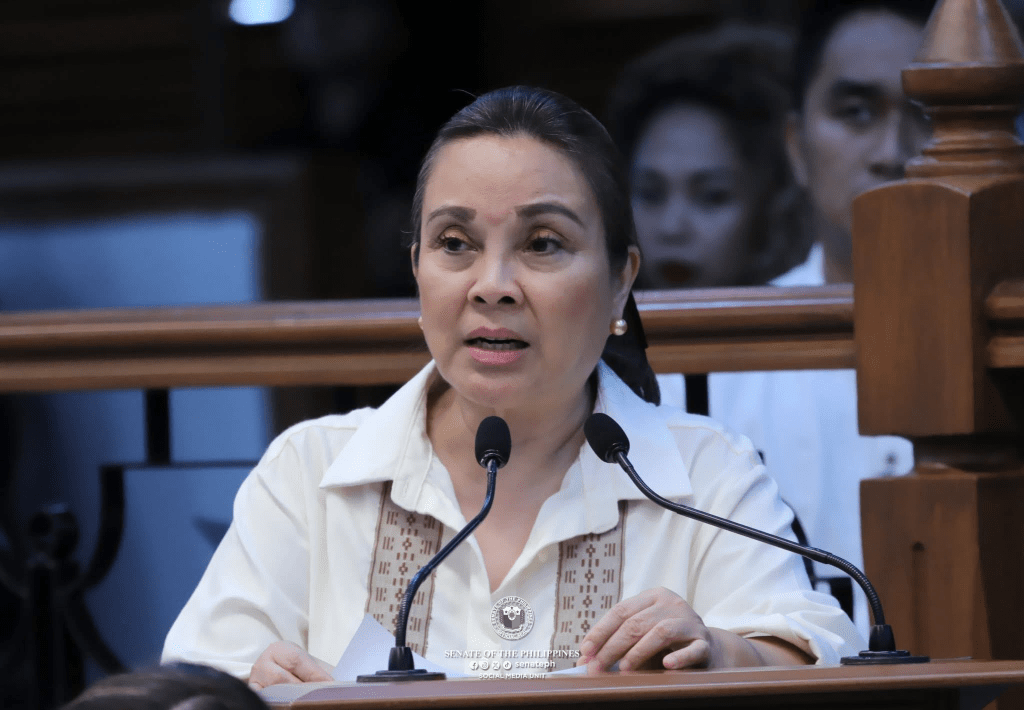
MANILA — Senator Loren Legarda renewed her call for a stronger national commitment to address the country’s growing waste crisis as the Philippines observes National Zero Waste Month this January, warning that delays in action could lead to irreversible harm to the environment and public health.
Legarda said that while public awareness and community-led initiatives have increased over the years, the magnitude of the waste problem requires deeper reforms and coordinated action across all sectors.
“Zero Waste initiative is a national imperative,” Legarda said.
“We must move beyond awareness into stronger, decisive action. Every Filipino has a responsibility, and every institution must rise to the challenge of safeguarding our environment and future generations,” she added.
Her statement came amid data from the World Bank’s 2025 What a Waste global database report, which ranked the Philippines 27th among 50 countries generating the highest amount of municipal solid waste, estimated at 14.6 million tons annually. Plastic waste accounts for a significant share, with experts warning that increasing waste volumes threaten public health, urban resilience, and climate adaptation efforts.
Legarda also pointed to the impact of mismanaged waste on flooding and disaster risks. In July 2025, the Metropolitan Manila Development Authority collected more than 600 tons of garbage across Metro Manila during heavy monsoon rains, including 526.8 tons from pumping stations and 76.9 tons from flooded areas. During the same period, the Department of Environment and Natural Resources–National Capital Region cleared over 872,000 sacks of debris from rivers and esteros to help mitigate flooding. Authorities confirmed that clogged waterways due to improper waste disposal worsened flooding in Metro Manila.
“Flooding is never just about rainfall; it is worsened by garbage choking our rivers and esteros,” Legarda warned.
“Every piece of trash becomes a barrier that endangers lives. Stronger waste discipline is the safeguard we can build together,” she stressed.
The senator underscored that the legal framework for achieving zero waste is already in place through Republic Act No. 9003, or the Ecological Solid Waste Management Act, which she authored and principally sponsored. The law requires waste segregation at source, the establishment of materials recovery facilities in every barangay, and waste reduction through recycling, composting, and reuse.
“RA 9003 gives us the roadmap: segregate at source, recycle, compost, and reuse,” Legarda said.
“If every barangay enforces materials recovery facilities and every household practices proper segregation, we can drastically reduce our waste and protect our communities.”
Legarda also cited Republic Act No. 11898, or the Extended Producer Responsibility Act of 2022, which she co-authored to strengthen RA 9003 by requiring producers to recover and recycle plastic packaging waste under defined EPR programs.
In addition, she said she refiled the proposed Magna Carta of Waste Workers in the 20th Congress, which seeks to standardize working conditions, provide social protection, and formally recognize both formal and informal waste workers as essential partners in environmental management.
“Waste workers are vital partners in safeguarding public health and the environment. By ensuring their rights and protections, we uphold their dignity and reinforce our commitment to people-centered environmental governance,” Legarda said.
As Zero Waste Month 2026 begins, Legarda reiterated her commitment to pushing reforms that strengthen producer responsibility, empower communities, and institutionalize support for waste workers.
“This is the beginning of another year of responsibility,” she said. “But this time, it must be marked by decisive action and measurable results. Zero Waste is not a dream, it is a duty we owe to our country and to the future generations.”

 Republika News
Leave a comment