
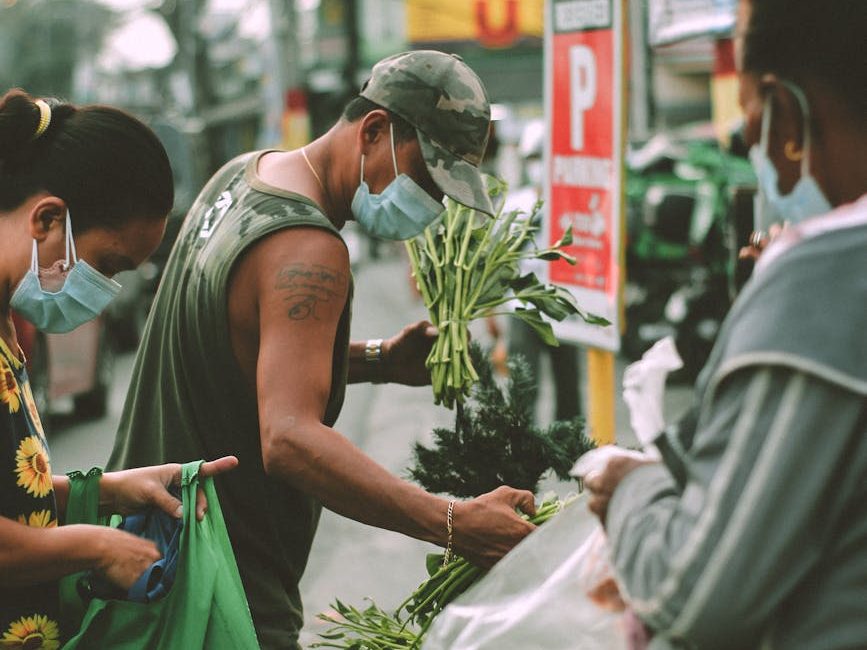
MANILA — Food poverty in the Philippines declined sharply in the fourth quarter of 2025, according to the latest OCTA Research Tugon ng Masa (TNM) Survey, signaling easing pressure on households as food access improves and prices stabilize amid government interventions.
The OCTA Q4 2025 survey showed self-rated food poverty dropping by 19 percentage points, from 49 percent in the third quarter to 30 percent in the fourth quarter. OCTA said this translates to around five million families who no longer consider themselves food-poor, marking one of the fastest improvements recorded in the TNM survey series.
Self-rated overall poverty also fell by 17 percentage points, from 54 percent to 37 percent quarter-on-quarter, which OCTA estimates represents about 4.5 million families who no longer identify as poor—the largest single-quarter decline in the series.
Agriculture Secretary Francisco P. Tiu Laurel Jr. welcomed the survey results, saying they reflect the impact of sustained efforts to secure food supply and support both consumers and producers.
“These results show that our programs are reaching Filipino families. We will continue to ensure consumers have access to affordable food with stable prices, while helping farmers, fisherfolk, and other food producers earn more,” Tiu Laurel said.
He cited the expansion of the government’s flagship rice initiative, noting that the P20 rice program is being scaled up this year. “This year, we are scaling up President Ferdinand Marcos’ P20 rice program to reach 15 million households, or roughly 60 million Filipinos,” he said.
President Ferdinand R. Marcos Jr. wants to sustain the P20 rice program until the end of his term in June 2028.
Tiu Laurel also said President Marcos, together with the House of Representatives and the Senate, approved a higher budget for farm and related infrastructure, including farm-to-market roads, cold storage facilities, food hubs, deepwater ports, rice dryers, warehouses, and greenhouses, to boost production, lower food costs, and increase rural incomes.
Meanwhile, self-rated hunger increased from 11 percent to 16 percent during the period. OCTA noted, however, that nearly 80 percent of households reporting hunger experienced it only once or a few times, indicating short-term or episodic food stress rather than chronic hunger.
Analysts attributed the decline in food poverty to government programs that stabilize food supply and prices, particularly rice, including the “Benteng Bigas, Meron Na!” program and the P20-per-kilo rice initiative, which aim to protect consumers from price spikes while supporting farmers and fisherfolk through higher productivity, reduced post-harvest losses, and improved market access.
Economists said sustaining these gains would require continued support for production and price management, but noted that the OCTA survey points to significant progress in reducing food poverty and improving household food security.



 Republika News
Leave a comment