
MANILA – The Second Congressional Commission on Education (EDCOM II) on Monday released its Final Report titled “Turning Point: A Decade of Necessary Reforms,” concluding its three-year evaluation of the country’s education sector and introducing the first unified ten-year national roadmap to address the Philippine learning crisis.
The report presents the National Education and Workforce Development Plan (NatPlan) 2026–2035, which seeks to replace fragmented education policies with a coordinated sequence of reforms across the Department of Education (DepEd), the Commission on Higher Education (CHED), and the Technical Education and Skills Development Authority (TESDA).
EDCOM II said its findings show deep and persistent learning gaps, citing the Comprehensive Rapid Literacy Assessment for the end of School Year 2024–2025, which found that 48.76 percent of learners were not reading at grade level by Grade 3. The report also pointed to declining learning outcomes, noting that while 30.5 percent of students are proficient in Grade 3, proficiency drops to 0.40 percent by Grade 12.
The Commission attributed the learning crisis to several systemic issues, including early childhood stunting affecting 23.6 percent of children, limited access to early childhood education with participation rates of only 34 percent among 3- to 4-year-olds, and a culture of “mass promotion” driven by administrative pressures and DepEd’s grade transmutation policy. It also cited the loss of learning time, with an average of only 191 actual class days and some regions losing up to 42 days due to class suspensions and more than 150 legislated school celebrations.
These findings add to earlier EDCOM reports that flagged a classroom backlog of 165,000 rooms, textbook shortages from 2013 to 2023, and the heavy administrative workload placed on teachers.
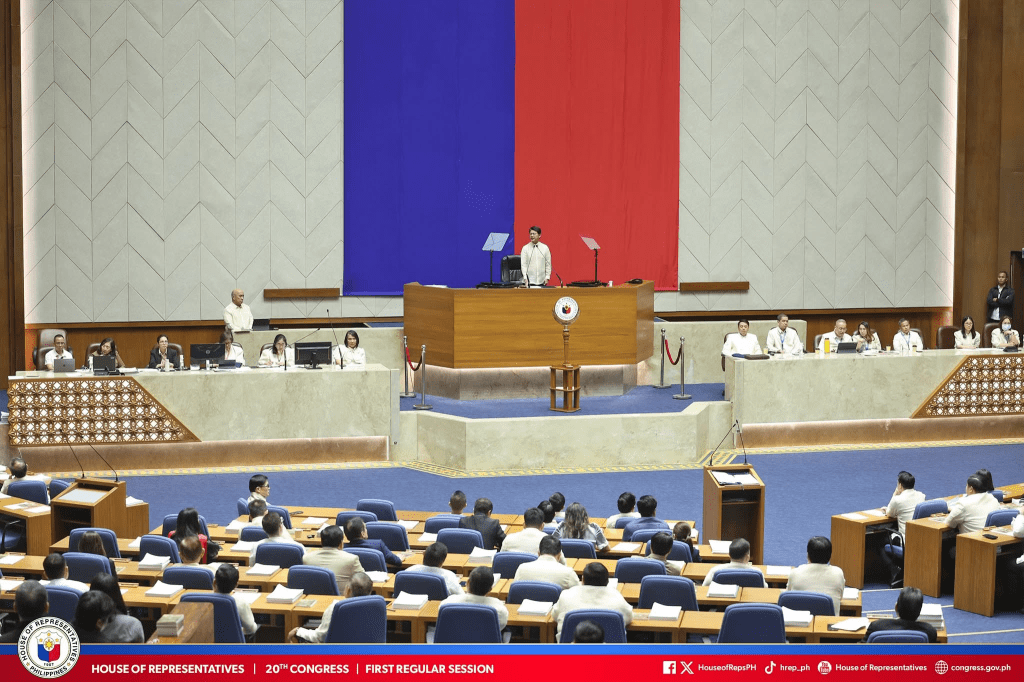
House Speaker Faustino “Bojie” Dy said the report underscores the need for sustained and long-term reforms.
“Ngunit malinaw rin ang mensahe ng ulat: ang krisis ay hindi malulutas kung walang tuloy-tuloy at pangmatagalang reporma. Hindi sapat ang isang Kongreso. Hindi sapat ang isang administrasyon. Ang reporma sa edukasyon ay nangangailangan ng disiplina sa pag-prayoridad, gaya ng pagtuon sa nutrisyon, early childhood care, at functional literacy,” Dy said.
“Nangangailangan din ito ng tapang na ipagpatuloy ang tama, kahit mahirap o hindi popular. Tinatahak ng EDCOM II Final Report ang landas na ito. Ngayon, responsibilidad natin sa Kongreso na tiyaking ang mga rekomendasyong ito ay hindi mananatiling nasa papel lamang. It is not enough to study and understand the problems before us—what is more critical is that we act on the recommendations of the EDCOM II,” he added.
EDCOM II Co-Chair Rep. Roman Romulo said the Final Report reflects three years of extensive research and consultations nationwide.
“This document is the culmination of three years of rigorous study, more than a hundred research publications, and extensive consultations across the archipelago,” Romulo said. “This report confirms that the problem is not just a lack of resources; it is a lack of coherence and sustained national focus on education.”
The National Education Plan calls for a “discipline to prioritize,” focusing investments on nutrition, early childhood care, and functional literacy. The roadmap emphasizes “fixing of foundations,” including full implementation of the ARAL Program, the immediate end of mass promotion practices, the phaseout of grade transmutation policies, and a commitment to invest at least 5 percent of gross domestic product in education, with resources frontloaded to the early years.
EDCOM II Co-Chair Rep. Jude Acidre said the report marks a critical moment for reform.
“Let this Final Report be the map. Let the National Education and Workforce Development Plan be our compass. And let our collective political will be the engine that drives this nation forward,” Acidre said. “The turning point is here. The future can be bright. And the best days of Philippine education are ahead of us— so long as we respond with urgency, discipline, and unity.”
Despite the scale of the crisis, EDCOM II said progress has been made over the past three years, including the passage of 10 landmark education laws and the allocation of a Php 1.37 trillion education budget for fiscal year 2026, equivalent to 4.4 percent of GDP and within the UNESCO benchmark of 4 to 6 percent.
The Commission also cited the resolution of the textbook procurement backlog, with DepEd delivering over 100 new titles in 2024, and efforts to reduce teachers’ administrative workload by cutting required forms from 174 to 75 and approving 10,000 new Administrative Officer positions.
Other reforms highlighted in the report include the creation of the Education and Workforce Development Group to align policies across agencies, revised guidelines on the use of the Special Education Fund to include early childhood care, the Alternative Learning System, and the ARAL Program, and updated implementing rules of the Anti-Bullying Act.
EDCOM II also noted the alignment of the Board Licensure Examination for Professional Teachers with teacher education curricula, including the introduction of specialization-based exams starting September 2025, and the planned creation of 6,000 new school principal positions in 2026.
The Commission said the release of the Final Report marks a shift from diagnosis to execution, stressing that the learning crisis is “neither inevitable nor irreversible” if reforms are protected from political disruption and anchored on stable, outcome-focused institutions.


 Republika News
Leave a comment