
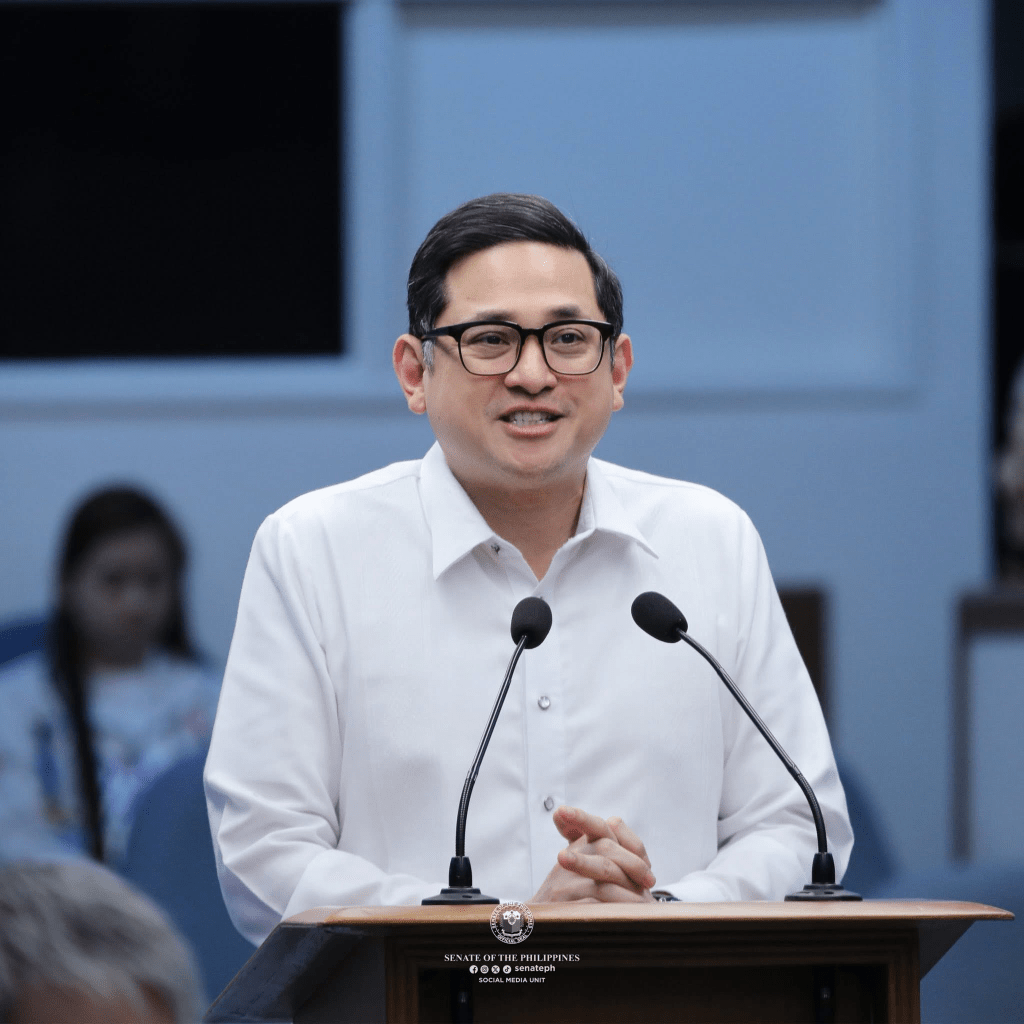
MANILA – Senator Bam Aquino expressed optimism that the government can accelerate classroom construction nationwide by working closely with local government units (LGUs), stressing the need to deliver classrooms on time and at the right cost.
Aquino made the remarks during a media interview on the sidelines of the Mayor’s Dialogue on Accelerating Classroom-Building in Cities and Municipalities at the Makabagong San Juan National Government Center on January 28.
Asked whether the Senate would investigate the low number of classrooms built last year, Aquino said the priority should be ensuring classrooms are completed, noting that previous Senate hearings showed some projects were overpriced.
“In our last hearing last year, nakita rin namin na overpriced yung ibang mga classrooms,” Aquino said, citing estimates that the proper cost of a classroom ranges from P1.5 million to P1.8 million, compared with P3.5 million classrooms previously built by the Department of Public Works and Highways (DPWH).
Aquino said both the DPWH and LGUs would continue to receive funding for classroom construction, but noted that the DPWH’s capacity is limited to about 2,000 to 3,000 classrooms, while the total target ranges from 25,000 to 30,000 classrooms.
“So yung karamihan talaga na magagawang classroom will really be through the mayors,” he said.
He added that more than 200 mayors attended the dialogue, reflecting strong local government support for addressing the classroom shortage. Aquino said LGUs could pursue various approaches, including constructing new classrooms, leasing or purchasing old buildings, and repairing dilapidated facilities.
Aquino said he is optimistic that the classroom acceleration program will move forward, noting that similar measures have been pushed in the House of Representatives and could be passed by February.
“Sa aming opisina pa lang, over eight hundred na po yung nagsabi na LGU na nais nilang magsagawa ng proyekto ito,” he said.
On coordination with LGUs, Aquino said templates for memoranda of agreement with the Department of Education are already available to speed up implementation.
He said the Senate Committee on Education aims to have 25,000 classrooms started in 2026, adding that single- or double-storey classrooms could be completed within 90 to 120 days, while multi-storey buildings would take longer.
Aquino said P66 billion has been allocated for classroom construction, stressing that funds should be used properly to address the current classroom gap of 166,000 nationwide. He said around 25,000 to 30,000 classrooms could be built this year but noted that closing the gap would require sustained funding and cooperation over several years.
“This is beyond one term of a mayor or of a senator,” Aquino said, adding that education reforms require long-term commitment.
On teacher shortages, Aquino said the committee is also addressing the issue, including measures to support teachers assigned to far-flung areas, particularly in Last Mile Schools. He said current hardship allowances are insufficient and that additional support such as living quarters and per diem should be considered.
Asked about the mass promotion policy cited in the Second Congressional Commission on Education report, Aquino said the issue has already been addressed by the Department of Education, noting that mass promotion contributed to learning and proficiency gaps among students.
“Ang nais po natin makita, yung mga kabataan natin, nasa tamang grade level, nandoon din yung kanilang kaalaman,” he said.



 Republika News
Leave a comment