
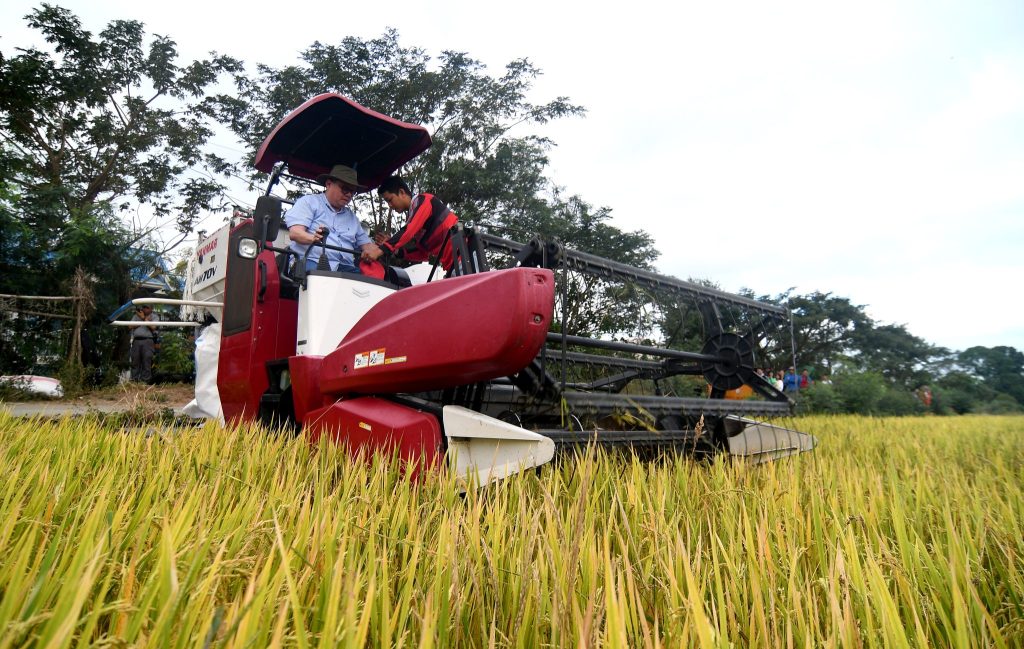
MANILA – Philippine agriculture expanded by 3.1 percent in 2025, its fastest growth in eight years, as policy interventions helped cushion the sector from the impact of nearly two dozen storms that battered the country in the second half of the year, data from the Philippine Statistics Authority showed.
The 2025 performance marked a break from years of volatility in the sector. Since posting a 4.2 percent expansion in 2017, agricultural output had alternated between weak growth and contractions, often undermined by extreme weather, animal diseases, and plant pests.
Last year’s expansion suggests these long-standing vulnerabilities are starting to be addressed, albeit gradually.
“The 2025 performance of agriculture is both encouraging and instructive—it tells us what is working and where we need to sharpen our approach,” Agriculture Secretary Francisco P. Tiu Laurel Jr. said. “We are using these lessons to fine-tune our programs and accelerate investments in smarter, climate-resilient, and more productive agriculture.”
Growth was anchored on stronger crop output, with palay production rising 3.5 percent and corn output increasing by 3.4 percent, helping stabilize domestic food supply.
Sugar recorded the largest gain, surging 56 percent on the back of record production in 2025. This helped ease price pressures and improve incomes in key producing regions. Coffee and cacao also posted double-digit growth, reflecting rising demand and improved farm-level practices.
The gains were recorded despite persistent climate risks, highlighting the role of government support.
For 2026, the budget approved by President Ferdinand Marcos Jr. allocated additional funds for farm-to-market roads, cold storage facilities, and drying systems to reduce post-harvest losses and lower logistics costs. Funds were also set aside to control avian influenza and African Swine Fever, alongside financial assistance for farmers and fisherfolk.
The passage of new laws increasing funding for animal industry development and rice industry competitiveness is also expected to improve the sector’s prospects in the coming years.
While agriculture accounts for a smaller share of the economy compared with services, its faster growth has broader implications, supporting rural incomes, helping contain food inflation, and reducing the economy’s vulnerability to supply shocks.



 Republika News
Leave a comment