
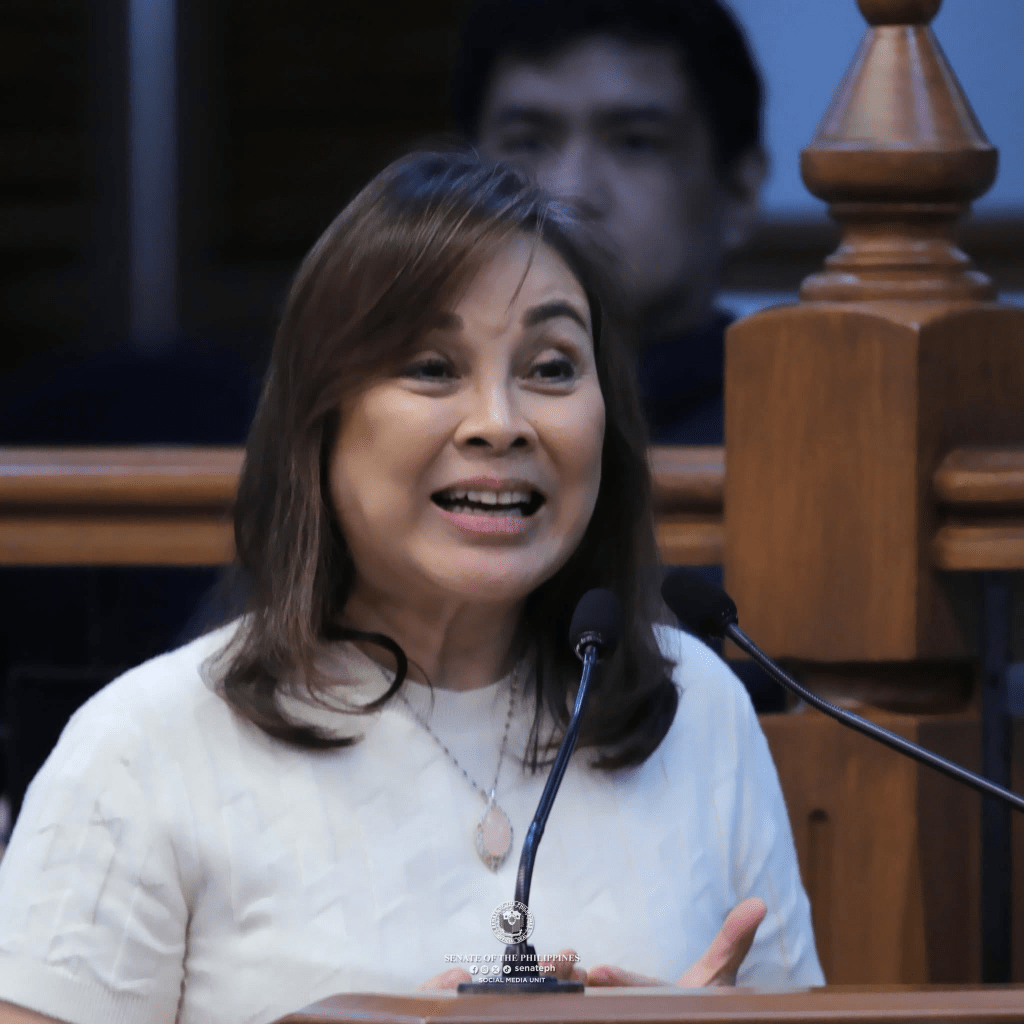
MANILA – Sen. Loren Legarda praised the Department of the Interior and Local Government (DILG) for enforcing the nationwide removal of names, images and likenesses of public officials from government-funded projects, programs and properties, calling the move a step toward restoring integrity in public service.
Legarda welcomed the DILG memorandum directing all levels of government to remove personal branding from billboards, markers, tarpaulins, vehicles and other taxpayer-funded properties, stressing that public office should not be used for self-promotion.
“Public office is a public trust. Public funds are for public service, not for personal publicity,” Legarda said.
She said every peso of public funds carries a moral obligation to serve the people, warning that misuse for self-promotion deprives citizens of basic needs such as education, healthcare, food and livelihood support.
“What should have been allocated to education, nutrition, healthcare, livelihood, and essential social services is instead squandered on vanity projects that serve no one but the officials themselves,” Legarda said.
“This is not simply the misuse of public funds for personal gain. It is theft from the people, a betrayal of trust. If that is not ‘epal’ in its truest sense, I do not know what is,” she added.
Legarda noted that even without a permanent law, government agencies have long attempted to curb the practice through administrative measures. She cited the 2010 DILG ban on billboards and signage bearing officials’ names or images on government projects, the 2013 Commission on Audit ruling declaring such practices improper and disallowing them as unnecessary expenditures, and the 2019 DILG directive barring local officials from appearing in the distribution of government programs.
She also pointed out that the 2026 General Appropriations Act expressly prohibits public officials and politicians from influencing or participating in the distribution of government aid.
“These measures show a consistent recognition that self-promotion undermines public trust. But without a permanent law, these safeguards remain vulnerable,” Legarda said.
In this Congress, Legarda filed Senate Bill No. 1716, or the proposed Anti-Epal Act, which seeks to consolidate these safeguards into law by prohibiting public officials from affixing their names, images or personal identifiers on government-funded programs and projects.
The bill also provides for the creation of Anti-Epal Desks tasked with monitoring compliance, receiving complaints and enforcing the law.
“We can only stop this practice if we put in place reporting mechanisms for the general public. The citizens themselves must be able to call out and report violations,” Legarda said.
She acknowledged that the practice has become deeply ingrained in politics but warned against normalizing it.
“We have all witnessed this scheme, time and again. The longer we allow it, the deeper it takes root. Familiarity must never breed acceptance,” she said.
“End it now, do not perpetuate it. If we nip it at the bud, if we refuse to water it, if we refuse to romanticize it, then it will wither and die on its own,” she added.
Legarda also commended DILG Secretary Jonvic Remulla for holding heads of offices accountable for compliance with the directive and for encouraging citizens to report violations through DILG channels and other complaint mechanisms.
“When officials step back from the spotlight and allow programs to speak for themselves, we honor the people who pay for every kilometer of road, every classroom, and every relief pack distributed,” Legarda said.
She concluded by stressing that government projects must never be used as tools for political credit-grabbing.
“Hindi nasusukat ang mahusay na pamumuno sa dami ng tarpaulin o laki ng pangalan; nasusukat ito sa tapat na paglilingkod at malasakit na ramdam ng bayan. Ang pamumuno ay nakikita sa gawa, hindi sa mukha,” Legarda said.


 Republika News
Leave a comment