
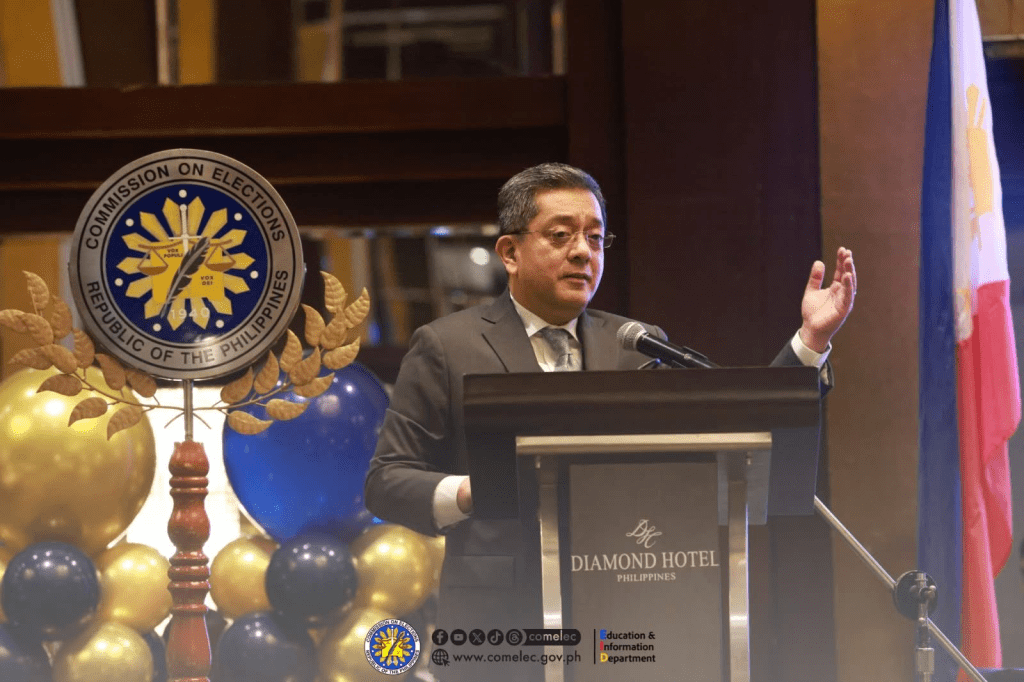
MANILA – The Commission on Elections (Comelec) emphasized that the proposed anti-political dynasty law cannot function effectively as a standalone measure, calling for amendments to existing election laws to ensure proper implementation once the bill becomes law.
Comelec Chair George Erwin Garcia made the remarks during the Senate Committee on Electoral Reforms’ ongoing hearings on anti-dynasty measures.
“The anti-political dynasty law cannot be a standalone law. There should be other laws that we should touch, amend, correct so that the proposed law will be effective once implemented,” Garcia said, reiterating the poll body’s support for the measure.
He stressed that Congress would need to define key provisions such as the level of consanguinity and affinity covered by the law, and whether the successive or simultaneous election of kin should be prohibited. Garcia also highlighted potential implementation challenges, particularly the distinction between cancellation and disqualification of candidates:
- Disqualification allows substitution of candidates with the same surname.
- Cancellation applies when a candidate has committed material misrepresentation on their Certificate of Candidacy (COC) and cannot be substituted.
Garcia also pointed out that Section 74 of the Omnibus Election Code does not currently require candidates to declare they are not part of a political dynasty. He suggested either adding this requirement to the COC or passing a separate law to amend the section automatically. He further called for a penal clause classifying violations of the anti-dynasty law as election offenses.
“Passing the anti-political dynasty law alone is not enough. Changes to the current legal regime are necessary because the present structure could run contrary to an anti-political dynasty framework,” Garcia said.
Senate hearings underway
Six anti-dynasty bills are currently pending before the Senate electoral reforms committee. Senator Risa Hontiveros, committee chairperson, said the legislation is long overdue and stressed that political dynasties weaken checks and balances, hinder accountability, worsen poverty, and are linked to political violence and controversies such as the flood control scandal.
The Senate hearings aim to resolve key issues, including the degree, scope, timing, and enforcement mechanisms of the proposed law.
The House of Representatives has already begun its own hearings on its version of the measure. President Ferdinand Marcos Jr. has urged Congress to prioritize the anti-dynasty bill, noting that the country’s political landscape has changed and emphasizing the importance of equal access to public service.



 Republika News
Leave a comment