
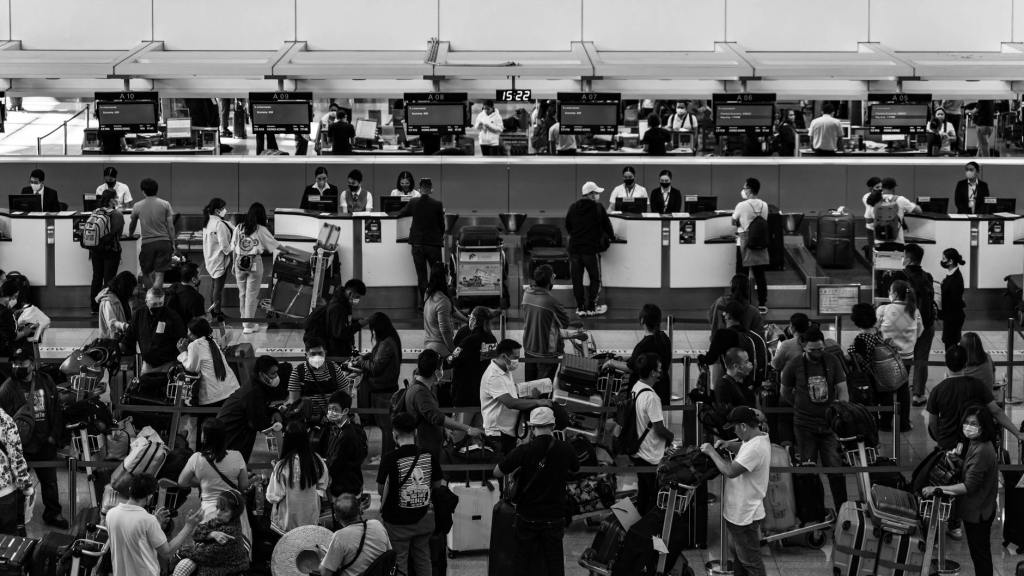
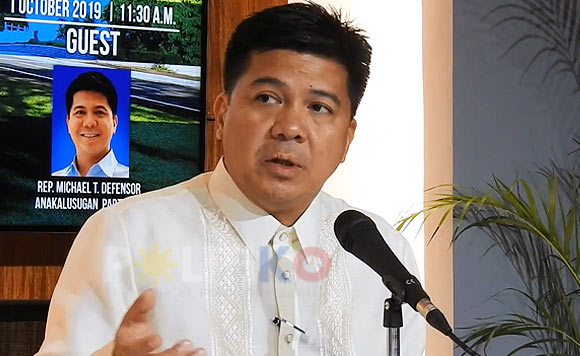
MANILA – House Majority Leader and presidential son Sandro Marcos filed a bill seeking the abolition of the travel tax, arguing that it no longer fulfills its intended purpose and instead imposes financial burdens on Filipino families while hindering tourism growth.
In a statement, Marcos said the tax discourages travel by making it more expensive, limiting opportunities for work, family visits, and other personal pursuits. “When travel becomes more expensive, fewer people move, fewer people spend and fewer opportunities circulate through the economy. Lowering the cost of travel allows Filipino families to allocate their money where it matters most,” he said.
The bill seeks to repeal Presidential Decree 1183, enforced under his grandfather, the late Ferdinand Marcos Sr., as well as provisions of the amended Tourism Act of 2009 that impose fixed travel taxes on Filipino travelers. Marcos emphasized that the tax also conflicts with the 2022 ASEAN Tourism Agreement, which encourages the phased elimination of travel levies among member states.
“A tax that discourages travel also discourages growth. If our neighbors are opening doors and reducing barriers, we should not be holding on to policies that place us at a disadvantage,” he said.
Marcos further argued that government programs funded by the travel tax should instead be financed through the General Appropriations Act (GAA), ensuring continuity without placing an undue burden on travelers.
Currently, Filipino travelers leaving the country pay either ₱1,620 for economy or ₱2,700 for first-class flights. According to the Tourism Infrastructure and Enterprise Zone Authority (TIEZA), proceeds from the tax are allocated as follows:
- 50% to TIEZA for tourism infrastructure and enterprise zone projects
- 40% to the Commission on Higher Education for tourism-related educational programs
- 10% to the National Commission for Culture and the Arts
Marcos said abolishing the travel tax would encourage both domestic and international travel, stimulating tourism-dependent industries such as hotels, transport services, tour operations, and retail establishments, while creating jobs and promoting cultural exchange.
“Travel is not a luxury for many Filipinos. It is part of how families stay connected and how workers sustain their livelihoods,” he added.
The proposal comes amid public criticism that local travel has become more expensive than trips abroad, despite government campaigns promoting domestic tourism.


 Republika News
Leave a comment