
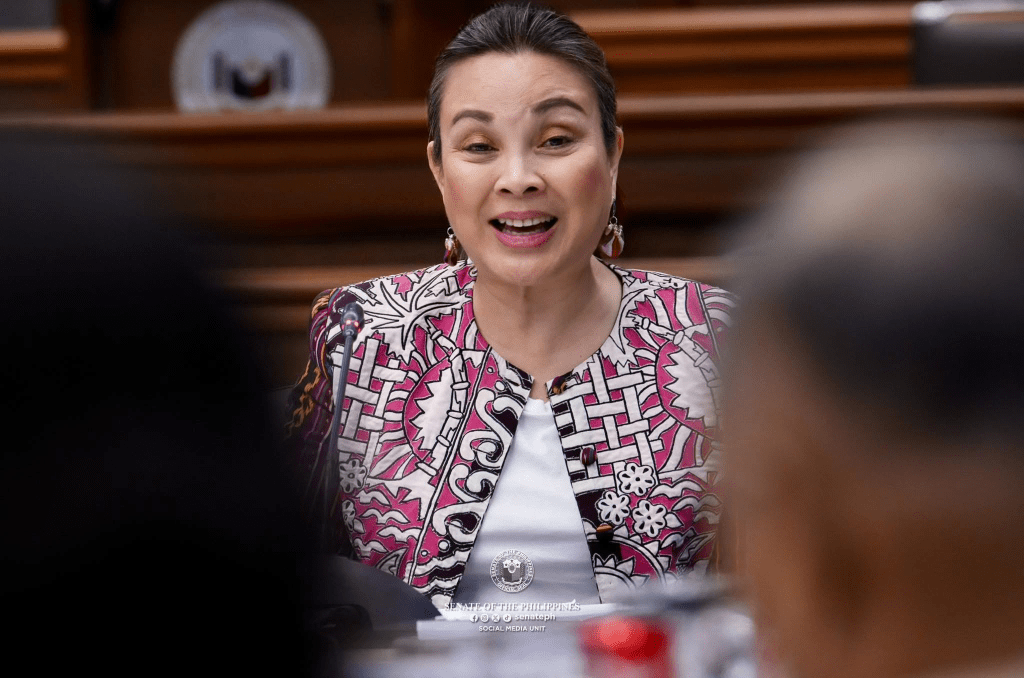
MANILA – Senator Loren Legarda marked the opening of National Arts Month 2026 with a call to strengthen support for Filipino artists, artisans, and creative communities, citing the role of culture in sustaining communities and driving innovation nationwide.
Legarda, chairperson of the Senate Committee on Culture and the Arts, said this year’s celebration carries the theme “Ani ng Sining: Katotohanan at Giting,” which reflects how artists and cultural workers confront contemporary challenges with courage and creative integrity, and how the arts help shape communities, governance, and sustainable societies.
“Every February, we celebrate the soul of our nation through the arts. This year’s theme reminds us that truth and courage are lived through the creativity of our people. The arts continue to guide us toward justice, cultural strength, and progress,” Legarda said.
She highlighted two measures she authored and sponsored that have passed on third and final reading in the Senate: the Aklan Piña Conservation and Innovation Center Act (Senate Bill No. 1425) and the Schools of Living Traditions Act (Senate Bill No. 1507).
“Through SBN 1425, we will establish the Aklan Piña Conservation and Innovation Center in Kalibo to expand the planting of Red Spanish pineapple, build facilities for research and innovation, and strengthen cooperation among weavers, farmers, and educational institutions,” Legarda said.
She added that Senate Bill No. 1507 institutionalizes the Schools of Living Traditions as community-based, intergenerational cultural education mechanisms.
“SBN 1507 institutionalizes our Schools of Living Traditions (SLTs) as community based, intergenerational cultural education mechanisms. SLTs are sanctuaries of wisdom where cultural masters transmit knowledge to younger generations, ensuring that oral traditions, crafts, and rituals continue to inspire our future,” she said.
Legarda also cited her long-standing work on culture and heritage policy, including the National Cultural Heritage Act, National Museum of the Philippines Act, Philippine Creative Industries Development Act, Philippine Tropical Fabrics Law, Cultural Mapping Act, and the National Music Competitions for Young, among others.
She said these measures are designed to position the cultural sector as a driver of employment, innovation, and inclusive development.
Legarda also pointed to the National Arts and Crafts Fair, which she initiated in 2016, as a platform that continues to provide local artisans with national exposure and market opportunities. The 2025 edition, held at the Megatrade Halls of SM Megamall, featured over 300 exhibitors from Luzon, Visayas, and Mindanao.
She recalled her efforts to bring Filipino literary excellence to the global stage, including her leadership at the Frankfurt Book Fair 2025, where the Philippines served as Guest of Honour.
“When the Philippines stood as Guest of Honour in Frankfurter Buchmesse last year, we showed the world that our imagination and literary excellence articulate the Filipino identity and situate our stories at the heart of the global stage,” Legarda said.
“My vision is to continue opening doors for Filipino ingenuity to flourish and be celebrated at home and across continents,” she added.
Legarda said her legislative work has consistently pushed for the integration of culture into education, local development, environmental protection, and economic planning, while protecting indigenous traditions and expanding spaces for arts and cultural work.
“Every work of art and every piece of culture is part of the larger story of who we are as a people. When we stand beside the artists and cultural workers who keep that story alive, we also keep our future more imaginative, more just, and more humane,” she said.
On Wednesday, February 4, Legarda presided over a hearing of the Senate Committee on Culture and the Arts on proposed measures, including the Department of Culture Act, NCCA Board Composition Expansion, Philippine Music Industry Act, Filipino Music Promotion and Usage Act, Philippine Rondalla Training Program Act, Philippine Culinary Heritage Act, and the proposal declaring the waling-waling orchid as the country’s second national flower.



 Republika News
Leave a comment