
MANILA – The House of Representatives secured the inclusion of the proposed abolition of the travel tax among the priority measures of the Legislative-Executive Development Advisory Council (LEDAC), as the council expanded its priority legislative agenda from 48 to 52 measures.
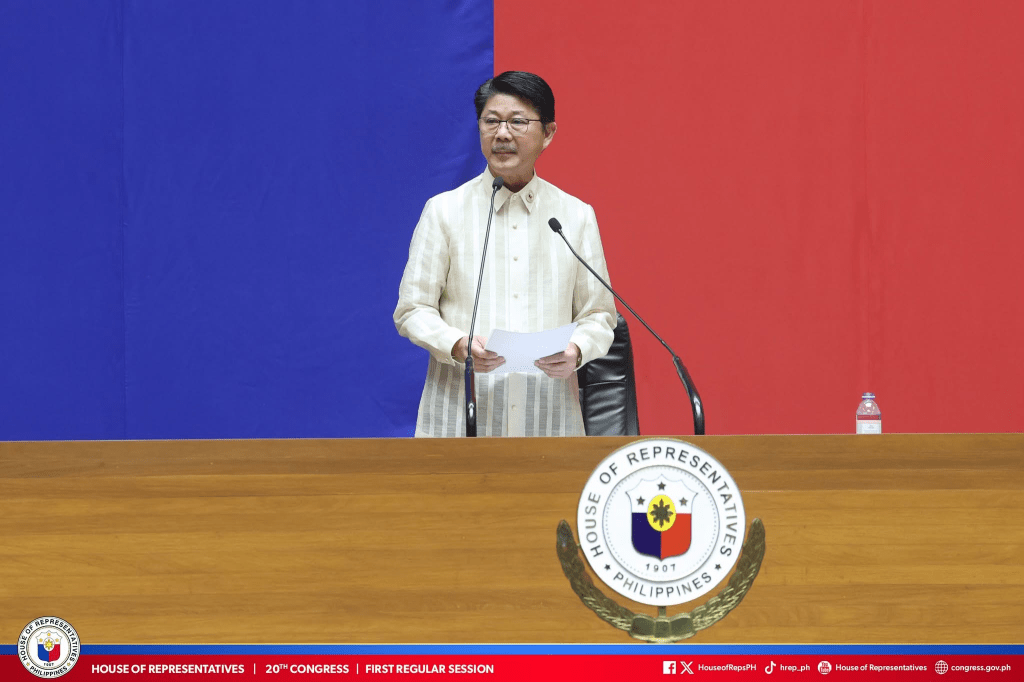
House Speaker Faustino “Bojie” G. Dy III raised the proposal during the LEDAC meeting presided over by President Ferdinand “Bongbong” R. Marcos Jr. at Malacañang, urging the council to adopt it as part of the administration’s priority bills.
The abolition of the travel tax was among four additional measures approved for inclusion, along with proposals addressing online sexual abuse and child sexual abuse or exploitation materials (OSAEC/CSAEM), anti-fake news and digital disinformation, and the resetting of the Bangsamoro Autonomous Region in Muslim Mindanao (BARMM) elections.
Dy said the House strongly supports the initiative of House Majority Leader Ferdinand Alexander “Sandro” Marcos, who filed House Bill No. 7443 seeking the outright abolition of the travel tax imposed on outbound Filipino travelers.
“Before ending, Mr. President, we also urge the inclusion of the Abolition of the Travel Tax among the LEDAC priority measures as it is a practical, equitable, and progressive reform that encourages tourism and supports our regional integration efforts,” Dy said.
“It is, in our view, a crucial step toward a more competitive and open Philippines,” he added.
The travel tax was first imposed under Presidential Decree No. 1183 and later incorporated into the Tourism Act of 2009. It currently requires departing Filipino passengers to pay levies ranging from about ₱1,620 for economy class to ₱2,700 for first class.
In filing House Bill No. 7443, Majority Leader Marcos said the travel tax has outlived its original purpose and now hampers mobility, increases travel costs, and places Filipinos at a disadvantage compared with travelers from neighboring countries that do not impose similar outbound levies.
“The travel tax was created in a very different economic context. Today, it has become an added cost that restricts mobility and weighs heavily on ordinary Filipinos who simply want to travel for work, family, or opportunity,” Marcos said.
He added that lowering travel costs would allow Filipino families to better allocate resources, stimulate spending, and encourage greater economic activity.
“When travel becomes more expensive, fewer people move, fewer people spend, and fewer opportunities circulate through the economy,” he said.
The Philippines remains one of the few Association of Southeast Asian Nations members that continues to impose an outbound travel tax.
With its inclusion in the expanded LEDAC priority list, the proposed abolition of the travel tax is expected to undergo faster deliberations with closer executive-legislative coordination, in line with the administration’s push for people-centered, pro-growth reforms.


 Republika News
Leave a comment