
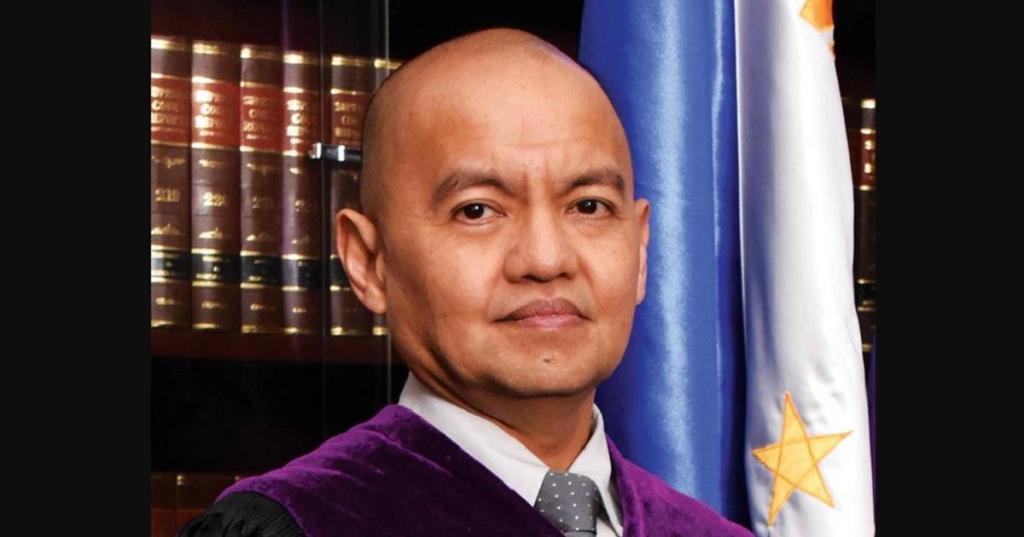
MANILA — Supreme Court Senior Associate Justice Marvic Leonen said that changing the 1987 Constitution alone will not be sufficient for the Philippines to overcome corruption.
In a report, Leonen made the remarks while addressing prosecutors of the Office of the Ombudsman during the agency’s strategic planning session, where he served as one of the keynote speakers.
”At present, the idea of Charter change is being floated in response to corruption. However, this is not the full solution. In fact, for corruption, it is tangential. I say for corruption, Charter change is tangential. We must remember that even if Charter change occurs, or whatever form of government our country chooses to adopt, we must anchor ourselves in the role of demanding accountability and going after corruption in any situation,” Leonen said.
He added, “No matter what political system we evolve into, it will always have a criminal justice system. Breaking out of these corrupt habits will require more than just regime or Charter change. We must strike at the root of the problem.”
Leonen underscored that corruption begins at the top, with the country’s leaders, and stressed that the Ombudsman must prioritize prosecuting high-level officials first.
“We can arrest the ordinary traffic police asking for GCash. Yes, GCash na daw ngayon. Ordinary employees will not be able to do what they are doing if their leaders follow the straight and narrow path. If their leaders say this, then therefore they are going to follow it,” he said.
He also noted that the Constitution explicitly directs the Ombudsman to prioritize high-level officials over lower-ranking personnel. “Because once the highest officers follow the law and have integrity and do it right, no matter how difficult, everyone below will follow,” Leonen said.
On handling evidence, Leonen reminded prosecutors that publicized information does not always constitute reliable evidence, and emphasized the importance of securing evidence that can withstand judicial scrutiny.
“Sometimes there is a sacrifice between premature announcement… and the actual effort that we all need to do in order to get evidence, discover it, maintain it, preserve it, and maintain the chain of custody… True accountability is if we are able to truly convict beyond reasonable doubt,” he said.
Leonen concluded by urging officials to uphold loyalty to the people rather than the appointing authority. “Our principals are the people who are powerless, who face the government on a daily basis, and who see corruption daily… Your duty now is no longer to the appointing officer, it is to our people,” he said.




 Republika News
Leave a comment