
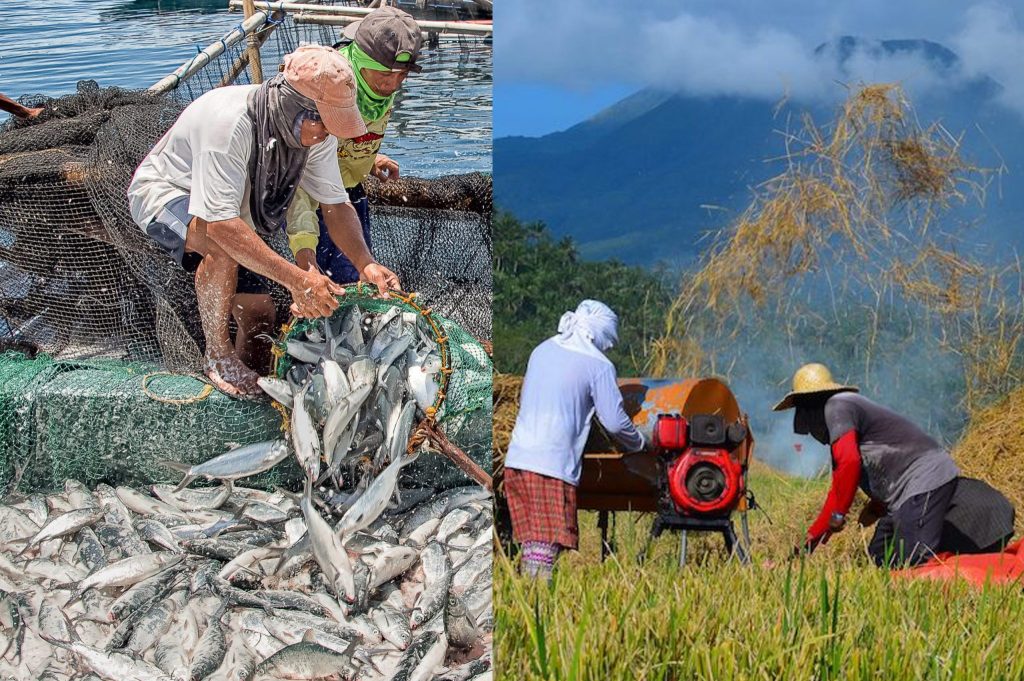
MANILA — Philippine agriculture entered 2026 on stronger footing after posting its highest growth in eight years, Agriculture Secretary Francisco P. Tiu Laurel Jr. said, but he cautioned that sustaining the momentum will require continued investment, policy reform, and favorable weather.
Speaking during the induction of the new officers of the Economic Journalists Association of the Philippines on Monday, February 9, Tiu Laurel said the sector’s 3.1 percent expansion in 2025 showed that recent reforms were beginning to take effect despite persistent risks.
The growth came even as the country was hit by 23 storms last year, 22 of which struck during the second half, a critical period for harvests. Agricultural exports rebounded, led by bananas and other tropical fruits. Philippine avocados entered the Japanese market for the first time, while durian gained access to new export destinations. Domestically, onion prices stabilized after years of sharp volatility.
“These are early gains from a longer and deliberate reset of the sector,” Tiu Laurel said, noting that reforms accelerated when President Ferdinand Marcos Jr. assumed leadership of the Department of Agriculture in 2022.
He emphasized that farmers and fisherfolk must be profitable and that agriculture must reclaim its role as a serious economic driver to attract the next generation of producers. To support this, the Marcos administration allocated one of the largest budgets for agriculture in recent history, funding farm-to-market roads, warehouses, food hubs, post-harvest facilities, dryers, and a national command center.
Tiu Laurel warned that current spending is insufficient to fully address structural weaknesses, estimating that the sector needs P400 billion to P500 billion annually over two administrations to reverse decades of underinvestment, rebuild institutions such as the National Food Authority, and improve resilience against external shocks.
He also cited early achievements, including moderated rice prices, expansion of the Benteng Bigas program to all 82 provinces, and the construction of cold storage facilities and food hubs to reduce post-harvest losses.
“If the weather cooperates, pests behave, vaccines arrive, laws move, and exports expand,” Tiu Laurel said, “there is reason to believe that 2026 could become the ninth year of strong growth.”




 Republika News
Leave a comment