
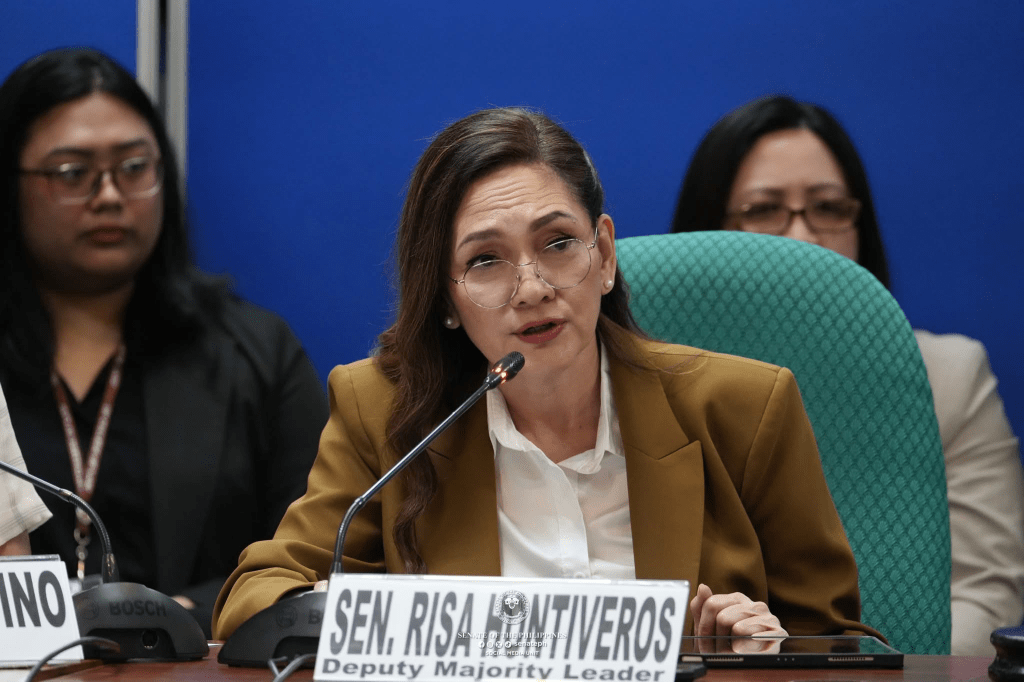
MANILA — Senator Risa Hontiveros pressed government agencies to clarify their legal and financial options in addressing issues hounding several water districts, including possible takeovers, contract reviews, and transition mechanisms involving private joint venture partners.
During a Senate Committee on Public Services hearing, Hontiveros expressed disappointment over the absence of representatives from Crystal Bridges, which reportedly bought PrimeWater, saying their participation would have helped in the committee’s problem-solving efforts.
She then turned to the Local Water Utilities Administration (LWUA), noting that President Ferdinand Marcos Jr. had directed the agency to craft solutions to the ongoing crisis but that concrete proposals have yet to be publicly detailed.
Citing an opinion from the Office of the Government Corporate Counsel (OGCC), Hontiveros pointed out that under Section 61E of Presidential Decree 198, LWUA has authority to take over water districts in cases of operational default, such as high non-revenue water or service neglect. She asked LWUA Administrator Jose Moises Salonga to outline the agency’s options.
Salonga said some water districts have resisted LWUA’s takeover powers despite posting non-revenue water levels as high as 50 percent, leading to confusion over the agency’s authority. He added that while there is an internal framework for takeovers, the agency is cautious about disclosing details.
On transition arrangements, Salonga said transactions exceeding P3 billion are subject to review by the Philippine Competition Commission. He also announced plans to introduce service level agreements (SLAs) between water districts and individual subscribers to clearly define rights and obligations—an arrangement he said is common in other utilities but currently absent in water services.
He added that LWUA had issued a memorandum circular stating that water providers cannot charge even minimum fees if they fail to supply water for 15 days. However, he acknowledged challenges in imposing penalties, as water districts are non-profit entities.
Hontiveros also asked about the advantages and disadvantages of direct LWUA takeovers compared with seeking assistance from the Public-Private Partnership (PPP) Center.
Salonga said a large-scale direct takeover would strain LWUA’s manpower, noting that replacing boards across numerous water districts would require significant human resources. He said LWUA coordinates with the PPP Center on contract execution and is currently mapping obligations under joint venture agreements.
On funding, Hontiveros raised the possibility of local government units stepping in to rehabilitate their water districts through financing from institutions such as the Development Bank of the Philippines (DBP), potentially under lease-to-own models.
Salonga said he is willing to sign waivers to allow financing arrangements, provided a framework is in place to recognize senior debt and clarify obligations. He proposed co-lending arrangements with government banks such as DBP and Land Bank, allowing LWUA to retain step-in rights while lowering blended interest rates and expanding available resources.
Hontiveros described the approach as a way to distribute risk and responsibility while increasing available funding.
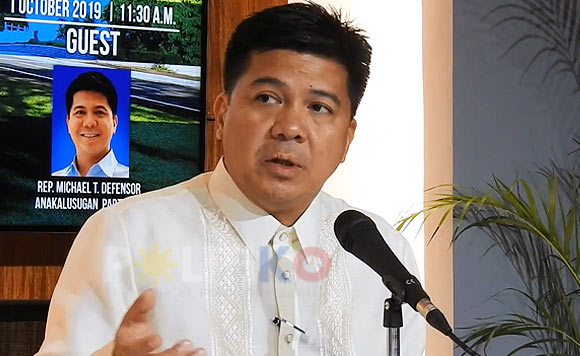
The senator also questioned the PPP Center on its capacity to act as transition adviser and contract reviewer for water districts. PPP Center Director Lester Añonuevo confirmed that the agency can step in as adviser and review joint venture agreements, including determining whether they may be void ab initio or ultra vires for bypassing NEDA-Investment Coordination Committee approval. He said the PPP Center is coordinating with the OGCC and the Department of Justice on the matter.
Añonuevo noted, however, that the PPP Center has only 20 monitoring officers overseeing 290 awarded PPP projects nationwide, each handling about 14 to 15 projects simultaneously. He said the agency could reallocate resources internally but may require additional support from Congress.
Hontiveros encouraged the agency to raise its budgetary needs during the next budget cycle.
Añonuevo also cited challenges in obtaining complete information from water districts and private partners, including inventories of assets covered by joint venture agreements, which hampers oversight and assistance efforts.
On termination payments, Añonuevo explained that contracts generally provide for compensation based on depreciated replacement cost of assets. If the private partner is at fault, 75 percent of the depreciated replacement cost would be paid as just compensation, while 25 percent would go to the water district as liquidated damages.
He added that PPP contracts typically require hiring an independent auditor, with costs shared equally by the water district and private partner, to determine termination payments and just compensation.
Hontiveros said the classification of separation terms—whether termination for convenience, managed surrender, or another category—would significantly affect financial computations and the future viability of water districts and their potential partnerships with local government units.

 Republika News
Leave a comment