
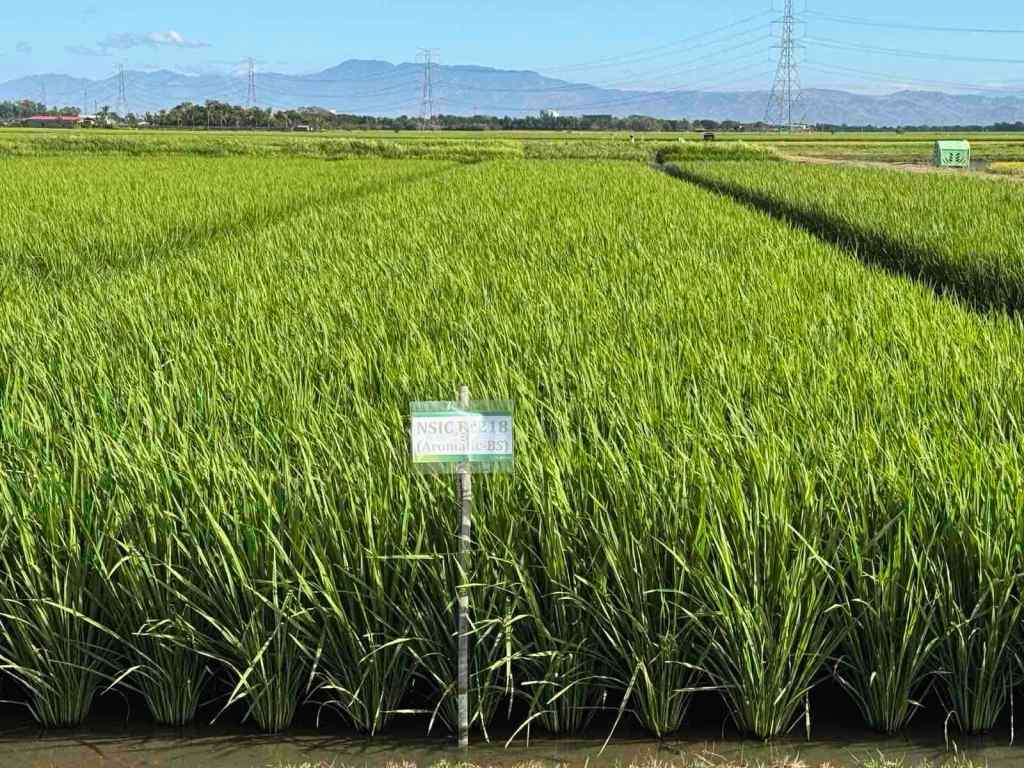
MANILA — Fresh from earning silver at the 2025 World’s Best Rice Award in Cambodia, Mabango 3 has added another credential to its profile: strong performance under oxygen-deprived conditions that typically threaten newly sown rice.
The aromatic variety, officially known as NSIC Rc218, was identified as one of the top performers in a study published in the February 2026 issue of the Philippine Journal of Science. The paper, titled Anaerobic Germination Tolerance Trait of Philippine Rice Elite Lines and Varieties for Direct Seeding, examined how rice lines fare when submerged during early crop establishment.
Researchers from the Philippine Rice Research Institute evaluated 56 elite breeding lines and 38 released varieties to determine their ability to germinate, survive, and grow under flooded conditions.
Key trait for direct seeding
The study focused on anaerobic germination tolerance, a trait that enables rice seeds to sprout and elongate even when oxygen is limited. This characteristic is crucial in direct-seeded systems, where seeds are sown directly into fields instead of transplanting seedlings.
Direct seeding has become increasingly popular due to lower labor requirements, shorter planting periods, and reduced water use. However, the approach also carries risks. Heavy rainfall and flash floods can inundate paddies during germination, depriving seeds of oxygen and leading to uneven crop stands or crop failure.
Flooding remains one of Asia’s most damaging agricultural hazards, affecting roughly a quarter of rice crops annually and reducing regional yields.
To assess tolerance, researchers measured percent germination, seedling length, and seedling vigor index under controlled flooded conditions. They also applied molecular markers to detect the AG1 locus associated with anaerobic germination tolerance.
NSIC Rc218 posted high germination rates and vigorous seedling growth comparable to tolerant check varieties. It also tested positive for AG1 markers, strengthening its potential as both a ready-to-plant variety and a breeding parent.
Another strong performer was NSIC Rc638 SR, a recently approved special-purpose, non-glutinous variety, which recorded an 87 percent germination rate under stress. Breeding line PR52390ILR-2-1-3-B also showed promising results.
Climate-ready breeding
Agriculture Secretary Francisco P. Tiu Laurel Jr. said the findings highlight the importance of developing climate-resilient rice varieties.
“If we want to increase rice production while strengthening climate resilience and food security, we must invest in varieties that can survive real field conditions, not just ideal ones,” the DA chief said. “Studies like this move us closer to stable harvests and a more secure food future.”
He added: “We are lucky our scientists developed Mabango3, it is a gift that continues to give,” he said.
With rainfall patterns becoming more unpredictable, researchers noted that rice varieties must combine grain quality, yield, and stress tolerance. For Mabango 3, already recognized on the global stage, the ability to thrive under low-oxygen conditions adds a new dimension to its value and strengthens its potential role in climate-adaptive farming systems.



 Republika News
Leave a comment