
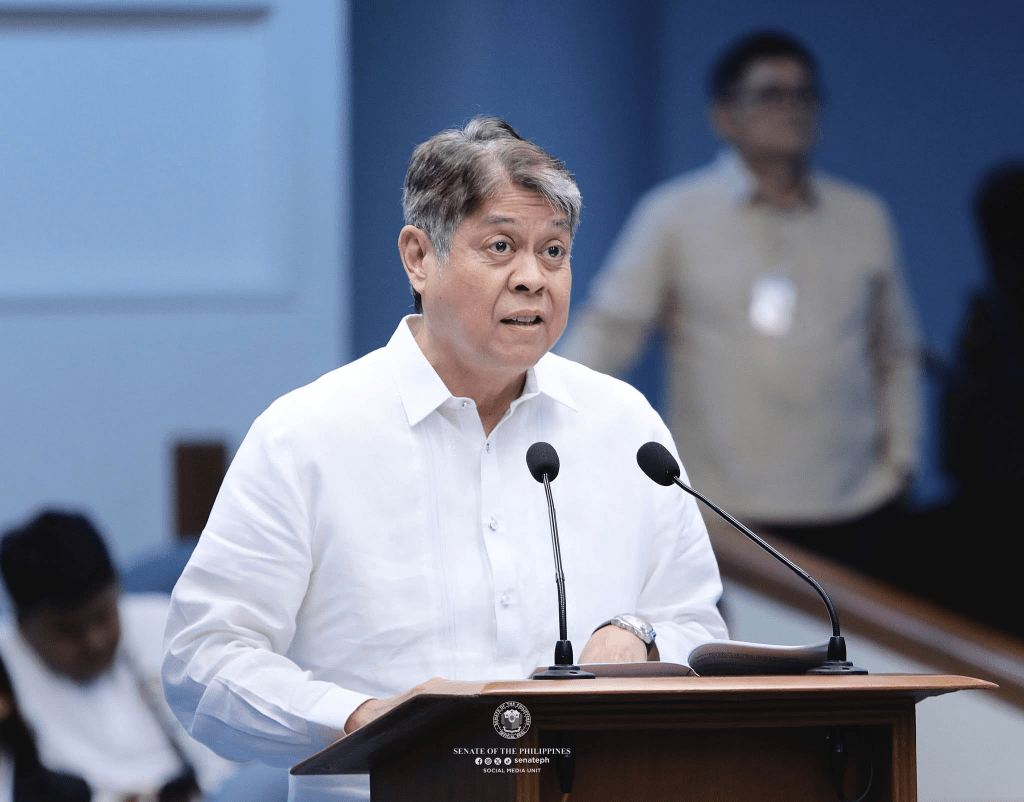
MANILA — Senator Francis “Kiko” Pangilinan is urging the passage of three proposed measures aimed at addressing long-standing issues in the agriculture and fisheries sector and strengthening food security in the country.
Pangilinan said the measures—the Agricultural Cooperatives Act of 2025, the Agriculture and Fisheries Extension Act of 2025, and the Congressional Commission on Agriculture, Fisheries, and Food Security (AGRICOM) Act—seek to advance rural development and improve the welfare of farmers and fisherfolk.
The senator recently met with Ferdinand “Bongbong” Marcos Jr. at Malacañang Palace on March 3 to discuss priority legislation for the agriculture sector and request the administration’s support for the proposed measures.
These include Senate Bill No. 1183 or the Agricultural Cooperatives Act of 2025, Senate Bill No. 1182 or the Agriculture and Fisheries Extension Act of 2025, and Senate Bill No. 1624 or the AGRICOM Act.
The meeting followed the “Evening With The Stars” Malacañang Gala last month, which Pangilinan attended with his wife, singer-actress Sharon Cuneta-Pangilinan. During the event, the senator asked to schedule a meeting with Marcos to discuss the proposed reforms.
“Walang araw na hindi tayo nakakarinig o nakakabasa ng reklamo at hinaing tungkol sa gutom, sa taas ng presyo ng mga bilihin. Nangako tayo na hahanapan natin ng solusyon ang mga daing na ito kaya tayo narito at hinihiling ang suporta ng Presidente para sa mga panukalang batas natin,” he said.
According to Pangilinan, the proposed bills aim to strengthen agricultural cooperatives, expand support services for farmers and fisherfolk, and identify systemic issues affecting the country’s food supply chain.
The Agricultural Cooperatives Act seeks to provide funding to improve the productivity of agricultural cooperatives, encourage clustering and consolidation to achieve economies of scale, promote modern and climate-resilient farming technologies, and expand farmers’ access to credit.
Meanwhile, the Agriculture and Fisheries Extension Act proposes to restore national oversight of extension services under the Department of Agriculture to ensure that assistance reaches farmers and fisherfolk down to the municipal level.
The AGRICOM Act, for its part, seeks to establish a three-year congressional commission tasked with recommending reforms in the agriculture and fisheries sector and streamlining related government agencies.
During the meeting, Pangilinan also asked Marcos to certify the three measures as urgent, stressing that strengthening the agriculture sector could help address the country’s food crisis.
The senator also called on Mark Enverga, chairperson of the House Committee on Agriculture and Food, and Leah Bulut-Begtang, chairperson of the House Committee on Agrarian Reform, to work toward the swift passage of the measures in the House of Representatives.
Pangilinan said the proposed agricultural cooperatives and extension services measures would complement the Sagip Saka Act, a law he authored in 2019 that allows government agencies and local government units to purchase agricultural products directly from farmers and fisherfolk without public bidding.
He noted that farmers’ and fisherfolk’s organizations benefited from the policy after Executive Order No. 101 was signed last year directing government agencies to fully implement the law.
“Kapag organisado ang ating mga magsasaka at mangingisda at kapag sila ay nakakatanggap ng sapat na suporta mula sa gobyerno, maaari na silang pumasok sa mga kontrata kasama ang mga ahensya ng gobyerno tulad ng DepEd, DOH, at DSWD. Mas mapapabilis din ang pagbabaabot ng gobyerno ng tulong sa kanila bilang mga organisasyon kaysa sa indibidwal,” the senator said.
Pangilinan added that improved absorption of government interventions is needed to boost domestic food production.
He said the agriculture and fisheries sector could access more than P37 billion worth of feeding programs from government agencies this year through the Sagip Saka Act.
Aside from Marcos and Pangilinan, the meeting was also attended by Agriculture Secretary Francisco Tiu Laurel Jr., Executive Secretary Ralph Recto, and Economy, Planning, and Development Secretary Arsenio Balisacan.



 Republika News
Leave a comment