
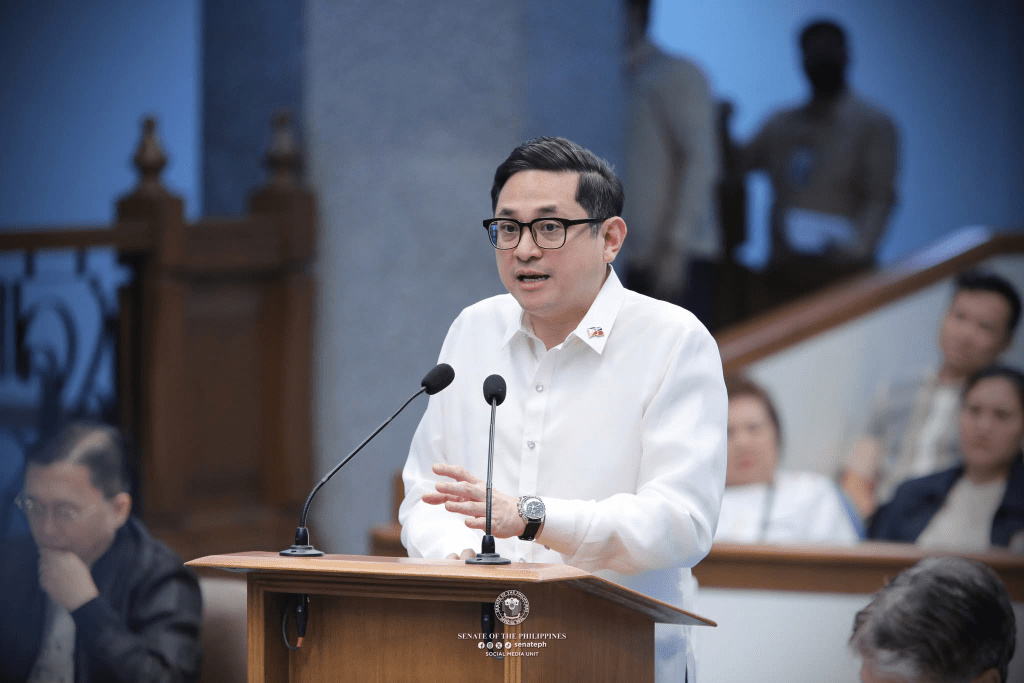
MANILA — Sen. Bam Aquino has urged the Department of Education to immediately download funds to local government units to speed up the construction of classrooms across the country.
Aquino said the prompt release of funds will help jumpstart the construction of 25,000 classrooms funded under the ₱65 billion allocation in the 2026 national budget.
“Mahalagang maibaba sa lalong madaling panahon ang pondo sa ating mga katuwang na lokal na pamahalaan para agad nang masimulan ang pagtatayo ng mga classroom,” Aquino said.
“Sa ganitong paraan, mas mapapabilis ang pagpapatayo ng mga silid-aralan at mas maraming estudyante ang mabibigyan ng maayos at ligtas na lugar para matuto,” he added.
Aquino, who chairs the Senate Committee on Basic Education, said the increased funding for classroom construction in the 2026 national budget is meant to help address the country’s estimated 165,000-classroom backlog.
Under the spending plan, the education department has flexibility in implementing classroom construction projects, including entering into partnerships with local government units, civil society groups, and non-governmental organizations with proven track records.
Local government units, however, are required to enter into a memorandum of agreement with DepEd to gain access to the funds for the construction of classrooms.
Meanwhile, the Senate of the Philippines has also approved Aquino’s proposed Classroom-Building Acceleration Program Act, or Senate Bill No. 1482, on third and final reading with a 22-0 vote, without negative votes or abstentions.
The measure allows local government units and qualified non-governmental organizations to construct classrooms within their jurisdictions, provided they follow the standards and guidelines set by DepEd.
The bill also aims to streamline the classroom construction process and includes safeguards against corruption, such as imposing a price ceiling on classroom building costs.
Aquino said the construction of new classrooms is also expected to generate employment opportunities nationwide, potentially creating more than 100,000 jobs.
He noted that building a classroom typically requires four to six workers and usually takes about three to four months to complete.
According to Aquino, taxes collected by local government units from local contractors hired for the projects may also help support social services for their constituents.



 Republika News
Leave a comment