
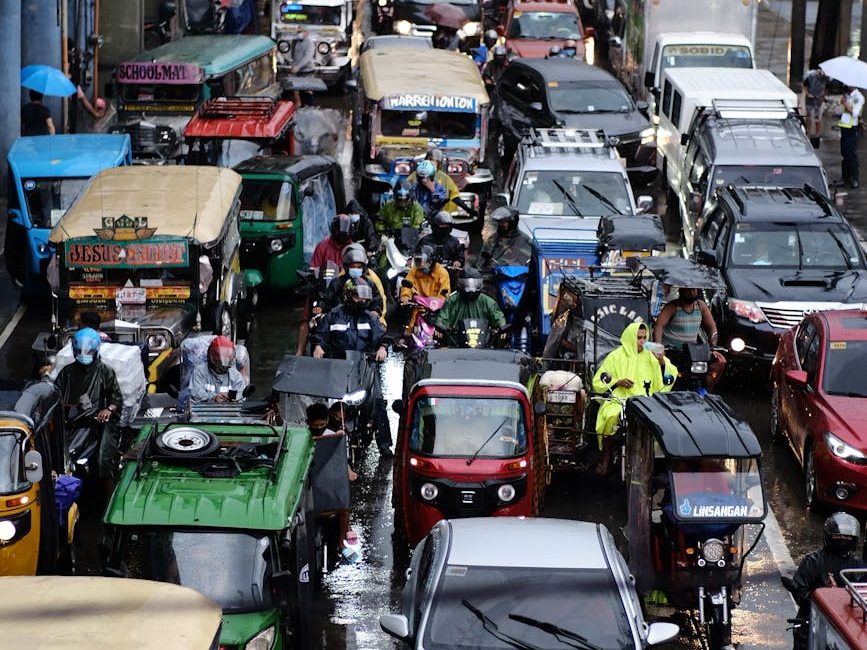
MANILA — Jeepney drivers across the country will stage a one-day transport strike on Thursday, March 19, to protest the government’s “slow” response to rising fuel costs, which have reached an all-time high of ₱100 per liter.
The strike was announced Monday by PISTON (Pagkakaisa ng mga Samahan ng Tsuper at Operator Nationwide), a transport group representing jeepney drivers and operators.
According to Mody Floranda, PISTON president, the protest aims to pressure the Ferdinand Marcos Jr. administration to remove value-added and excise taxes on petroleum, cap fuel prices at ₱55 per liter, and allow a ₱5 fare increase amid ongoing tensions in the Middle East.
While Congress is considering a bill granting Marcos Jr. emergency powers to suspend or reduce fuel excise taxes for up to six months, PISTON said even the proposed suspension would only lower prices by ₱5 to ₱10 per liter, far short of the recent double-digit increases.
The group also criticized oil companies for imposing sharp price hikes despite reportedly earning billions in profit. Meanwhile, House lawmakers are examining the possibility of reviewing or repealing the Oil Deregulation Law, which allows petroleum firms to adjust prices based on the Mean of Platts Singapore (MOPS) and their inventory.
To ease the impact of rising fuel costs, the government will roll out a ₱5,000 fuel subsidy for transport workers nationwide starting March 17, initially targeting tricycle drivers in Metro Manila before extending to jeepney, taxi, bus, and other public utility vehicle drivers.
The Department of Transportation said fare increases for Metro Manila buses, point-to-point buses, modern and traditional jeepneys, and airport taxis are expected to take effect in the coming weeks.
Fuel prices this week are projected to rise by as much as ₱16.60 per liter for gasoline, ₱23.90 per liter for diesel, and ₱8.90 per liter for kerosene. Oil companies have agreed to implement the increases on a staggered basis starting Tuesday, March 17, in an effort to reduce the immediate impact on goods and services.
Since last week, the government has implemented a four-day workweek and work-from-home arrangements across agencies to conserve fuel amid persistent Middle East tensions affecting global oil markets.




 Republika News
Leave a comment