
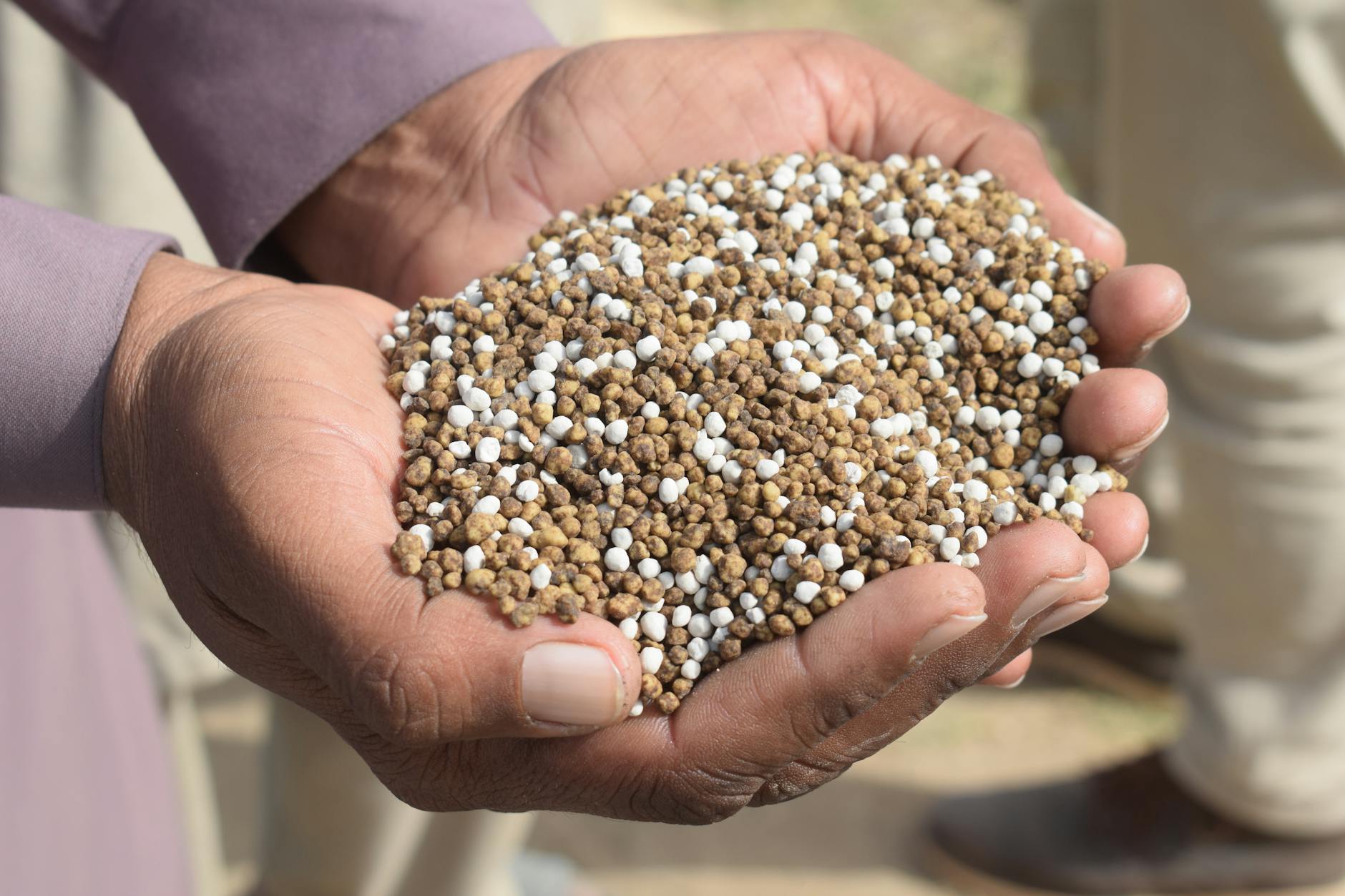
MANILA – Agriculture Secretary Francisco P. Tiu Laurel Jr. sought to ease concerns over a possible fertilizer shortage, saying the Philippines has sufficient supply sources and alternative inputs to cushion the impact of rising global prices.
Tiu Laurel, along with Senator Francis Pangilinan, visited the facility of Agri Specialists Inc. as part of efforts to promote reduced reliance on inorganic fertilizers and support sustainable agricultural practices.
Agri Specialists produces biofertilizer developed by researchers from the University of the Philippines Los Baños’ National Institute of Molecular Biology and Biotechnology. Company estimates show that one kilogram of biofertilizer can replace two 50-kilogram bags of urea-based fertilizer, with each kilogram priced at around P750, significantly lower than the approximately P2,500 cost of a bag of complete fertilizer.
Even before recent geopolitical developments in the Middle East, the Department of Agriculture (DA) had been scaling up the use of alternatives such as liquid fertilizers, biofertilizers, and soil ameliorants to offset rising costs of petroleum-based inputs.
Tensions escalated after airstrikes involving the United States and Israel against Iran on February 28, followed by restrictions on trade through the Strait of Hormuz, a major route for global fertilizer shipments.
Despite these developments, Tiu Laurel said the country’s direct exposure to supply disruptions remains limited. Based on 2025 data, only about 20 percent of the country’s 713,000 metric tons of imported urea-based fertilizers came from Qatar and Saudi Arabia, with the majority sourced from Indonesia, Brunei, Malaysia, China, and Vietnam. Ammonium sulfate imports were sourced entirely from China and Japan.
“I reviewed all the figures on where our fertilizer comes from… supply is not the issue—it’s really the price,” Tiu Laurel said.
He noted that while supply remains stable, rising global oil prices and logistics costs could drive up fertilizer prices, which may in turn increase food prices. He estimated that agricultural goods could see price hikes of around P2 to P5 per kilogram, largely due to higher transport costs.
Tiu Laurel added that field trials indicate farmers can reduce their use of traditional urea without affecting yields by adopting bio-based and nanotechnology-driven alternatives.
“If you used to apply 10 sacks of urea, you might now be able to use only half or even just three,” he said.
Pangilinan, for his part, warned that the ongoing energy crisis could pose risks to food security if left unchecked, noting that the agriculture budget was already limited even before the crisis. He said lawmakers are open to reviewing the 2026 national budget and passing a supplemental budget if needed.
Rice production remains particularly vulnerable due to its heavy dependence on fertilizer, while highland vegetables may experience smaller increases. Corn farmers, meanwhile, can tap alternative inputs to maintain yields.
“We have many strategies,” Tiu Laurel said, expressing confidence that government measures will help stabilize supply and prevent sharper increases in food prices.


 Republika News
Leave a comment