
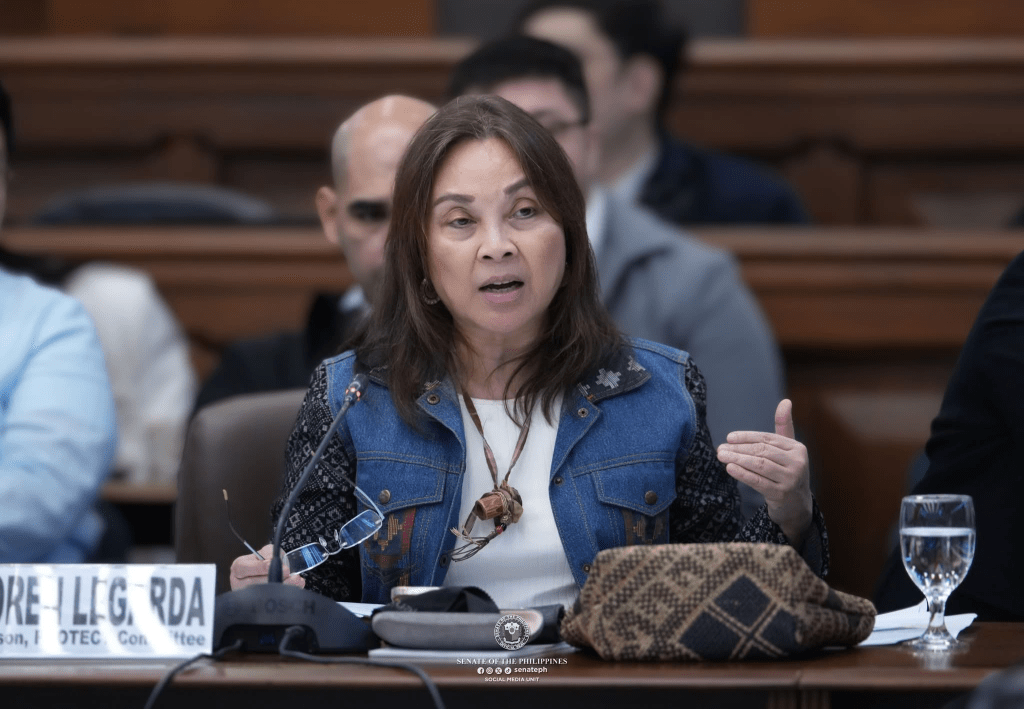
MANILA – Senator Loren Legarda called for the stricter implementation of environmental and water-related laws, emphasizing the critical role of women in ensuring water security, climate resilience, and inclusive development.
Speaking at the Water and Women Forum PH 2026 held on March 23 in Quezon City, Legarda said issues on water, waste management, and gender equality are closely linked.
“Water shapes the rhythm of every home, every community, every future. But when water is scarce, when it is unsafe or distant, the burden does not fall evenly,” Legarda said.
Citing data from the Philippine Statistics Authority, she noted that only 53.1 percent of Filipino households have access to safely managed drinking water, while 44 percent still rely on sources outside their homes.
“In four out of five cases, it is women and girls who carry this responsibility. We all know this, especially in the provinces, but even in Metro Manila, waking up very early, walking long distances, and even not long, but in a long queue, carrying heavy containers, making difficult choices on how to stretch every drop for cooking, cleaning, and hygiene. And time spent securing water is time taken away from education, from livelihood and jobs, recreation even, and rest,” she said.
Legarda also pointed to the limited representation of women in water-related institutions.
“Women have little influence in designing the systems that govern it. They remain underrepresented in the institutions where water policies are shaped, and resources are allocated,” she said.
She reaffirmed her support for existing laws such as the Climate Change Act of 2009 and the Clean Water Act, saying these measures aim to protect public health and livelihoods.
“They’re meant to protect the health, the livelihood, the dignity of Filipino families, especially those who carry the daily responsibility of securing water at home. The same principle behind these laws must guide water governance today,” Legarda said.
The senator also underscored the link between waste management and water quality, citing the Ecological Solid Waste Management Act.
“Solid waste has everything to do with water,” she said. “It institutionalizes the segregation of waste at source, recycling, and composting. If this is followed, our waste need not go to our water bodies and the tragedies of Cebu and Rizal would not, should not, could not have happened.”
She lamented what she described as weak enforcement of laws. “It seems like laws are just recommendations or suggestions. Hindi sinusunod e. Matigas ang ulo nating lahat,” she said.
Legarda also highlighted the importance of the Rainwater Collection Act and the Philippine Ecosystem and Natural Capital Accounting System Act, saying these are key to strengthening sustainable water management.
She recognized the contributions of grassroots and indigenous women in protecting water resources.
“They are the primary managers of household water. They know how it is stored, how it is used, conserved, and shared. And in many local communities, our indigenous women have protected our watersheds, our rivers, our springs for generations,” she said.
Legarda called for stronger representation of women in policymaking and more consistent enforcement of environmental laws.
“By placing women at the center of water governance, we move closer to a future where every community has safe, reliable, and sustainable access to water, and where development is inclusive,” she said.
The Water and Women Forum PH 2026 was organized by the National Water Resources Board in partnership with the Department of Environment and Natural Resources, the River Basin Control Office, and other stakeholders.

 Republika News
Leave a comment